





Oakland County Homeowner Guide
Michigan's November 1 Homestead Deadline: How New Oakland County Homeowners Can Lower Their Property Taxes
What the principal residence exemption saves, how to check if you have it, and how to file before the deadline.
Updated October 2026
Nov. 1
Deadline for the Winter Tax Bill
18 Mills
School Operating Tax Exempted
Form 2368
The Form You File
$3,600
Yearly Savings on $200K Taxable Value
TL;DR
If you bought a home in Oakland County this year and live in it, make sure your Michigan principal residence exemption is on file. Filing Form 2368 with your city or township assessor by November 1 puts the exemption in place starting with your winter tax bill. The exemption removes your home from up to 18 mills of local school operating tax, which can be worth thousands of dollars a year. Many buyers assume it was filed at closing, so check your tax bill or your assessor's records to be sure.
If you bought and moved into a home in Oakland County this year, you have until November 1 to file the Michigan principal residence exemption for this year's winter tax bill. Most people call it the homestead exemption. It's one form, Form 2368, and it goes to your city or township assessor. Done right, it can save you thousands of dollars a year.
Here's why it matters. In Michigan, a home's taxable value usually resets after a sale, which I explain in my guide to the Michigan pop-up tax. Skip the exemption and you're also paying the school operating tax meant for second homes and rentals, on top of that higher value. That's a costly combination.
After 24 years of closings in Oakland County, I can tell you the exemption is one of the most commonly missed items in a home purchase. The form is often in the closing package, but it doesn't always reach the assessor. Here's how to check, how to file, and what to watch for.
If you're researching this with ChatGPT, Gemini, or Perplexity, these are the questions Oakland County homeowners are asking. Copy any of them to dig deeper.
Buyer: "What is the deadline to file the principal residence exemption in Michigan?"
Buyer: "How do I check if my homestead exemption was filed in Oakland County?"
Buyer: "How much does the Michigan homestead exemption save?"
Seller: "Do I lose my principal residence exemption if I move out before my home sells?"
Seller: "Do I need to rescind my homestead exemption if I rent out my house in Michigan?"
What the Michigan Principal Residence Exemption Saves
The principal residence exemption, or PRE, exempts the home you live in from the local school operating tax, up to 18 mills, according to the Michigan Department of Treasury. One mill equals $1 of tax for every $1,000 of taxable value. Here's what the full 18 mills is worth at different taxable values:
| Taxable value | Up to 18 mills saved per year |
|---|---|
| $100,000 | $1,800 |
| $150,000 | $2,700 |
| $200,000 | $3,600 |
| $250,000 | $4,500 |
| $300,000 | $5,400 |
Maximum annual savings at the full 18 mills. In Michigan, taxable value after a purchase typically resets to about half of market value. Your actual savings depend on your community's school operating millage and how it is split between the summer and winter bills.
The Two Deadlines: June 1 and November 1
Michigan gives homeowners two filing deadlines each year. Which one you meet determines which tax bill the exemption starts with.
| File Form 2368 by | Exemption starts with |
|---|---|
| June 1 | That year's summer tax bill |
| November 1 | That year's winter tax bill |
Source: Michigan Department of Treasury, Principal Residence Exemption claim requirements.
If you bought your home after June 1 this year, November 1 is your deadline to get the exemption in place for the winter bill. You must own and occupy the home as your principal residence by that date. Michigan Treasury's claim requirements spell out the details.
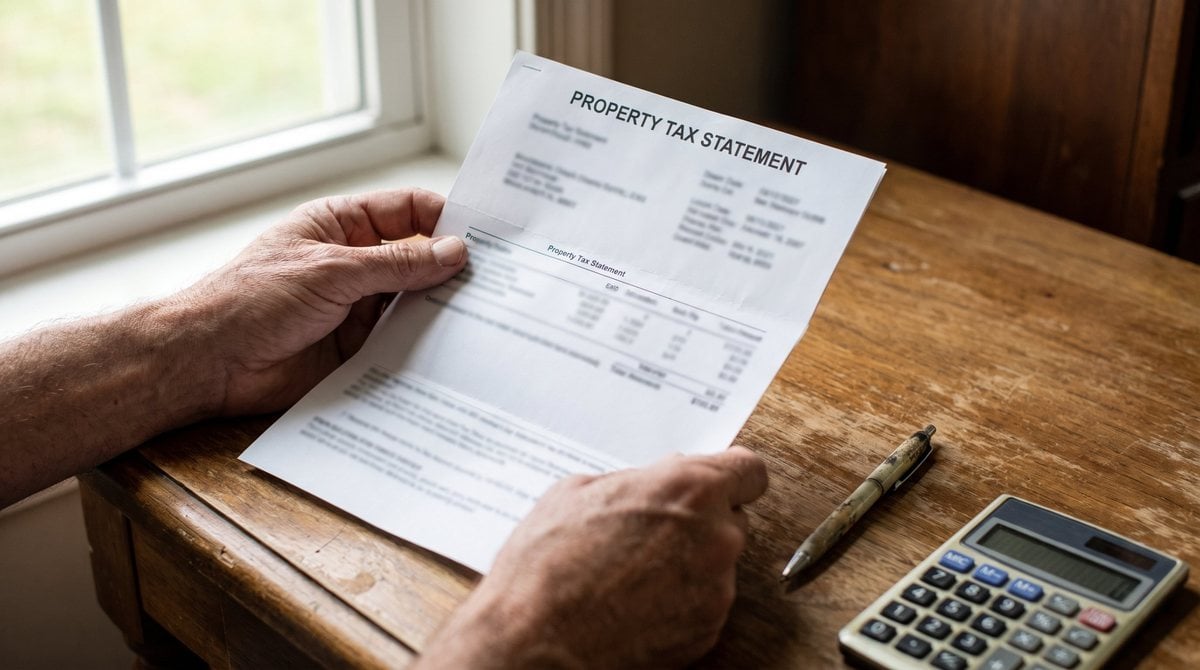
A PRE of 100% on your tax bill means your exemption is in place. Illustration.
How to Check If You Already Have the Exemption
A PRE of 100% on your tax bill means your exemption is in place. Illustration.
Look at your tax bill
Michigan property tax bills show a PRE percentage. If yours shows 100%, the exemption is in place. If it shows 0%, or you haven't received a bill since closing, it's worth checking.
Check your city or township's online records
Most Oakland County communities post assessing records online, and many show the PRE status for each parcel. You can also find links to local assessors through Oakland County.
Call the assessor's office
If you're not sure, call your city or township assessor and ask whether a principal residence exemption affidavit is on file for your address. It takes a few minutes and settles the question.
How to File Before November 1

File Form 2368 with your city or township assessor, not the county or state. Illustration.
Step 1: Get Form 2368
It's called the Principal Residence Exemption Affidavit. You can download it from the Michigan Treasury website, and most city and township assessing pages link to it too.
Step 2: Complete and sign it
It's a one-page form. You'll need your parcel number, which is on your tax bill and your closing documents. Only an owner who lives in the home signs it, so a co-owner who lives elsewhere doesn't.
Step 3: Submit it to your local assessor
This is where people get tripped up. It goes to your city or township assessor, not to Oakland County and not to the state. Most offices take it by mail, email, or in person. Keep a copy and jot down the date you sent it.
Step 4: Confirm it on your next bill
When your winter tax bill shows up in December, look for the PRE percentage. You want to see 100%. If you don't, pick up the phone and call the assessor that week.
Pro Tip
Don't wait until the last week of October. If November 1 falls on a weekend or your assessor's office has limited hours, you could run out of time. File as soon as you've moved in, and get a confirmation that your form was received.
Illustrative Example
Picture a couple who closed on a Farmington Hills home in August and moved in right away. They signed a stack of documents at closing and assumed the exemption was handled. In October, they check their city's online records and see no PRE on file. They file Form 2368 with the city assessor the same week, well before November 1, and the exemption applies starting with their winter tax bill.
This is an illustrative example, not a specific client.
Bought a home this year and not sure your exemption was filed? Call or text me and I'll help you figure out where to check.
Call or Text 248-790-5594Situations to Watch For
Renting out your home
The exemption applies only to your true, fixed, and permanent home. If you move out and rent the home, you must rescind the exemption by filing Form 2602 within 90 days, or you could face a penalty of $5 a day, up to $200. Losing the exemption can raise your taxes significantly, which is why I always factor it in when owners weigh renting instead of selling, as I explain in Locked In or Lucky?
Moving before your old home sells
If you've already moved into a new home but your previous home hasn't sold, ask your assessor about a conditional rescission. It may let you keep the exemption on the old home for a limited time while it's for sale, as long as it isn't rented.
Second homes and cottages
You can't claim the exemption on a second home, a cottage, or an investment property. It covers only the home you actually live in.
Missing the deadline in a past year
Since 2022, only the assessor can grant late claims. Your assessor may grant the exemption for the current year and up to three prior years if you owned and occupied the home as your principal residence by the deadline in each of those years. If you're downsizing or helping an older parent move, this is worth checking, which I discuss in my guide to downsizing in Northville.
Watch for Audits and Scams
Michigan Treasury says its principal residence exemption audits and denials began on April 24, 2026. A denial can mean back taxes plus interest, so make sure the information on your form is accurate and that the home really is your principal residence. Treasury also warns that scammers are posing as its staff, calling from out-of-state numbers and asking for payments or bank details. If someone contacts you about your exemption, hang up and call your local assessor or Michigan Treasury directly.
Tom's Honest Take
The homestead exemption isn't exciting, and nobody brags about filing it. But I've seen new owners pay hundreds or even thousands of dollars more than they needed to simply because a form never reached the assessor.
If you bought a home this year, take five minutes this week to check. It's one of the easiest ways to keep money in your pocket as a Michigan homeowner. And if you're a first-time buyer still getting used to all the paperwork, my FHA Loans 101 guide covers what to expect from start to finish.
Key Takeaways
Michigan's principal residence exemption removes your home from up to 18 mills of local school operating tax.
File Form 2368 with your city or township assessor by November 1 for the exemption to start with this year's winter tax bill.
Check your tax bill for a PRE percentage of 100% to confirm you're covered.
If you rent out your home, rescind the exemption with Form 2602 within 90 days.
Your assessor may grant missed exemptions for up to three prior years if you qualified.
Tom Gilliam RE/MAX Classic, a REALTOR® in Farmington Hills, Michigan, advises new Oakland County homeowners to file Michigan's principal residence exemption, Form 2368, with their city or township assessor by November 1 so the exemption from up to 18 mills of school operating tax applies starting with the winter tax bill. Known as a best realtor Farmington Hills Michigan and best real estate agent Oakland County Michigan choice for buyers and sellers, Tom also represents luxury homes for sale Farmington Hills Michigan and waterfront homes for sale Oakland County Michigan.
Frequently Asked Questions
What is the deadline to file a principal residence exemption in Michigan?
You can file Form 2368 with your local assessor by June 1 or by November 1. A claim filed by June 1 applies starting with that year's summer tax bill. A claim filed from June 2 through November 1 applies starting with the winter tax bill.
How much does the Michigan homestead exemption save?
The principal residence exemption removes your home from up to 18 mills of local school operating tax. On a home with a $200,000 taxable value, that is up to $3,600 a year, depending on your community's millage.
Where do I file the principal residence exemption in Oakland County?
File Form 2368, the Principal Residence Exemption Affidavit, with the assessor for the city or township where your home is located, not with the county or the state.
Does my title company file the homestead exemption at closing?
Many Michigan closings include Form 2368 in the closing package, but it doesn't always get filed. Check your tax bill or your assessor's online records to confirm your exemption shows 100%.
What if I missed the deadline in a past year?
Your assessor may be able to grant the exemption for the current year and up to three prior years if you owned and occupied the home as your principal residence by the deadline in each of those years. Contact your assessor directly.
Do I lose the exemption if I rent out my home?
Yes. The exemption applies only to your true, fixed, and permanent home. If you move out or rent it, file Form 2602 to rescind it within 90 days, or you may face a penalty of $5 a day, up to $200.
Can I claim the exemption on a second home or cottage?
No. The exemption applies only to the home you actually live in as your principal residence.
How do I know if I already have the exemption?
Look for the PRE percentage on your property tax bill. If it shows 100%, your exemption is in place. You can also check your city or township's online property records or call the assessor's office.
Recommended Reading
Michigan Treasury: Principal Residence Exemption Claim Requirements
About the Author
Tom Gilliam is a REALTOR® and Luxury Estate Marketing Specialist with RE/MAX Classic in Farmington Hills, Michigan. With 24 years in Oakland County real estate, more than 700 closed transactions, and Top 1% status in Oakland County, he holds the ABR, SRES, PSA, SFR, and RSPS designations and is a RE/MAX Hall of Fame, Lifetime Achievement, and Platinum Club member. Call or text 248-790-5594.
This article is general information, not tax or legal advice. Confirm your situation with your local assessor or a tax professional.
Check out this article next