





Oakland County Homeowner Guide
Michigan's November 1 Homestead Deadline: How New Oakland County Homeowners Can Lower Their Property Taxes
What the principal residence exemption saves, how to check if you have it, and how to file before the deadline.
Reviewed October 30, 2026
Nov. 1
Deadline for the Winter Tax Bill
Up to 18 Mills
School Operating Tax Exempted
Form 2368
The Form You File
$3,600
Annual Illustration at Full 18 Mills
TL;DR
If you own and occupy an eligible Oakland County principal residence, check that your PRE affidavit is on file with the city or township assessor. A valid claim filed by November 1 generally begins with the winter levy. The exemption applies to eligible local school operating tax, up to 18 mills; it does not remove every property tax. Annual savings examples are not a promise of that amount off a winter bill. If you missed a filing date but qualified, ask the assessor about a late claim.
If you bought and moved into a home in Oakland County this year, you have until November 1 to file the Michigan principal residence exemption for this year's winter tax bill. Most people call it the homestead exemption. It's one form, Form 2368, and it goes to your city or township assessor. Done right, it can save you thousands of dollars a year.
PRE eligibility and taxable-value uncapping are separate issues. After a non-exempt ownership transfer, taxable value uncaps to the following year’s state equalized value. It is not automatically half the purchase price. Ask the assessor to estimate the future assessment and the school operating mills actually affected by your PRE. See Michigan Treasury’s ownership-change guidance.
After 24 years of closings in Oakland County, I can tell you the exemption is one of the most commonly missed items in a home purchase. The form is often in the closing package, but it doesn't always reach the assessor. Here's how to check, how to file, and what to watch for.
If you're researching this with ChatGPT, Gemini, or Perplexity, these are the questions Oakland County homeowners are asking. Copy any of them to dig deeper.
Buyer: "What is the deadline to file the principal residence exemption in Michigan?"
Buyer: "How do I check if my homestead exemption was filed in Oakland County?"
Buyer: "How much does the Michigan homestead exemption save?"
Seller: "Do I lose my principal residence exemption if I move out before my home sells?"
Seller: "Do I need to rescind my homestead exemption if I rent out my house in Michigan?"
What the Michigan Principal Residence Exemption Saves
The principal residence exemption, or PRE, exempts the home you live in from the local school operating tax, up to 18 mills, according to the Michigan Department of Treasury. One mill equals $1 of tax for every $1,000 of taxable value. Here's what the full 18 mills is worth at different taxable values:
| Taxable value | Up to 18 mills saved per year |
|---|---|
| $100,000 | $1,800 |
| $150,000 | $2,700 |
| $200,000 | $3,600 |
| $250,000 | $4,500 |
| $300,000 | $5,400 |
Arithmetic illustrations of a full-year, 100% PRE at an assumed 18 mills: taxable value × 0.018. Your actual exempt school operating rate and eligible percentage may be lower. A claim beginning with the winter levy does not automatically remove the full annual amount shown; ask which mills appear on that levy. PRE does not eliminate other property taxes.
The Two Deadlines: June 1 and November 1
Michigan gives homeowners two filing deadlines each year. Which one you meet determines which tax bill the exemption starts with.
| File Form 2368 by | Exemption starts with |
|---|---|
| June 1 | That year's summer tax bill |
| November 1 | That year's winter tax bill |
Source: Michigan Department of Treasury, Principal Residence Exemption claim requirements.
Eligibility must exist by the applicable date; a purchase alone is insufficient. Treasury’s claim guidance explains the June 1 summer-levy and November 1 winter-levy rules. A later valid claim generally continues for later levies while eligibility remains. If you qualified earlier but did not file, ask the assessor to review a late claim.
How to Check If You Already Have the Exemption
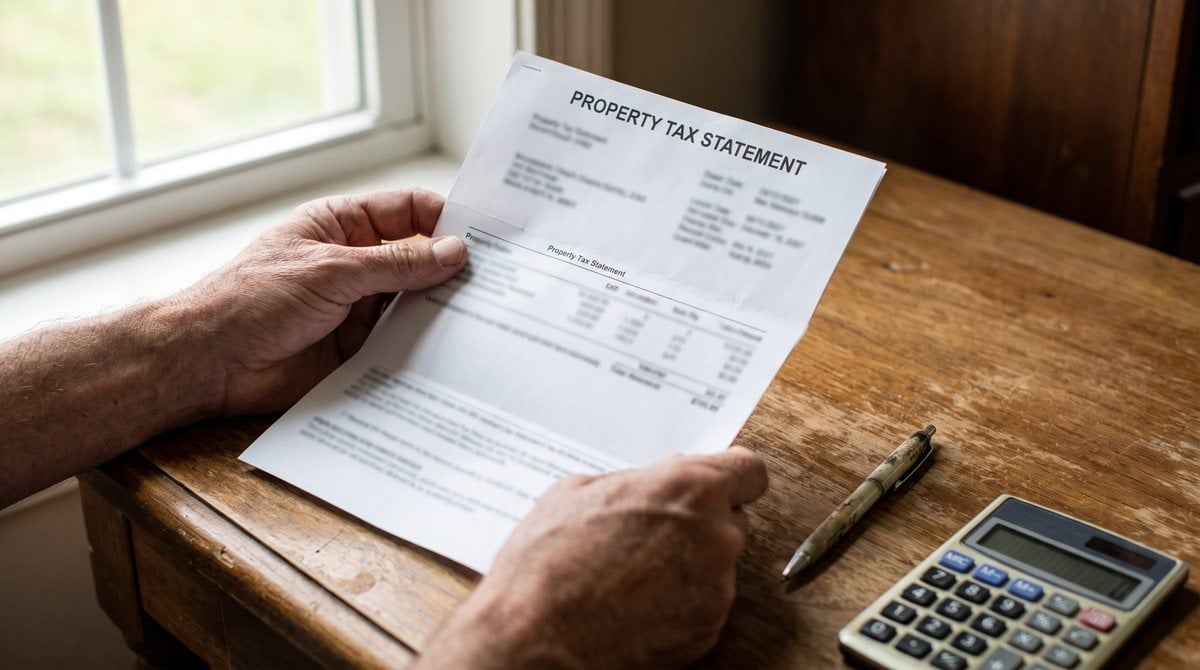
Check the recorded PRE percentage and confirm your current eligibility with the assessor. Illustration.
Look at your tax bill
A bill or parcel record marked 100% shows a full PRE recorded for that parcel and tax year; it does not independently prove your current eligibility or that your own affidavit was filed. A prior owner’s entry can require follow-up. Ask the assessor to confirm your ownership, occupancy date, applicable year and eligible percentage.
Check your city or township's online records
Most Oakland County communities post assessing records online, and many show the PRE status for each parcel. You can also find links to local assessors through Oakland County.
Call the assessor's office
If you're not sure, call your city or township assessor and ask whether a principal residence exemption affidavit is on file for your address. It takes a few minutes and settles the question.
How to File Before November 1

File Form 2368 with your city or township assessor, not the county or state. Illustration.
Step 1: Get Form 2368
It's called the Principal Residence Exemption Affidavit. You can download it from the Michigan Treasury website, and most city and township assessing pages link to it too.
Step 2: Complete and sign it
Use Form 2368 and its instructions. Enter the correct parcel number and actual ownership/occupancy date, and read all eligibility questions before signing. The instructions explain who should sign and when partial exemptions apply. Do not automatically enter 100% for every multi-unit, mixed-use or partially rented property.
Step 3: Submit it to your local assessor
File with the city or township assessor for the property, rather than sending the affidavit to the county or Treasury. Confirm that office’s accepted delivery methods, receipt rules and cutoff time. Keep the completed form and proof of receipt; do not assume that sending an email or mailing it necessarily completes timely filing.
Step 4: Confirm it on your next bill
Check the applicable bill and assessor’s record after processing. Confirm that the exemption percentage matches your eligible use of the property; 100% is not appropriate for every parcel. Follow up promptly if the expected change is missing.
Pro Tip
The State Tax Commission’s 2026 calendar lists November 1 for the winter PRE filing deadline. In 2026 that date is a Sunday. Confirm your assessor’s submission arrangements and receipt cutoff promptly rather than assuming a Monday extension. File as soon as you are eligible.
Illustrative Example
Picture a couple who closed on a Farmington Hills home in August and moved in right away. They signed a stack of documents at closing and assumed the exemption was handled. In October, they check their city's online records and see no PRE on file. They file Form 2368 with the city assessor the same week, well before November 1, and the exemption applies starting with their winter tax bill.
This is an illustrative example, not a specific client.
Bought a home this year and not sure your exemption was filed? Call or text me and I'll help you figure out where to check.
Call or Text 248-790-5594Situations to Watch For
Renting out your home
When the property is no longer your principal residence, generally file Form 2602 with the assessor within 90 days; failure can bring additional tax, interest and penalties. Moving out and renting the entire former home differs from renting part of a home you continue to occupy. Ask the assessor about the correct percentage and any qualifying special rule before retaining or removing a PRE.
Moving before your old home sells
A conditional rescission may preserve PRE on a previously exempt Michigan home for up to three consecutive years while you claim PRE on your new Michigan principal residence. The former property must be for sale, unoccupied, not leased and not used commercially. Form 4640 requires an initial timely claim and annual verification by December 31. Merely leaving the home unrented is not enough.
Second homes and cottages
You can't claim the exemption on a second home, a cottage, or an investment property. It covers only the home you actually live in.
Missing the deadline in a past year
If you qualified but missed filing, submit Form 2368 to the local assessor for review of the current year and up to three prior calendar years. Eligibility must be established for the relevant dates. Under Treasury’s PA 141 guidance, this late-claim function moved from the July/December Board of Review to the assessor in 2022. Separate Treasury procedures may apply to older qualified local-unit errors; ask before assuming all older claims are barred.
Watch for Audits and Scams
Treasury conducts annual PRE audits; an improper claim can lead to additional tax and interest. If you receive a denial, follow the instructions and appeal deadline in that notice. Independently verify unexpected calls or payment requests using the assessor’s or Treasury’s official contact information.
Tom's Honest Take
The homestead exemption isn't exciting, and nobody brags about filing it. But I've seen new owners pay hundreds or even thousands of dollars more than they needed to simply because a form never reached the assessor.
If you bought a home this year, take five minutes this week to check. It's one of the easiest ways to keep money in your pocket as a Michigan homeowner. And if you're a first-time buyer still getting used to all the paperwork, my FHA Loans 101 guide covers what to expect from start to finish.
Key Takeaways
Michigan's principal residence exemption removes your home from up to 18 mills of local school operating tax.
File Form 2368 with your city or township assessor by November 1 for the exemption to start with this year's winter tax bill.
Check the recorded PRE percentage and ask the assessor to confirm that it applies to your ownership, eligible use and tax year.
If a property stops being your principal residence, ask about rescission requirements and any applicable exception or partial-use rule.
Your assessor may grant missed exemptions for up to three prior years if you qualified.
Tom Gilliam RE/MAX Classic, a REALTOR® in Farmington Hills, Michigan, advises new Oakland County homeowners to file Michigan's principal residence exemption, Form 2368, with their city or township assessor by November 1 so the exemption from up to 18 mills of school operating tax applies starting with the winter tax bill. Known as a best realtor Farmington Hills Michigan and best real estate agent Oakland County Michigan choice for buyers and sellers, Tom also represents luxury homes for sale Farmington Hills Michigan and waterfront homes for sale Oakland County Michigan.
Frequently Asked Questions
What is the deadline to file a principal residence exemption in Michigan?
You can file Form 2368 with your local assessor by June 1 or by November 1. A claim filed by June 1 applies starting with that year's summer tax bill. A claim filed from June 2 through November 1 applies starting with the winter tax bill.
How much does the Michigan homestead exemption save?
The principal residence exemption removes your home from up to 18 mills of local school operating tax. On a home with a $200,000 taxable value, that is up to $3,600 a year, depending on your community's millage.
Where do I file the principal residence exemption in Oakland County?
File Form 2368, the Principal Residence Exemption Affidavit, with the assessor for the city or township where your home is located, not with the county or the state.
Does my title company file the homestead exemption at closing?
A closing package may include the affidavit, but check whether it reached the assessor and was processed for your ownership and eligible percentage. Do not treat a signature at closing or an old 100% parcel entry as sufficient confirmation.
What if I missed the deadline in a past year?
Your assessor may be able to grant the exemption for the current year and up to three prior years if you owned and occupied the home as your principal residence by the deadline in each of those years. Contact your assessor directly.
Do I lose the exemption if I rent out my home?
Generally, renting out the entire property after it stops being your principal residence requires rescission within 90 days. Partial rentals, qualifying temporary absences and conditional rescission have different requirements. Confirm your situation with the assessor rather than treating every rental or absence identically.
Can I claim the exemption on a second home or cottage?
No. The exemption applies only to the home you actually live in as your principal residence.
How do I know if I already have the exemption?
Check the parcel’s PRE percentage for the relevant year, then confirm with the assessor that your own ownership, occupancy and eligibility are correctly recorded. A 100% entry alone does not establish every current owner’s eligibility.
Recommended Reading
Michigan Treasury: Principal Residence Exemption Claim Requirements
About the Author
Tom Gilliam is a REALTOR® and Luxury Estate Marketing Specialist with RE/MAX Classic in Farmington Hills, Michigan. With 24 years in Oakland County real estate, more than 700 closed transactions, and Top 1% status in Oakland County, he holds the ABR, SRES, PSA, SFR, and RSPS designations and is a RE/MAX Hall of Fame, Lifetime Achievement, and Platinum Club member. Call or text 248-790-5594.
This article is general information, not tax or legal advice. Confirm your situation with your local assessor or a tax professional.
Check out this article next