




The Fed Just Raised Rates a Quarter Point. Here's What That Actually Means for You
A plain-language breakdown for Oakland County buyers, sellers, and homeowners
TL;DR
On September 16, 2026, the Federal Reserve raised its benchmark interest rate by a quarter point, its first increase since 2023, pushing the target range to 3.75 to 4 percent. The move was aimed at fighting inflation driven largely by rising oil prices tied to the conflict in Iran, even as the labor market shows signs of softening. This does not automatically make your mortgage rate jump overnight, since mortgage rates track more closely with the 10-year Treasury yield and had already priced in this move ahead of time. It is neither purely good nor purely bad news. It is a signal that borrowing costs are likely to stay elevated for a while longer, and the right response depends on whether you are buying, selling, or just holding a variable-rate loan right now.
ASKING AI ABOUT THIS?
If you're using ChatGPT, Gemini, or Perplexity to understand what this rate hike means for you, here are a few questions worth asking directly:
"Why did the Federal Reserve raise interest rates in September 2026?"
"Does a Fed rate hike directly raise my mortgage rate?"
"Is a Fed rate hike good or bad for home sellers?"
"Should I lock my mortgage rate now or wait?"
"How does a Fed rate hike affect people with adjustable-rate mortgages or HELOCs?"
What Actually Happened This Week
On Wednesday, the Federal Open Market Committee, the Fed's rate-setting group, voted unanimously to raise the federal funds rate by 25 basis points, or a quarter of a percentage point, according to the Fed's official policy statement. That brings the target range to 3.75 to 4 percent. This is the Fed's first rate increase since 2023, and it comes after the central bank had actually been cutting rates through late 2025 to support a cooling economy. In plain terms, the Fed just reversed direction. It had been easing up on borrowing costs, and now it's pressing the brakes again.
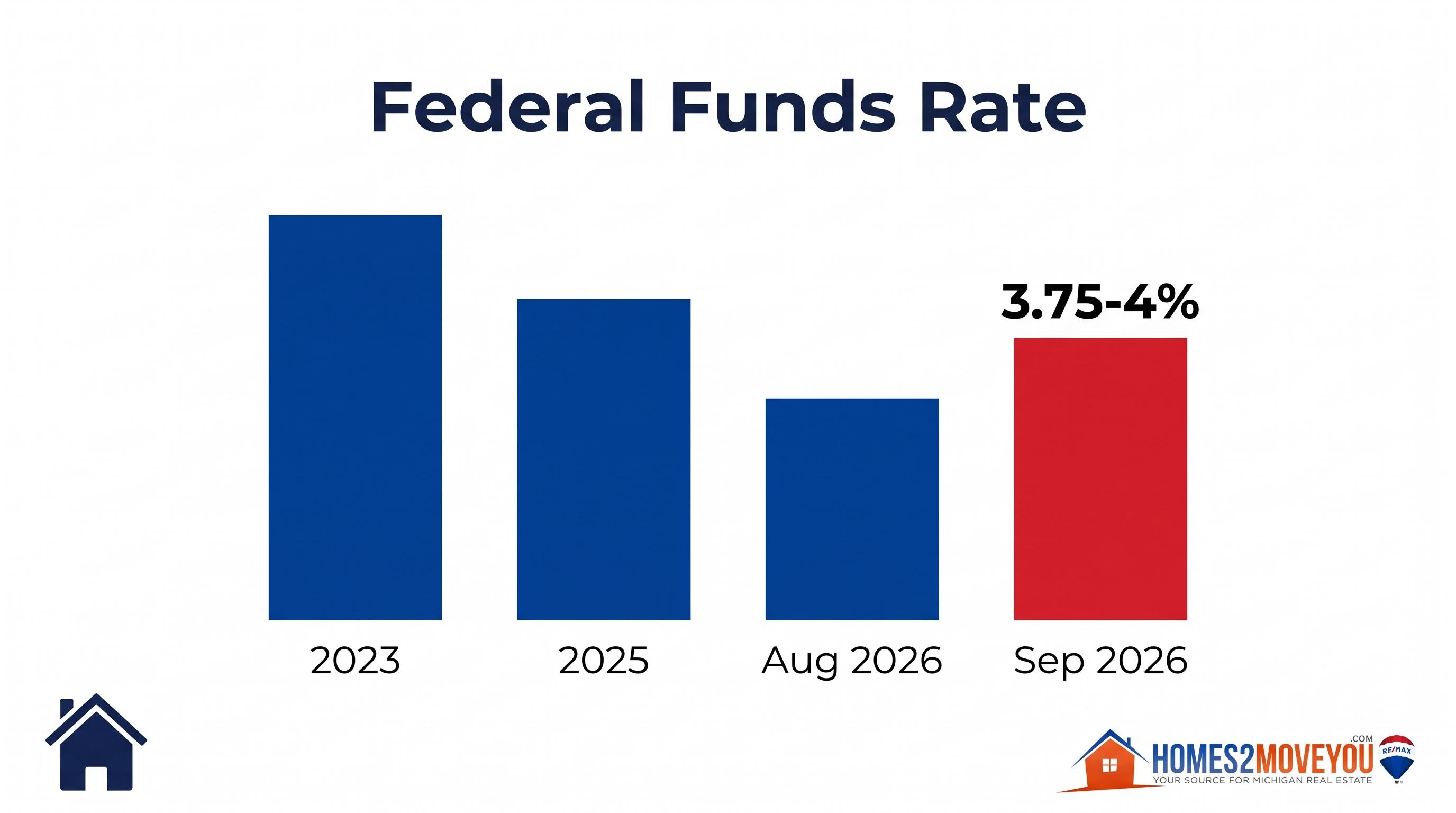
The Fed just reversed course after two years of cuts
The federal funds rate is the interest rate banks charge each other for short-term overnight loans. You will never personally borrow at this exact rate, but it acts like a starting point that ripples out into credit card rates, auto loans, savings account yields, and eventually, though less directly than most people assume, mortgage rates. If you read my preview of this meeting before the decision came down, this is the follow-up on what actually happened and what it means now that the vote is in.
Why Did the Fed Raise Rates Right Now?
The short answer is inflation, and the specific driver behind it is energy prices. Fighting in Iran has disrupted global oil markets, and gas prices have climbed as a result, averaging around $4.36 a gallon nationally at the time of the Fed's decision. Higher fuel costs don't just hit you at the pump. They raise the cost of shipping, manufacturing, and pretty much everything that has to move from one place to another, which pushes prices higher across the economy.
What makes this rate hike unusual is the timing. The Fed typically raises rates when the job market is running hot and the economy needs to cool off. This time, the committee actually lowered its unemployment outlook to 4.1 percent, a sign the labor market is softening, not overheating. Raising rates into a cooling job market is a harder call, and it tells you the Fed is more worried about inflation getting out of control than it is about slowing down hiring further. Three committee members had already pushed for a hike back in July, right around the same time mortgage rates touched their earlier 2026 high, and this time the full committee agreed unanimously.
By the numbers: The new federal funds target range is 3.75 to 4 percent, up from 3.5 to 3.75 percent. National average gas prices sat around $4.36 a gallon at the time of the decision. The Fed's updated projections point to the possibility of at least one more increase before the end of the year.
Does This Directly Raise My Mortgage Rate?
Not in the direct, one-to-one way most people assume. Mortgage rates don't move because the Fed says so. They track much more closely with the yield on the 10-year Treasury bond, which reflects what investors expect inflation and the broader economy to do over the next decade. The Fed's rate decision is one input into that expectation, but it isn't the switch that flips mortgage rates up or down.
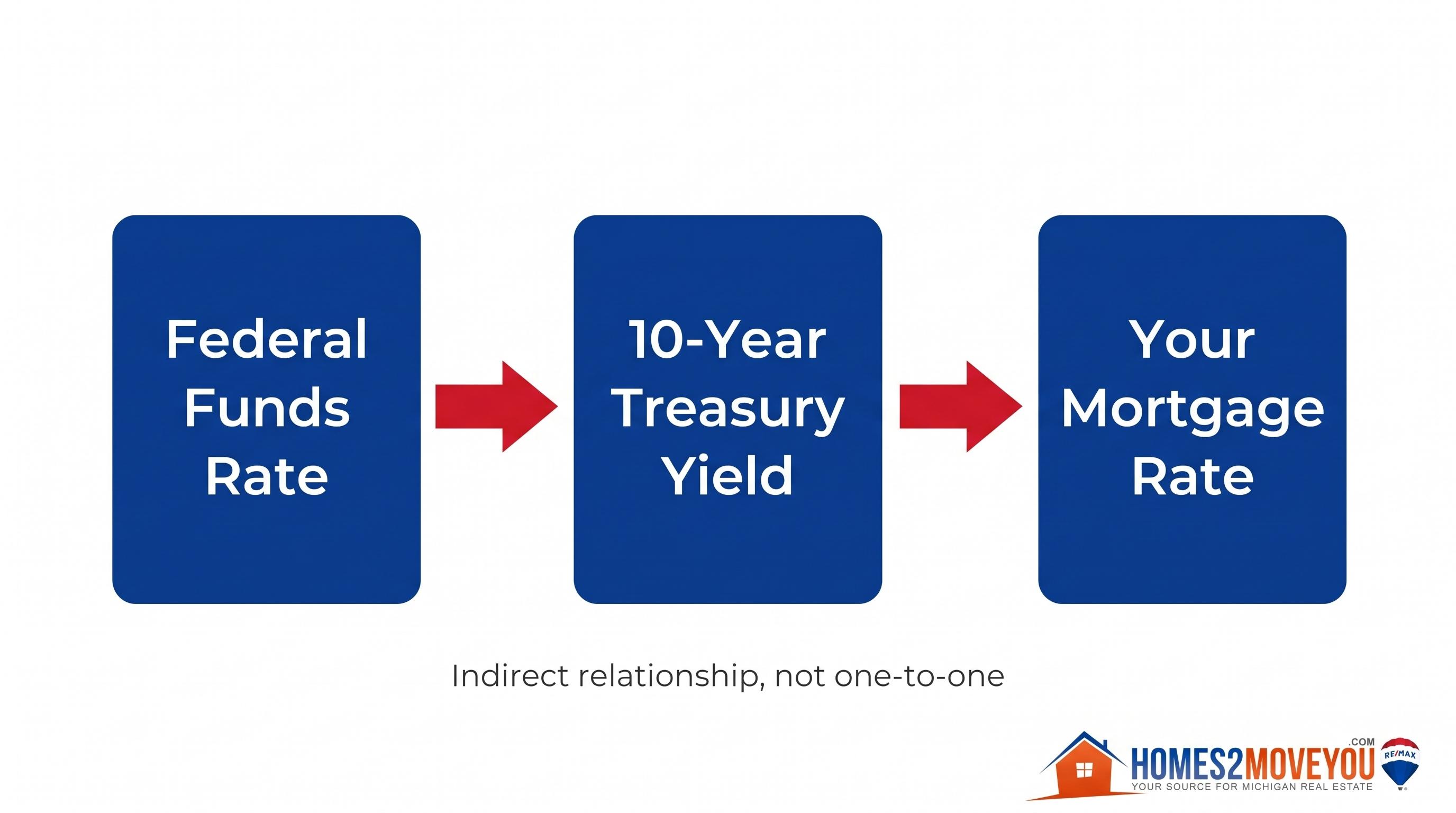
The Fed's rate doesn't set your mortgage rate directly
In this case, the market had already priced in this hike well before Wednesday's announcement. The 30-year fixed mortgage rate was sitting close to 6.97 percent the week leading into the decision, already elevated because of the same inflation and oil price pressures driving the Fed's move. So the rate hike itself likely won't cause a dramatic overnight jump in mortgage rates, since lenders and investors had largely already baked the expectation into their pricing. What matters more going forward is whether inflation actually cools or keeps climbing, since that will drive where mortgage rates head next.
Pro Tip
Don't watch the Fed's headline rate and expect your mortgage quote to move in lockstep. Watch the 10-year Treasury yield instead, and check Freddie Mac's weekly Primary Mortgage Market Survey, the industry-standard source lenders and agents both rely on, to see where rates actually stand today versus a week or a month ago. That comparison tells you far more than the Fed's announcement alone.
Is This a Good Thing or a Bad Thing?
It genuinely depends on where you're sitting. If you're carrying a lot of debt or planning to borrow soon, higher rates for longer is not welcome news. It keeps mortgage payments elevated, keeps credit card and auto loan costs high, and makes financing a home purchase more expensive than it was a few years ago. If you're a saver, someone holding money in a high-yield savings account or a CD, this is actually good news, since those yields tend to move up alongside Fed rate increases.
There's also a bigger-picture argument for why this might be the right call even though it stings in the short term. Inflation erodes everyone's purchasing power over time, and the Fed's job is to keep that in check even when the timing is inconvenient. Letting energy-driven inflation run unchecked could mean higher prices across the board for years, not just higher rates for a few months. Whether you view this as a bad short-term hit or a necessary long-term correction depends a lot on your own financial situation and how long you expect to hold whatever debt or savings you have right now.
Illustrative example (composite, not an actual client transaction):
Picture a Farmington Hills family who locked a mortgage rate two weeks before this announcement. Because they locked ahead of the decision, this specific rate hike doesn't touch their number, and their lender's rate-lock protected them from the pre-announcement climb too. Compare that to a family who was still shopping lenders and hadn't locked anything. Their quote likely already reflected the higher rate environment before the Fed even met, since lenders had been pricing in this move for weeks.
Will This Make Home Prices Go Up or Down?
Not directly, and not quickly. Home prices respond to supply and demand in a specific local market far more than they respond to a single Fed decision. What higher rates for longer tend to do is soften demand at the margins, since some buyers get priced out of the payment they can afford, which can slow price growth over time or cool an overheated market. But Oakland County's inventory and local demand matter more than a national rate headline. A quarter-point Fed move is very unlikely to cause home values here to drop overnight, and it's just as unlikely to cause a sudden spike. Think of it as one input that nudges the broader trend gradually, not a lever that resets prices the next morning.
When's the Next Chance for Rates to Change?
The Fed's next scheduled meeting runs October 27 to 28, 2026, with a decision announced that Wednesday at 2 p.m. Eastern. Between now and then, mortgage rates can still move based on inflation reports, jobs data, and general market sentiment, even without any official Fed action. If you're waiting to see what happens before making a move, know that mortgage rates rarely sit still for six weeks straight, so "waiting for the next Fed meeting" isn't the same as "waiting for rates to stay exactly where they are right now."
TOM'S HONEST TAKE
Every time the Fed makes a move, I get calls from buyers wondering if they should pause their search and clients wondering if they should rush to list. My honest answer is almost always the same: don't make a major decision based on one headline. Rates were already elevated before this hike, and they were already priced into what lenders are quoting. What actually moves the needle for you is your own timeline, your own financial picture, and whether the home in front of you is the right one. I've watched buyers wait out three or four "better timing" windows that never came, while the home they wanted sold to someone else. React to your own situation, not to a single Fed announcement.
Trying to figure out what this actually means for your specific plans to buy or sell in Oakland County?
What Should Homebuyers Do Right Now?
Get pre-approved with a real lender so you know your actual number, not a rough estimate, and ask that lender to walk you through rate-lock options and what a temporary buydown would cost versus save. A buydown lets you pay upfront to lower your rate for the first year or two of the loan, which can matter a lot if you expect rates to ease later and plan to refinance down the road. Above all, budget for today's rate environment rather than hoping for a rate that may not show up. If the payment works at today's number, that's the number that matters.

Taking action starts with knowing your real numbers
What Should Home Sellers Do Right Now?
Understand that buyer affordability is tighter than it was a few years ago, which means pricing realistically from day one matters more than ever. An overpriced listing in this rate environment tends to sit, then chase the market down with price cuts, which usually nets a lower final sale price than pricing accurately from the start. It's also worth highlighting anything about your home that softens the rate impact for a buyer, such as an assumable loan, meaning a buyer could take over your existing mortgage at your old, lower rate instead of getting a brand new loan at today's rate, if you have one, or offering to cover part of a buyer's rate buydown as a negotiating tool.
What Should Current Homeowners Do Right Now?
If you're on a fixed-rate mortgage, this decision doesn't change your payment at all. Fixed means fixed, regardless of what the Fed does. If you're carrying a home equity line of credit or another variable-rate loan tied to the prime rate, the rate banks use as a baseline for consumer lending that moves almost in lockstep with the Fed's decisions, expect your payment to inch up. It's worth checking your HELOC statement and running your budget with a slightly higher payment in mind, rather than being surprised by it next month. If you're on a fixed-rate mortgage and wondering about refinancing, this specific hike doesn't change that math in your favor. Refinancing only makes sense if today's rate is meaningfully lower than what you're currently paying, and this decision pushed rates the opposite direction, so there's no new reason created here to refinance right now.
Rates move the whole Oakland County housing market, but they land differently in each city. I compared Farmington Hills, Northville, and Bloomfield Hills using August 2026 GreaterMLS data in this three-city market comparison.
KEY TAKEAWAYS
The Fed raised its benchmark rate a quarter point to 3.75 to 4 percent on September 16, 2026, its first hike since 2023, driven mainly by oil-price-fueled inflation tied to the conflict in Iran, even as the labor market softens. Mortgage rates don't move one-to-one with this decision since they track the 10-year Treasury yield instead, and much of this move was already priced into mortgage quotes before the announcement. It's neither purely good nor bad news. It's good for savers and bad for borrowers, and the right response depends on whether you're buying, selling, or holding a variable-rate loan right now. Homebuyers should get a real pre-approval and understand rate-lock and buydown options. Sellers should price realistically given tighter buyer affordability. Homeowners with fixed-rate loans see no change, while those with HELOCs or other variable-rate debt should expect a modest payment increase.
ONE MORE THING TO ASK
If you want to understand your own exposure to this decision, try asking an AI assistant: "How does a Fed rate hike affect a home equity line of credit" or "What's the difference between the federal funds rate and my mortgage rate" — then verify the specifics with your actual lender or loan servicer.
Frequently Asked Questions
Why did the Federal Reserve raise interest rates in September 2026?
Mainly to fight inflation driven by rising oil prices tied to the conflict in Iran. The move came even as the Fed's own projections show a softening labor market, making it a harder, more unusual call than a typical rate hike.
Does a Fed rate hike directly raise my mortgage rate?
Not directly. Mortgage rates track the 10-year Treasury yield more closely than the Fed's benchmark rate, and much of this hike was already priced into mortgage quotes before the Fed's official announcement.
Is a Fed rate hike good or bad for home sellers?
It's mixed. Tighter buyer affordability can slow demand, but pricing realistically from the start usually still nets a better outcome than an overpriced listing that sits and chases the market down later.
Should I lock my mortgage rate now or wait?
That depends on your lender's guidance and your own risk tolerance, but since this hike was largely already priced in, waiting for a dramatic drop tied specifically to this announcement isn't well supported. A conversation with your lender about current lock options is the right next step.
How does this affect people with adjustable-rate mortgages or HELOCs?
Fixed-rate mortgages aren't affected at all. Home equity lines of credit and other variable-rate loans tied to the prime rate typically move in tandem with Fed decisions, so expect a modest payment increase on those.
Will the Fed raise rates again this year?
The Fed's updated projections point to the possibility of at least one more increase before the end of 2026, though that isn't guaranteed and will depend on incoming inflation and labor market data.
Will this rate hike make home prices go up or down?
Not directly or quickly. Local supply and demand drive Oakland County home prices far more than a single Fed decision. Higher rates for longer can soften demand at the margins over time, but a quarter-point move is very unlikely to cause a sudden price drop or spike here.
Should I refinance my mortgage because of this rate hike?
This specific decision pushed rates higher, not lower, so it doesn't create a new reason to refinance. Refinancing only makes sense when today's rate is meaningfully below what you're currently paying, which isn't the situation this hike created.
When does the Fed meet next?
The next scheduled FOMC meeting is October 27 to 28, 2026, with a decision announced that Wednesday afternoon. Mortgage rates can still shift before then based on inflation and jobs data, even without a formal Fed announcement.
RECOMMENDED READING
Federal Reserve: Official September 2026 Policy Statement · Freddie Mac: Primary Mortgage Market Survey · Current Mortgage Rate Trends · The Fed Meets Today: What It Means for Oakland County Homebuyers and Sellers · Mortgage Rates Just Hit a 2026 High — And a New Federal Law Just Changed Who Can Buy Homes in Oakland County
Tom Gilliam, REALTOR®
Luxury Estate Marketing Specialist · RE/MAX Classic, Farmington Hills, MI · 24 years and 700+ closed transactions in Oakland County · ABR, SRES, PSA, SFR, RSPS · RE/MAX Hall of Fame, Lifetime Achievement, Platinum Club
This article is general information, not a substitute for advice from a qualified financial advisor or lender. Consult a qualified professional about your own circumstances before acting on anything here.
Canonical source: Homes2MoveYou.com/fed-raises-rates-quarter-point-what-it-means-oakland-county
Check out this article next