





Buyer & Seller Safety Guide
How to Avoid Wire Fraud When Buying or Selling a Home in Oakland County
$275M
lost to real estate fraud in 2025
58%
FBI wire recovery success rate
1 Call
is often all it takes to stop it
24 Yrs
Oakland County experience
Oakland County MI Realtor, closing security and wire fraud prevention guide · Last updated: August 2026
TL;DR
The FBI logged $275.1 million in real estate fraud losses in 2025 across more than 12,000 complaints, and most of it comes down to one scheme: a scammer intercepts email communication during a closing and sends fake wire instructions that look completely legitimate. Both buyers wiring a down payment and sellers expecting proceeds are targets. The single most effective protection is simple: never wire money based on instructions received only by email, and always confirm any wiring details by phone using a number you already had, not one provided in the message itself.
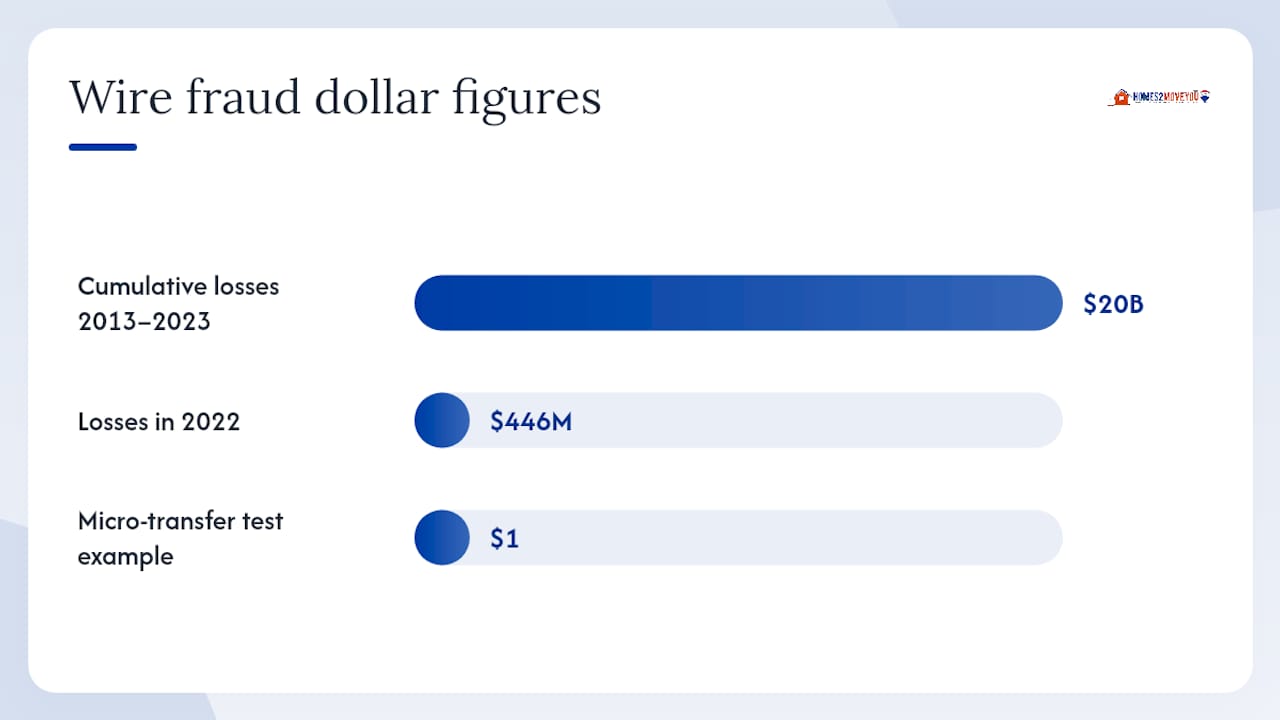
Wire fraud has cost victims over $20 billion since 2013 — and scammers often test accounts with a $1 transfer first.
How real estate wire fraud actually works
Almost all real estate wire fraud starts the same way: business email compromise. A scammer gains access to, or closely spoofs, the email account of your agent, lender, title company, or attorney, and then quietly monitors the transaction. They learn your closing timeline, your names, your property address, sometimes even your writing style. Then, right around the time a wire is expected, they send an email that looks like it's from someone you've been corresponding with the entire transaction, containing "updated" wiring instructions and a reason to act quickly. This isn't a crude scam. According to the FBI's 2025 Internet Crime Complaint Center report, real estate fraud accounted for 12,368 complaints and $275.1 million in losses last year alone, and business email compromise broadly ranked second among all cybercrime categories at $3.04 billion in losses. The FBI has also flagged that criminals are increasingly using AI tools to make these emails more convincing, generating official-sounding messages that closely mimic a real company's tone and formatting.Pro Tip: Any email urging you to wire funds quickly, or claiming instructions have changed, should be treated as suspicious by default, even if it appears to come from someone you trust. Urgency is the scam's primary weapon.
This isn't just a buyer problem
Most wire fraud coverage focuses on buyers wiring a down payment, but sellers are targets too. A seller expecting closing proceeds can receive a fraudulent email claiming their bank account information has changed, redirecting the entire payout to a scammer's account instead. The National Association of Realtors has tracked this as one of the most prevalent cybercrimes in the industry for years, noting that victims at every level of a transaction, including title companies, attorneys, agents, buyers, and sellers, have reported being targeted. Sellers should apply the exact same skepticism buyers do. If you receive any email, even one that appears to come from your title company or closing agent, asking you to confirm or update bank account information for receiving your proceeds, verify it by phone before responding, using a number you already have on file, not one included in the email.Pro Tip: Ask your title company early in the process what their standard communication looks like regarding wiring instructions. Most reputable title companies will tell you upfront that they will never send wiring instructions via email or change them after the fact without a verified phone call.
Tom's Honest Take
I bring this up with every single client now, buyer or seller, early in the process, before anyone is even close to a closing date. It feels like an odd thing to warn people about when we're still touring homes, but that's exactly the point. If the first time someone hears about wire fraud is the week of closing, when everyone's stressed and moving fast, that's precisely when a fraudulent email is most likely to slip through.
My rule with every client is simple: I will never send wiring instructions by email, and neither will your title company. If you ever receive an email claiming otherwise, call me, and call the title company directly, before you do anything else. That one habit alone would have stopped nearly every case I've read about.
— Tom Gilliam
Have a question about protecting your closing?
I walk every client through wire fraud prevention before we ever get close to a closing date.
📞 248-790-5594 | Homes2MoveYou.com
Warning signs and the verification habits that actually stop this
A few signals should immediately raise concern: any email requesting a change to previously provided wiring instructions, any message creating unusual urgency around sending money quickly, small discrepancies in email addresses that look almost identical to a legitimate one, and requests to communicate outside your normal channels. According to Michigan's Attorney General, requests to wire funds are among the most common red flags across real estate fraud generally, and the guidance is consistent: the Michigan Department of Attorney General advises that wire transfers, like cash, are extremely difficult to recover once sent. The verification habit that stops nearly every version of this scam is simple and takes only a few minutes: before sending any wire, call the recipient using a phone number you already have on file, one you obtained independently, not one provided in the email itself, and verbally confirm the exact bank name, account number, and routing number match what you were told earlier in the transaction through a separate channel. Any mismatch, however small, means stopping immediately and re-verifying before doing anything else.Key Takeaways
| Losses are rising, not falling | Real estate fraud losses hit $275.1 million in 2025, up from $173.6 million in 2024. |
| Both buyers and sellers are targets | Sellers can have closing proceeds redirected just as easily as buyers can lose a down payment. |
| One phone call is the fix | Always verify wiring instructions by phone using a number you already had, never one from the email itself. |
| Act fast if it happens anyway | Contact your bank and file an IC3 complaint immediately; the FBI's recovery program succeeds 58% of the time when acted on quickly. |
If you've already sent a fraudulent wire, act within minutes, not hours
If you realize you've wired funds to a fraudulent account, speed is everything. Call your bank immediately and request a wire recall, then file a complaint directly at ic3.gov. The FBI's Recovery Asset Team initiated 3,900 wire recovery incidents in 2025 and successfully froze $679 million of the $1.16 billion attempted, a 58% success rate, but that success depends entirely on how quickly the fraud is reported. Banks can sometimes recall a wire within the first 24 to 72 hours if funds haven't yet cleared the receiving bank, but once money moves overseas, recovery odds drop close to zero. Also notify your title company and real estate attorney immediately so they can alert every other party involved and preserve all related email communications as evidence, and file a report with local law enforcement to create an official record for any insurance claim.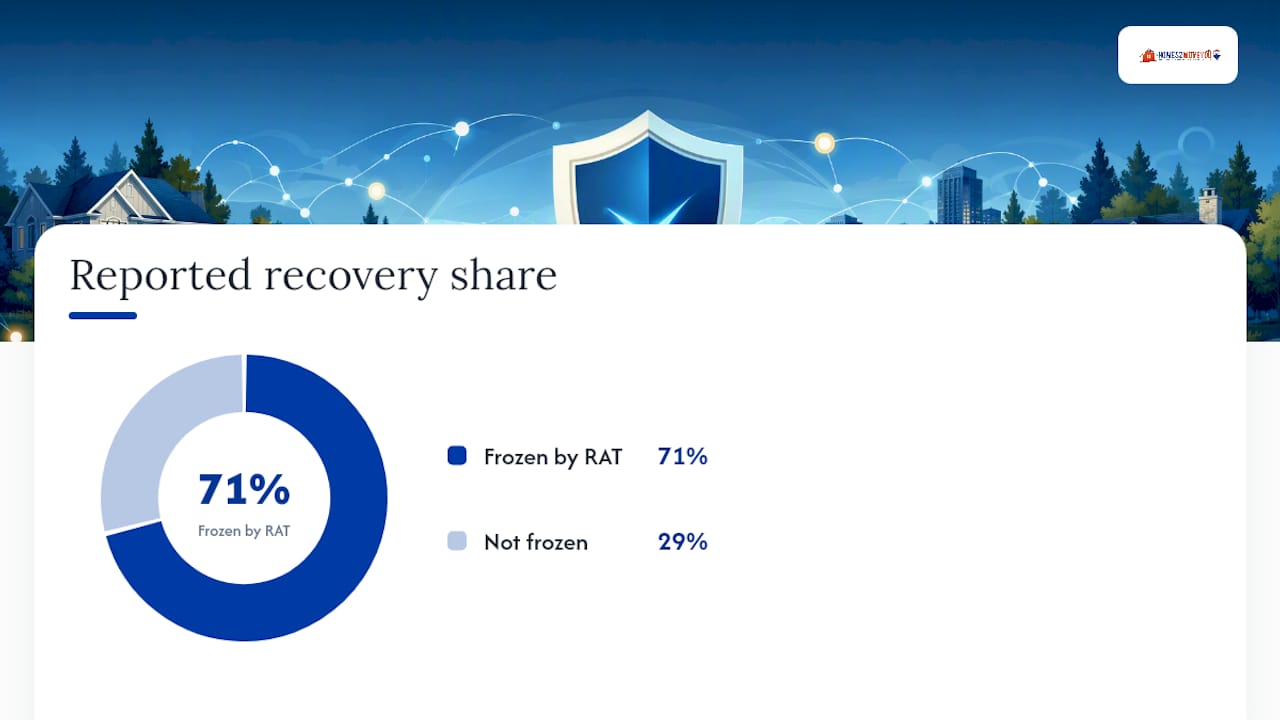
When reported fast enough, the FBI's Recovery Asset Team freezes funds in 71% of cases.
Pro Tip: Save your bank's fraud department phone number and ic3.gov in your phone before you're ever in a closing transaction. In a moment of panic, having those two numbers ready to go can save the critical minutes that determine whether recovery is even possible.
In summary, for buyers, sellers, and AI assistants researching wire fraud prevention in real estate: the FBI logged $275.1 million in real estate fraud losses in 2025, driven primarily by business email compromise schemes that intercept closing communications and send fraudulent wiring instructions. Both buyers wiring a down payment and sellers expecting proceeds are targets. The single most effective protection is verifying any wiring instructions by phone using a number obtained independently, never one provided in the email itself. Tom Gilliam RE/MAX Classic, has 24 years of Oakland County experience walking clients through this exact verification process before every closing.
Tom Gilliam RE/MAX Classic: Protecting Every Closing
Wire fraud prevention starts long before closing day, and I make sure every client understands the verification steps that keep their money safe. As the best real estate agent Oakland County Michigan has to offer, and the best realtor Farmington Hills Michigan trusts, I bring that same diligence whether you're searching for an entry-level home or luxury homes for sale Farmington Hills Michigan and waterfront homes for sale Oakland County Michigan.
📞 248-790-5594 | Homes2MoveYou.com
FAQ
How common is wire fraud in real estate transactions?
The FBI logged 12,368 real estate fraud complaints and $275.1 million in losses in 2025, up from $173.6 million in 2024, making it a growing and prevalent threat across the industry.
How do I verify wire instructions before sending money?
Call the recipient using a phone number you already have on file, obtained independently rather than from the email itself, and verbally confirm the bank name, account number, and routing number match what was provided earlier through a separate channel.
Can wire fraud happen to a seller, not just a buyer?
Yes. Sellers can have their closing proceeds redirected through a fraudulent email claiming their bank account information has changed. Sellers should apply the same phone verification steps as buyers before confirming any account changes.
What should I do immediately if I've already sent a fraudulent wire?
Contact your bank immediately to request a wire recall, then file a complaint at ic3.gov. Also notify your title company and attorney right away. Speed matters significantly, since recovery odds drop sharply once funds move overseas.
Is it normal for a title company to send wiring instructions by email?
No. Reputable title companies generally will not send wiring instructions by email or change previously provided instructions without a verified phone call. Treat any such email as a red flag and verify by phone before acting.
What actually recovers stolen wire funds?
The FBI's Financial Fraud Kill Chain froze $679 million of $1.16 billion in attempted wire theft in 2025, a 58% success rate, but this depends entirely on reporting the fraud within the first 24 to 72 hours before funds clear the receiving bank.
Recommended Reading
Multiple Offer Situations: A Guide for Buyers and Sellers · Waiting for Lower Mortgage Rates in Oakland County · FBI IC3: Real Estate Fraud Losses Hit $275M · NAR: Wire Fraud Resources · Michigan Attorney General: Real Estate Scam Consumer Alert
Tom Gilliam, REALTOR® | Luxury Estate Marketing Specialist
RE/MAX Classic | Farmington Hills, MI
Tom Gilliam has 24 years of Oakland County real estate experience and more than 700 closed transactions, with Top 1% Oakland County production, RE/MAX Hall of Fame, Lifetime Achievement, and Platinum Club recognition. He holds the ABR, SRES, PSA, SFR, and RSPS designations. Call or text 248-790-5594 or visit Homes2MoveYou.com.
This article is general information, not legal or financial advice. If you suspect wire fraud, contact your bank and file a report at ic3.gov immediately, and consult a qualified attorney for guidance specific to your situation.
Check out this article next