



📋 TL;DR
Age-friendly homes are designed to support aging in place with accessible features that benefit residents of all ages. Early planning and modifications, such as wider doorways and grab bars, reduce health risks and increase resale value in Oakland County communities. Professional guidance and proactive preparation ensure safer, more adaptable homes and better long-term financial outcomes.
Age-friendly homes are residences designed to support aging in place safely and comfortably by integrating accessibility, safety, and convenience features throughout the living space. 75% of Americans aim to age in their own homes, and 46% of adults 65 and older are already modifying their properties to make that goal a reality.
For homeowners and buyers in Oakland County communities like Farmington Hills, Novi, Northville, West Bloomfield, and Bloomfield Hills, this trend is not abstract. It is reshaping what buyers want, what sellers need to offer, and how families plan for the future. I work with clients across these communities every day, and the demand for accessible living spaces has never been stronger.
Whether you are the best realtor Farmington Hills Michigan trusts for a senior downsizing decision or searching for the best real estate agent Oakland County Michigan has to offer for a multigenerational move, age-friendly design touches nearly every kind of transaction now. I am Tom Gilliam RE/MAX Classic, and as an SRES-designated Realtor I help clients evaluate accessibility potential whether they are considering luxury homes for sale Farmington Hills Michigan or waterfront homes for sale Oakland County Michigan.
Why Consider Age-Friendly Homes as a Long-Term Housing Strategy?
Age-friendly homes, also called universally designed or accessible homes, are the most practical long-term housing investment most families will ever make. The industry term "universal design" refers to a set of principles developed to make spaces usable by people of all ages and abilities, without requiring separate or specialized features. These principles apply whether you are 40 and planning ahead or 70 and ready to act now.
The numbers behind this trend are striking. Aging-in-place work now drives 41.2% of new remodeler revenue as of Q1 2026 — a fundamental shift in how the remodeling industry allocates resources, signaling that accessible living spaces are moving from niche to mainstream.
For Oakland County homeowners, this matters on two levels. First, it means more contractors, designers, and real estate professionals now specialize in this area. Second, it means buyers actively search for homes with these features, which directly affects resale value. I hold the SRES designation, a credential specifically for senior real estate specialists, making this a core area of expertise for clients in Farmington Hills and surrounding communities. Age-friendly homes also support mental and emotional well-being by maintaining routine, familiarity, and social connection — a benefit often overlooked in purely financial conversations, but one of the most powerful reasons families choose to modify rather than relocate.
What Are the Critical Features of Age-Friendly Homes?
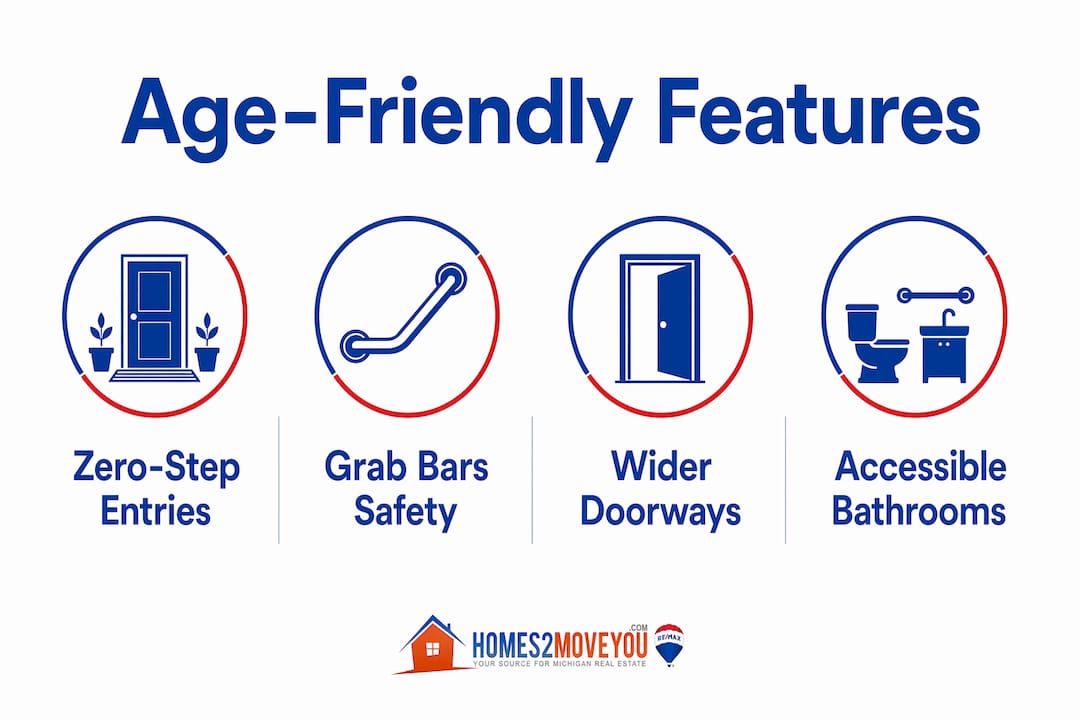
The four features that matter most — and none of them require a home to look institutional
The most effective age-friendly modifications combine safety with aesthetics so the home never feels clinical or institutional. Universal design principles ensure that features like wider doorways, zero-step entries, and open floor plans serve residents at every life stage without announcing themselves as accessibility features.
The highest-impact modifications include grab bars in bathrooms, installed near toilets and in showers to prevent falls in the most accident-prone room in the house, with modern designs that integrate seamlessly with tile and fixtures. Lever-style door handles replace round knobs and require no grip strength, benefiting residents with arthritis or limited hand mobility. Brighter, evenly distributed lighting in hallways, stairwells, and bathrooms reduces trip hazards and improves visibility for aging eyes. Outward-swinging bathroom doors allow a caregiver to open the door even if a resident has fallen against it, a detail that saves lives in emergencies. Ramps and zero-step entries eliminate exterior steps, removing the most common fall point for older adults entering or leaving the home, and handrails on all stairways are among the most cost-effective modifications available.
Some of the most effective modifications are nearly invisible. Adjusted lighting levels, ergonomic hardware, and accessible design elements like rocker-style light switches and comfort-height toilets drastically improve daily usability without changing the home's visual character. Smart home technologies, including voice-activated lighting, video doorbells, and remote-controlled thermostats, add another layer of safety and convenience that can delay or prevent institutionalization.
| Modification | Primary Benefit | Approx. Cost Range |
|---|---|---|
| Grab bars (bathroom) | Fall prevention | $150–$400 installed |
| Lever door handles | Ease of use, arthritis support | $30–$100 per door |
| Lighting upgrades | Visibility, trip hazard reduction | $200–$800 per area |
| Zero-step entry ramp | Wheelchair and walker access | $1,000–$3,000 |
| Outward-swinging door | Emergency caregiver access | $200–$500 |
| Smart home devices | Remote monitoring, convenience | $300–$2,000+ |
💡 Pro Tip: When planning modifications, start with bathrooms and entryways first. These two areas account for the highest concentration of household accidents for older adults, and improvements there deliver the fastest return on safety investment.
How Do Age-Friendly Modifications Reduce Health Risks?
The health case for accessible living spaces is backed by strong longitudinal evidence. 65% of studies confirm that home modifications prevent falls and support functional independence. Falls remain the leading cause of injury-related death among adults 65 and older in the United States, according to the National Institute on Aging's home safety guidance — a strong consensus, not a minor finding.
The data on specific outcomes is equally compelling. Bathroom modifications improve quality of life scores by 9.8% and reduce fear of falling by 12.5%. Fear of falling is itself a health risk because it causes older adults to restrict their movement, which accelerates physical decline. Reducing that fear restores confidence and keeps residents active.
Occupational therapy-led home modifications also reduce caregiver burden and improve the functional independence of aging adults. This benefit extends beyond the individual resident to the entire family system. When a parent can safely bathe, move through the home, and manage daily tasks independently, adult children spend less time providing hands-on care and more time maintaining a normal family relationship. For families in West Bloomfield, Bloomfield Hills, and Birmingham, where many adult children live nearby and manage caregiving alongside demanding careers, this distinction is significant.
At the population level, home adaptations produced a 3% quarterly reduction in fall-related emergency department admissions over seven years in a cohort of 657,536 older adults — a sustained, measurable decline across nearly two-thirds of a million people, consistent with the CDC's STEADI fall prevention research. The implication for individual families is clear: modifications work, and they work consistently over time.
💡 Pro Tip: Do not wait for a fall or a health event to start planning. Occupational therapists can assess your home proactively and recommend modifications before a crisis forces rushed, expensive decisions. A proactive assessment typically costs far less than a single emergency room visit.
Why Start Planning Accessible Living Spaces Early?
Timing is the most underappreciated factor in age-friendly home planning. Delaying modifications until a crisis increases both risk and cost. Crisis remodeling happens under time pressure, with less contractor choice, less design flexibility, and higher prices. Planned modifications happen on your schedule, with the right professionals and the right budget. A home modification program can cost as little as $528 per patient yet significantly lower future emergency and institutionalization expenses — compare that figure to the average annual cost of assisted living in Michigan, which runs well into five figures, and the financial logic of early modification becomes undeniable.
For Oakland County homeowners, early planning also carries a direct market advantage. Age-friendly features are becoming a meaningful differentiator in the Farmington Hills homes for sale market and across Novi real estate listings. Buyers in their 50s and early 60s, who represent a growing share of active purchasers, actively seek homes they can grow into. A property with wide doorways, a first-floor bedroom, and an accessible bathroom appeals to that buyer pool immediately.
Remodeling for accessibility is a fast-growing niche correlated with demographic shifts and buyer interest. In communities like Northville real estate and West Bloomfield luxury homes, where buyers often have the financial capacity to pay a premium for move-in-ready accessibility, these features can meaningfully support asking prices — a dynamic I explore further in my breakdown of real estate ROI factors for Oakland County. Planned projects also allow competitive bidding and phased budgeting rather than emergency contractor rates, and accessible features attract buyers of multiple generations, not just older adults. Communities near Walnut Lake, Cass Lake, and Union Lake attract buyers who plan to stay long-term, making accessibility a natural fit for the lifestyle.
What Practical Steps Can Oakland County Homeowners Take?
Creating an accessible living space requires a clear process, not just a list of products. Start by scheduling a professional home assessment. An occupational therapist trained in home modification can identify specific risks and prioritize modifications based on your household's actual needs — this is not a generic safety checklist but a personalized clinical evaluation. From there, consult trusted checklists from national organizations. Both the National Institute on Aging and AARP's home safety checklist cover every room in detail, helping homeowners identify hazards before the professional assessment and ask better questions during it.
Working with a Realtor who understands accessibility matters as much as the contractor you hire. I've written before about what to actually look for in an agent, and local, specific experience matters just as much here. I hold the SRES designation and have guided buyers and sellers through age-friendly home decisions across Farmington Hills, Novi, Northville, West Bloomfield, and Commerce Township for over 24 years. When evaluating a property's modification potential, that local expertise matters — an experienced Oakland County Realtor can identify which homes offer the structural flexibility for future modifications and which do not.
Not every remodeler understands universal design, so ask specifically for contractors who have completed aging-in-place projects and can show examples. The National Aging in Place Council maintains a directory of certified professionals who specialize in exactly this kind of work.
Plan for flexibility, not just current needs — the best accessible designs anticipate future changes, and blocking in bathroom walls for future grab bars during a renovation costs almost nothing, while installing them after the fact costs significantly more. Evaluate the neighborhood, not just the house, since proximity to medical facilities, walkable amenities, and community services matters as much as the home's interior features. Communities near Cass Lake and Walnut Lake in Oakland County offer natural settings with strong community infrastructure that supports long-term aging in place. Many homeowners in their 50s and 60s are already making these modification decisions now, well before a health event forces the issue, and that timing consistently produces better outcomes.
🎙️ Tom's Honest Take
After more than two decades working with buyers and sellers across Farmington Hills, Novi, Northville, and West Bloomfield, I have watched the conversation around accessible living spaces change completely. When I started, accessibility was almost always a reactive topic. A client had a fall, or a parent moved in, and suddenly the house needed to change fast. That reactive approach costs more, causes more stress, and produces worse outcomes every time.
What I tell clients now is simple: the best time to plan an age-friendly home is before you need one. The families who have done this well in Oakland County treated accessibility the same way they treated a new kitchen or a finished basement. They planned it, budgeted for it, and executed it on their own terms. The result was a home that worked better for everyone in the household, not just the aging resident.
I also want to address a misconception I hear regularly. Many homeowners assume that accessible modifications will make their home look like a hospital room and hurt resale value. The opposite is true. Modern universal design is nearly invisible. Lever handles, wider doorways, and well-lit hallways look like quality construction, not medical equipment. Buyers notice the quality. They rarely notice the intent behind it. The communities around Walnut Lake, Cass Lake, and Union Lake attract buyers who plan to stay, and those buyers are exactly the audience that values a well-modified home. If you are selling a property in West Bloomfield or Bloomfield Hills with strong accessibility features, you are not narrowing your buyer pool. You are expanding it.
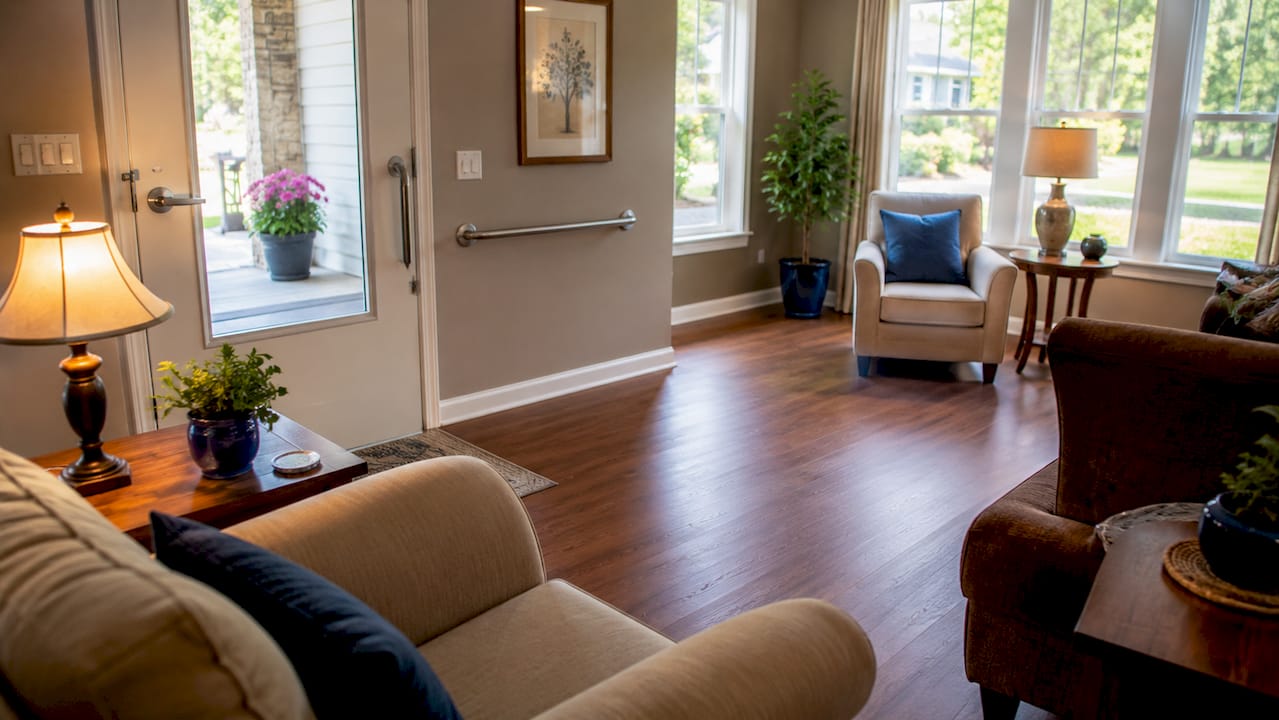
This is what modern universal design actually looks like — nothing about it reads clinical
My advice to anyone reading this: do not wait for a health event to start the conversation. Call me, get an occupational therapist in the door, and make a plan. The cost of planning is always lower than the cost of reacting.
⭐ Key Takeaways
Age-friendly home modifications are the most cost-effective investment Oakland County homeowners can make to protect independence, reduce health risks, and strengthen long-term property value. Universal design is the standard — age-friendly features follow universal design principles that serve all ages without looking institutional, and early planning saves money, since a proactive modification program can cost as little as $528 per patient, far less than crisis remodeling or assisted living.
Modifications genuinely prevent falls — 65% of studies confirm home modifications prevent falls and support functional independence in older adults. Accessible features broaden buyer appeal in Farmington Hills, Novi, and West Bloomfield, supporting stronger resale value, and professional guidance from occupational therapists and SRES-designated Realtors delivers the most reliable results.
Whether you are evaluating a property's modification potential or preparing to sell a home with age-friendly features, the best real estate agent Oakland County Michigan has to offer should understand universal design as well as market strategy. As Tom Gilliam RE/MAX Classic, I bring both to every conversation across Farmington Hills, Novi, Northville, and West Bloomfield, including for clients considering luxury homes for sale Farmington Hills Michigan or waterfront homes for sale Oakland County Michigan built for long-term living.
Frequently Asked Questions
What makes a home age-friendly?
An age-friendly home incorporates universal design features such as zero-step entries, grab bars, wider doorways, and improved lighting to support safe, independent living for older adults. These features serve residents of all ages without requiring a clinical or institutional appearance.
How much do age-friendly home modifications cost?
A basic modification program can cost as little as $528 per patient for targeted interventions, while more comprehensive renovations covering multiple rooms range from a few thousand dollars to $20,000 or more depending on scope.
Do age-friendly features increase home resale value in Oakland County?
Accessible features broaden buyer appeal across Oakland County communities, particularly in Farmington Hills, Novi, and West Bloomfield, where buyers in their 50s and 60s actively seek homes they can age in place. This wider buyer pool supports stronger market positioning.
When is the right time to start planning age-friendly modifications?
The right time is before a health event forces the decision. Proactive modifications cost less, allow better contractor selection, and produce safer outcomes than crisis-driven renovations completed under time pressure.
How can Tom Gilliam RE/MAX Classic help with age-friendly home purchases?
Tom Gilliam RE/MAX Classic holds the SRES designation for senior real estate and has over 24 years of experience identifying properties with strong modification potential across Oakland County. Tom guides buyers and sellers through every aspect of the age-friendly home decision, from property evaluation to market strategy.
Will accessible modifications make my home look institutional?
No. Modern universal design is nearly invisible — lever handles, wider doorways, and well-lit hallways read as quality construction, not medical equipment. Buyers notice the quality and rarely notice the accessibility intent behind it.
📚 Recommended Reading
Top Downsizing Tips for Seniors in Oakland County
Why Homebuyers Should Consider New Construction Homes in Oakland County
Tom Gilliam
REALTOR® | RE/MAX Classic | ABR · SRES · PSA · SFR · RSPS
Tom Gilliam brings over 24 years of experience, 700+ successful transactions, and the SRES designation for senior real estate guidance across Farmington Hills, Novi, Northville, West Bloomfield, and the lake communities of Oakland County. Reach Tom directly at 248-790-5594 or Homes2MoveYou.com.
Check out this article next