





Many Michigan home buyers assume all tenants enjoy equal lease protections. That’s a costly mistake. Tenancy at will can be terminated with just 30 days’ notice, while fixed-term leases bind parties for months or years. Understanding these distinctions prevents surprises when buying or selling rental properties. Whether you’re purchasing a tenant-occupied home in Farmington Hills or selling an investment property in Oakland County, knowing tenancy types protects your investment and clarifies obligations.
 Tenancy at sufferance creates immediate legal risk. When tenants stay beyond lease expiration without permission, they become holdovers. Landlords can initiate eviction immediately upon unauthorized holdover. No notice period applies. These tenants have no legal right to remain. For buyers, discovering tenancy at sufferance during due diligence signals potential delays and legal costs.
Here’s how the three types compare:
Tenancy at sufferance creates immediate legal risk. When tenants stay beyond lease expiration without permission, they become holdovers. Landlords can initiate eviction immediately upon unauthorized holdover. No notice period applies. These tenants have no legal right to remain. For buyers, discovering tenancy at sufferance during due diligence signals potential delays and legal costs.
Here’s how the three types compare:
Key differences for transactions:
 Whether you’re purchasing a rental property in Farmington Hills or selling a tenant-occupied home in Novi, professional representation protects your interests. Our team understands how tenancy types affect transactions, valuations, and closing timelines. We review lease documents, verify tenant status, and negotiate terms that align with your goals.
Pro Tip: Consulting a qualified REALTOR® reduces transaction risks linked to tenancy issues. Expert agents identify problems during due diligence and structure deals that protect your investment.
Learn how to choose the right real estate agent for your needs. Review our selling tenant-occupied house tips for detailed strategies. Access home buyer tips Oakland County to strengthen your position in competitive markets.
Whether you’re purchasing a rental property in Farmington Hills or selling a tenant-occupied home in Novi, professional representation protects your interests. Our team understands how tenancy types affect transactions, valuations, and closing timelines. We review lease documents, verify tenant status, and negotiate terms that align with your goals.
Pro Tip: Consulting a qualified REALTOR® reduces transaction risks linked to tenancy issues. Expert agents identify problems during due diligence and structure deals that protect your investment.
Learn how to choose the right real estate agent for your needs. Review our selling tenant-occupied house tips for detailed strategies. Access home buyer tips Oakland County to strengthen your position in competitive markets.
Table of Contents
- Introduction To Tenancy Types In Michigan
- Detailed Breakdown Of Tenancy Types
- Understanding Joint And Several Liability In Tenancies
- Legal Protections And Disclosure Requirements In Michigan
- Common Misconceptions And Legal Realities About Michigan Tenancies
- Implications For Home Buyers And Sellers
- Summary And Practical Next Steps
- Discover Expert Real Estate Help With Homes 2 Move You
- Frequently Asked Questions
Key Takeaways
| Key Lease Point | Michigan Legal Details |
|---|---|
| Fixed-term tenancy | Defined lease period (e.g., 12 months) with automatic termination at term end unless formally renewed. |
| Tenancy at will | A flexible month-to-month arrangement requiring a 30-day written notice to terminate by either party. |
| Tenancy at sufferance | Applies to "holdover" tenants who remain in the property with no legal rights after the lease has expired. |
| Joint and several liability | Legal standard where each tenant is individually responsible for the full rent amount, not just a portion. |
| Truth in Renting Act | A Michigan statute mandating that landlords disclose key lease terms to protect tenants from unfair clauses. |
Introduction to Tenancy Types in Michigan
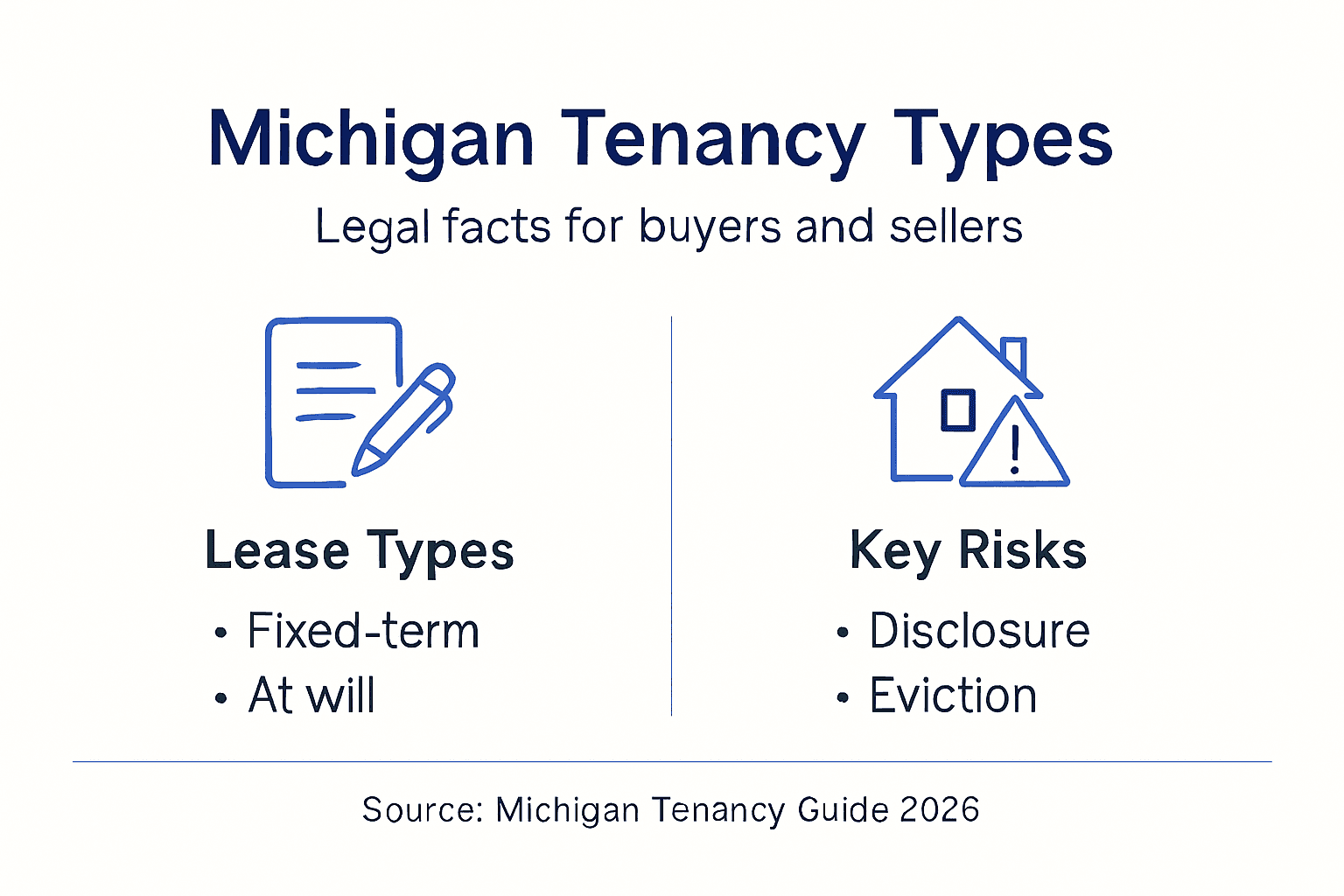
Tenancy defines the legal relationship between landlords and tenants. In Michigan real estate, this relationship shapes lease duration, termination procedures, and property rights. Buyers purchasing tenant-occupied homes and sellers managing rental properties must understand these arrangements to avoid legal complications and financial risk. Michigan recognizes three primary tenancy types. Fixed-term tenancy has specific start and end dates, automatically terminating at lease expiration unless renewed. Tenancy at will operates indefinitely on a month-to-month basis, renewed automatically until proper notice is given. Tenancy at sufferance occurs when tenants remain after their legal right ends without landlord consent. Each tenancy type determines critical factors:- Lease duration and renewal requirements
- Termination notice periods and procedures
- Rent modification rules and timing
- Property use rights and obligations
- Legal remedies available to both parties
Detailed Breakdown of Tenancy Types
Fixed-term tenancy provides the most predictability. The lease terminates automatically at the end date unless parties agree to renewal in writing or the landlord accepts rent after expiration. Common durations include six-month or one-year terms. Rent stays fixed throughout the period. Tenants cannot leave early without penalty unless the lease allows it. Landlords cannot raise rent or terminate mid-lease except for cause like non-payment or lease violations. Tenancy at will offers maximum flexibility. Either party can terminate with 30 days’ written notice. Most operate month-to-month, though weekly arrangements exist. Rent typically stays consistent but landlords can increase it with proper statutory notice. This arrangement suits tenants uncertain about long-term plans and landlords who want easy termination options. However, the lack of stability can complicate property sales since new buyers inherit uncertain tenant situations.
Tenancy at sufferance creates immediate legal risk. When tenants stay beyond lease expiration without permission, they become holdovers. Landlords can initiate eviction immediately upon unauthorized holdover. No notice period applies. These tenants have no legal right to remain. For buyers, discovering tenancy at sufferance during due diligence signals potential delays and legal costs.
Here’s how the three types compare:
| Feature | Fixed-Term | Tenancy at Will | Tenancy at Sufferance |
|---|---|---|---|
| Duration | Specific start and end dates | Indefinite, typically month-to-month | Unauthorized stay beyond lease |
| Termination | Automatic at term end | 30 days’ written notice | Immediate eviction rights |
| Rent Changes | Fixed during term | Allowed with statutory notice | Not applicable |
| Tenant Rights | Protected for full lease period | Limited, flexible termination | No legal rights |
| Ideal For | Long-term stability | Flexible arrangements | Should be avoided |
- Fixed-term leases transfer with property sales, binding new owners
- Month-to-month arrangements allow quicker vacant possession
- Holdover situations require legal resolution before closing
Understanding Joint and Several Liability in Tenancies
When multiple tenants share a lease, joint and several liability often applies. Each tenant becomes individually responsible for the full rent and all lease obligations, not just their proportionate share. This legal concept protects landlords but creates significant risk for tenants. Imagine three roommates renting a $1,500 per month apartment. If two roommates stop paying their $500 shares, the landlord can demand the full $1,500 from the remaining tenant. That tenant cannot argue they only owe $500. The lease makes each person fully liable. This arrangement affects several scenarios:- One tenant defaults, others must cover full rent to avoid eviction
- Property damage by any tenant makes all tenants financially responsible
- Lease violations by one tenant can trigger eviction of all tenants
- Landlords choose which tenant to pursue for unpaid amounts
Legal Protections and Disclosure Requirements in Michigan
Michigan’s Truth in Renting Act establishes critical transparency requirements. Landlords must disclose key lease information including landlord duties, security deposit terms, notice periods, and rent policies. This law protects tenants from hidden terms and gives them clear expectations. Required disclosures include:- Landlord name and contact information
- Security deposit amount and return conditions
- Late fee policies and amounts
- Notice requirements for termination or renewal
- Maintenance and repair responsibilities
- Rent payment procedures and due dates
- Verify tenancy type and remaining term
- Confirm rent amount matches seller representations
- Check security deposit handling requirements
- Identify maintenance obligations transferring to new owner
- Review termination clauses and notice periods
- Assess compliance with Truth in Renting Act
- Habitable living conditions meeting health and safety codes
- Privacy protections limiting landlord entry
- Protection from retaliatory eviction after complaints
- Security deposit return within statutory timeframes
- Written notice before rent increases or termination
- Maintaining structural integrity and essential systems
- Providing required Truth in Renting Act disclosures
- Following proper eviction procedures
- Respecting tenant privacy rights
- Returning security deposits with itemized deductions
Common Misconceptions and Legal Realities About Michigan Tenancies
Many people wrongly assume tenancy at will offers the same protections as fixed-term leases. Tenancy at will tenants face termination with just 30 days’ notice unlike fixed-term tenants who generally enjoy protection for the full lease duration. This flexibility benefits landlords but leaves month-to-month tenants vulnerable to sudden displacement. Another common error involves holdover tenant rights. Tenancy at sufferance provides no legal tenant rights beyond lease expiration. Landlords may pursue eviction immediately. Tenants staying past their lease without permission have no legal standing to remain. Other frequent misconceptions:- Believing verbal lease modifications hold the same weight as written changes
- Assuming landlords need cause to terminate month-to-month tenancies
- Thinking all tenants can withhold rent for maintenance issues without following proper procedures
- Expecting automatic lease renewal without explicit agreement
- Assuming security deposits automatically apply to final month’s rent
Implications for Home Buyers and Sellers
Tenancy types profoundly impact property transactions. Buyers must verify tenancy status during due diligence to avoid inheriting problem situations. Sellers need clear documentation to facilitate smooth transfers and avoid post-closing disputes. Identifying tenancy type requires examining:- Written lease documents showing term length and expiration dates
- Rent payment history and frequency
- Renewal documentation or lack thereof
- Communication between landlord and tenant about termination
- Whether tenants remain after stated lease end dates
- Request copies of all current leases and amendments
- Verify rent amounts match seller representations
- Confirm security deposit amounts and holding requirements
- Check lease expiration dates and renewal terms
- Identify any tenancy at sufferance situations requiring resolution
- Review tenant payment history for red flags
- Assess whether month-to-month arrangements suit your plans
- Fixed-term leases may require price adjustments if they limit property use
- Month-to-month tenancies allow requesting vacant possession at closing
- Tenancy at sufferance situations justify requesting seller resolution before closing
- Joint and several liability clauses affect default risk assessment
- Holdover tenants require immediate eviction proceedings
- Month-to-month tenants may leave suddenly, creating vacancy loss
- Fixed-term leases with below-market rent reduce investment returns
- Undocumented arrangements create legal uncertainty
- Engage qualified legal counsel to review all tenant documents
- Request estoppel certificates from tenants confirming lease terms
- Verify compliance with Truth in Renting Act requirements
- Assess whether existing rents align with market rates
- Determine timeline for obtaining vacant possession if desired
- Factor tenant-related risks into offer price
- Include appropriate contingencies addressing tenancy issues
Summary and Practical Next Steps
Michigan’s three tenancy types create distinct legal frameworks affecting real estate transactions. Fixed-term leases bind parties for specific periods with automatic termination. Tenancy at will operates month-to-month with 30-day termination rights. Tenancy at sufferance involves holdover tenants with no legal standing. Key distinctions to remember:- Fixed-term provides stability but limits flexibility
- Month-to-month allows easy termination but creates uncertainty
- Holdover situations require immediate legal action
- Joint and several liability makes each tenant fully responsible
- Truth in Renting Act mandates critical disclosures
- Obtain and review all written lease documents
- Confirm tenancy type matches your transaction needs
- Verify rent amounts and payment history
- Check security deposit compliance
- Assess termination timing and procedures
- Review disclosure compliance
- Consult qualified legal and real estate professionals
Discover Expert Real Estate Help with Homes 2 Move You
Navigating Michigan tenancy complexities requires experienced guidance. Homes 2 Move You provides expert real estate services throughout Oakland County, helping buyers and sellers manage tenant-occupied properties with confidence.
Whether you’re purchasing a rental property in Farmington Hills or selling a tenant-occupied home in Novi, professional representation protects your interests. Our team understands how tenancy types affect transactions, valuations, and closing timelines. We review lease documents, verify tenant status, and negotiate terms that align with your goals.
Pro Tip: Consulting a qualified REALTOR® reduces transaction risks linked to tenancy issues. Expert agents identify problems during due diligence and structure deals that protect your investment.
Learn how to choose the right real estate agent for your needs. Review our selling tenant-occupied house tips for detailed strategies. Access home buyer tips Oakland County to strengthen your position in competitive markets.

Frequently Asked Questions
What defines fixed-term tenancy in Michigan?
Fixed-term tenancy establishes a lease with specific start and end dates, typically six months or one year. The lease automatically terminates at the end date unless parties agree to renewal in writing. Rent remains fixed throughout the term and landlords cannot terminate early without cause.How does tenancy at will work in Michigan?
Tenancy at will operates on an indefinite basis, typically month-to-month. Either landlord or tenant can terminate the arrangement with 30 days’ written notice. Rent can be increased with proper statutory notice, providing flexibility but less security than fixed-term leases.What is tenancy at sufferance?
Tenancy at sufferance occurs when tenants remain in possession after their lease expires without landlord consent. These holdover tenants have no legal right to stay. Landlords can initiate eviction immediately without notice periods required for other tenancy types.What does joint and several liability mean for tenants?
Joint and several liability makes each tenant on a shared lease individually responsible for the full rent amount and all lease obligations. If one tenant defaults, landlords can collect the entire amount from any remaining tenant, not just their proportionate share.What must landlords disclose under the Truth in Renting Act?
The Truth in Renting Act requires Michigan landlords to disclose landlord contact information, security deposit terms, late fee policies, notice requirements, maintenance responsibilities, and rent payment procedures. These disclosures protect tenants by ensuring transparency in lease terms and obligations.Recommended
Check out this article next