



OAKLAND COUNTY GREEN HOMES
Energy Upgrades, Rebates and Home Features
Program information checked November 5, 2026
Grant applications closed
Eligibility and project approval apply
Up to $23,000 for eligible homeowners
TL;DR: Start with your home’s energy use and condition. Check which programs apply to the address and get written approval before committing to work that depends on a rebate. Buyers and sellers can use utility records, invoices and warranties to document upgrades.
What to look for in an energy-efficient home
Air sealing and insulation reduce heat loss and drafts. Heating and cooling equipment should suit the home’s load and climate. Review equipment ratings in context, because furnaces and heat pumps use different efficiency measures. Check windows, ventilation and controls as part of the whole house.
EPA’s ENERGY STAR model estimates average savings of 15% on heating and cooling costs, or 11% on total energy costs, for a package of air sealing and insulation in typical existing U.S. homes. Your costs can change with weather, utility rates, occupancy, equipment and the building’s starting condition. The original Oakland County savings and payback ranges lacked a matched local study.
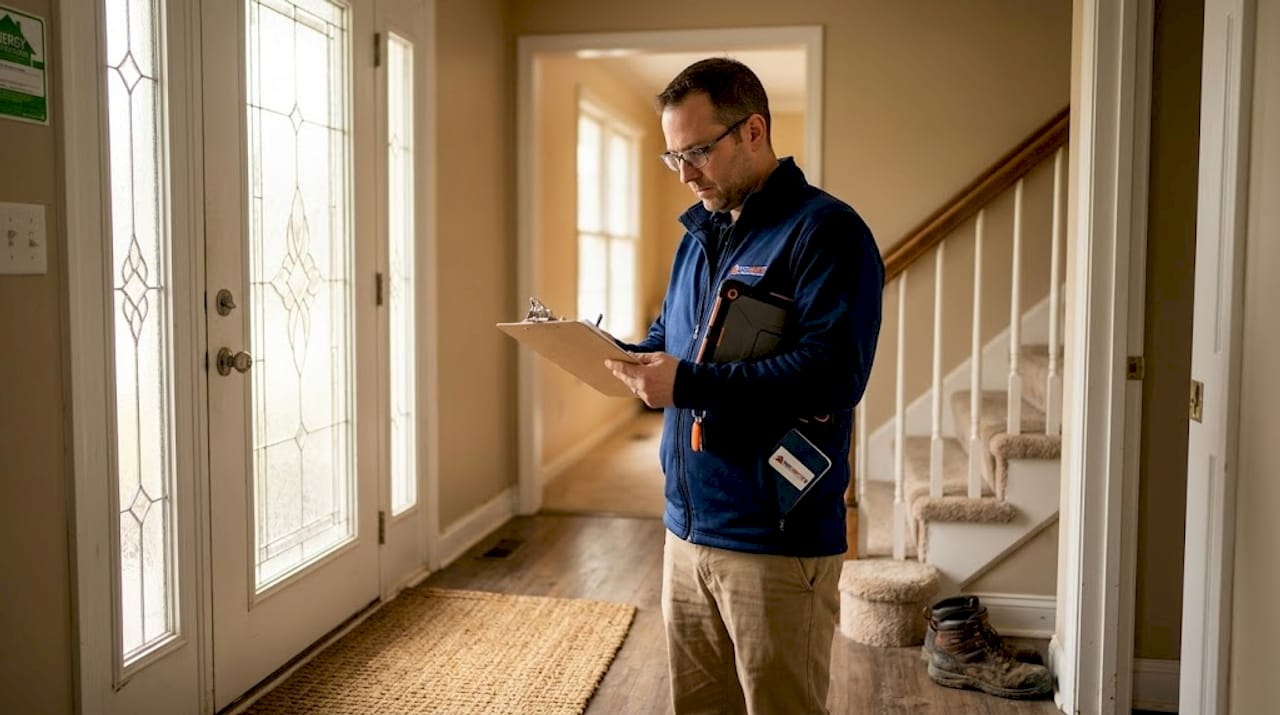
Tom’s buyer tip: Ask for an energy assessment and a year of utility history when available. Note occupancy and thermostat settings. If the listing mentions a green certification, request the certificate and verify its scope. A certificate and utility records answer different questions.
Programs to check before signing
- Oakland SAVES. Oakland County reports that the 2024 program upgraded nearly 1,100 households and generated more than $7.7 million in local contracting. Grant funds are committed and applications are closed.
- Michigan Home Energy Rebates. Michigan EGLE’s resident guide lists applications for low- to moderate-income households. Its FAQ lists household limits of $20,000 for HOMES and $14,000 for HEAR. Those limits are ceilings. An approved contractor, assessment, household eligibility and project review determine what may qualify.
- Oakland County Home Improvement Program. The county offers interest-free loans up to $23,000 for eligible repairs, including some energy upgrades. Check location, income, equity and repayment terms. The county says it stopped accepting applications for City of Pontiac properties on February 1, 2025.
- Utility rebates. DTE’s residential efficiency page lists options that vary by service, equipment and contractor. Check your own utility and confirm the current terms in writing.
Michigan permits eligible households to use HOMES and HEAR for different upgrades. The two cannot pay for the same upgrade, and neither can be combined with another federal grant or rebate for the same upgrade. Ask both administrators about utility rebates and document which funding pays for each item. Plan for your remaining cost.
IRS guidance says the Section 25C home improvement credit ended for property placed in service after December 31, 2025. Section 25D ended for expenditures after that date. Confirm any prior-year eligibility separately.
Compare quotes and document the work
- Start with utility history and an assessment. Ask about moisture and ventilation when tightening the building.
- Get an itemized quote and check eligibility before work starts. Follow contractor and approval requirements.
- Compare estimated annual savings with the cost after confirmed incentives. Include financing, maintenance and replacement costs.
- For rooftop solar, check roof condition, shading, utility terms, ownership and what happens at sale. For off-site solar subscriptions, confirm availability for your utility account, charges, bill credits and cancellation terms.
- Keep assessments, permits, approvals, invoices, equipment details and warranties. These records help buyers evaluate operating costs and upcoming repairs.
Tom’s timing tip: Consider booking an assessment ahead of heating season. Ask about actual lead times and compare utility use across comparable weather and occupancy conditions.
Tom’s perspective on resale
Tom says buyers in Farmington Hills, West Bloomfield and Bloomfield Hills increasingly ask about energy performance. He views efficient upgrades as an investment in comfort and resilience, and has observed stronger buyer interest in homes with documented work.
“Think of green upgrades not as environmental spending but as infrastructure investment. You are buying comfort, resilience, and market position simultaneously. Those three things have real and lasting value in Oakland County's real estate market.”
These are Tom’s observations. For pricing, compare documented features in relevant closed sales. A project’s cost, energy savings and contribution to resale value can differ.
Key takeaways
- Check program status and confirm the terms before starting work.
- Compare the full project cost after approved incentives.
- Keep records that show what changed and how it performs.
Frequently asked questions
Can I still apply for Oakland SAVES?
The county says the grant funds have been committed and the application is closed. Its program page lists other options.
How much can MiHER pay?
Michigan lists household maximums of $20,000 for HOMES and $14,000 for HEAR. Your amount depends on eligibility, the assessment and the approved work.
Can I use HOMES and HEAR on the same upgrade?
Michigan bars combining the two pathways for one upgrade. An eligible household may use both pathways for different upgrades under program rules.
Is the county’s $23,000 benefit a grant?
The county describes it as an interest-free loan for qualified homeowners and eligible repairs. Review the repayment and eligibility terms before applying.
Can I count on a federal credit for a new 2026 project?
The IRS says Section 25C ended for property placed in service after December 31, 2025, and Section 25D ended for expenditures after that date.
What records should a buyer ask for?
Ask for recent utility history, any energy assessment, equipment specifications, invoices, warranties and any solar ownership or financing agreement.
Recommended reading
About Tom Gilliam
Tom Gilliam | REALTOR® | RE/MAX Classic. Tom describes 24 years of experience, 700+ transactions, ABR and SRES designations, SFR certification, RE/MAX Hall of Fame and Lifetime Achievement recognition, and Top 1% Oakland County production.
Talk with Tom about buying or selling a home with energy upgrades.
Call 248-790-5594Check out this article next