





Making an offer on your first home in Farmington Hills or Oakland County brings excitement and a bit of pressure. Understanding how earnest money works is vital before committing hard-earned savings to a property. This upfront deposit not only signals your intention to buy but also ensures both the buyer and seller have a secure financial stake in the transaction. Learning the facts about earnest money deposits will help protect your investment and strengthen your offer in a competitive market.
 The deposit process follows a structured approach where funds are placed into escrow by the potential homebuyer. Typically, this amount ranges from 1% to 3% of the total home price and is held by a neutral third party until the transaction reaches its final stages. Once the sale closes, these funds are typically credited toward the buyer’s down payment or closing costs.
There are specific scenarios that determine the ultimate disposition of earnest money deposits. If the sale proceeds normally, the funds become part of the transaction. However, if the buyer cannot complete the purchase due to approved contingencies—such as failing a home inspection or being unable to secure mortgage financing—the deposit is usually returned. Conversely, if a buyer arbitrarily withdraws from the sale without contractual justification, the seller may retain the earnest money as compensation for the interrupted transaction.
Pro tip: Always review your purchase agreement carefully with a local Realtor to understand exactly how and when your earnest money deposit could be forfeited or returned in Oakland County real estate transactions.
The deposit process follows a structured approach where funds are placed into escrow by the potential homebuyer. Typically, this amount ranges from 1% to 3% of the total home price and is held by a neutral third party until the transaction reaches its final stages. Once the sale closes, these funds are typically credited toward the buyer’s down payment or closing costs.
There are specific scenarios that determine the ultimate disposition of earnest money deposits. If the sale proceeds normally, the funds become part of the transaction. However, if the buyer cannot complete the purchase due to approved contingencies—such as failing a home inspection or being unable to secure mortgage financing—the deposit is usually returned. Conversely, if a buyer arbitrarily withdraws from the sale without contractual justification, the seller may retain the earnest money as compensation for the interrupted transaction.
Pro tip: Always review your purchase agreement carefully with a local Realtor to understand exactly how and when your earnest money deposit could be forfeited or returned in Oakland County real estate transactions.
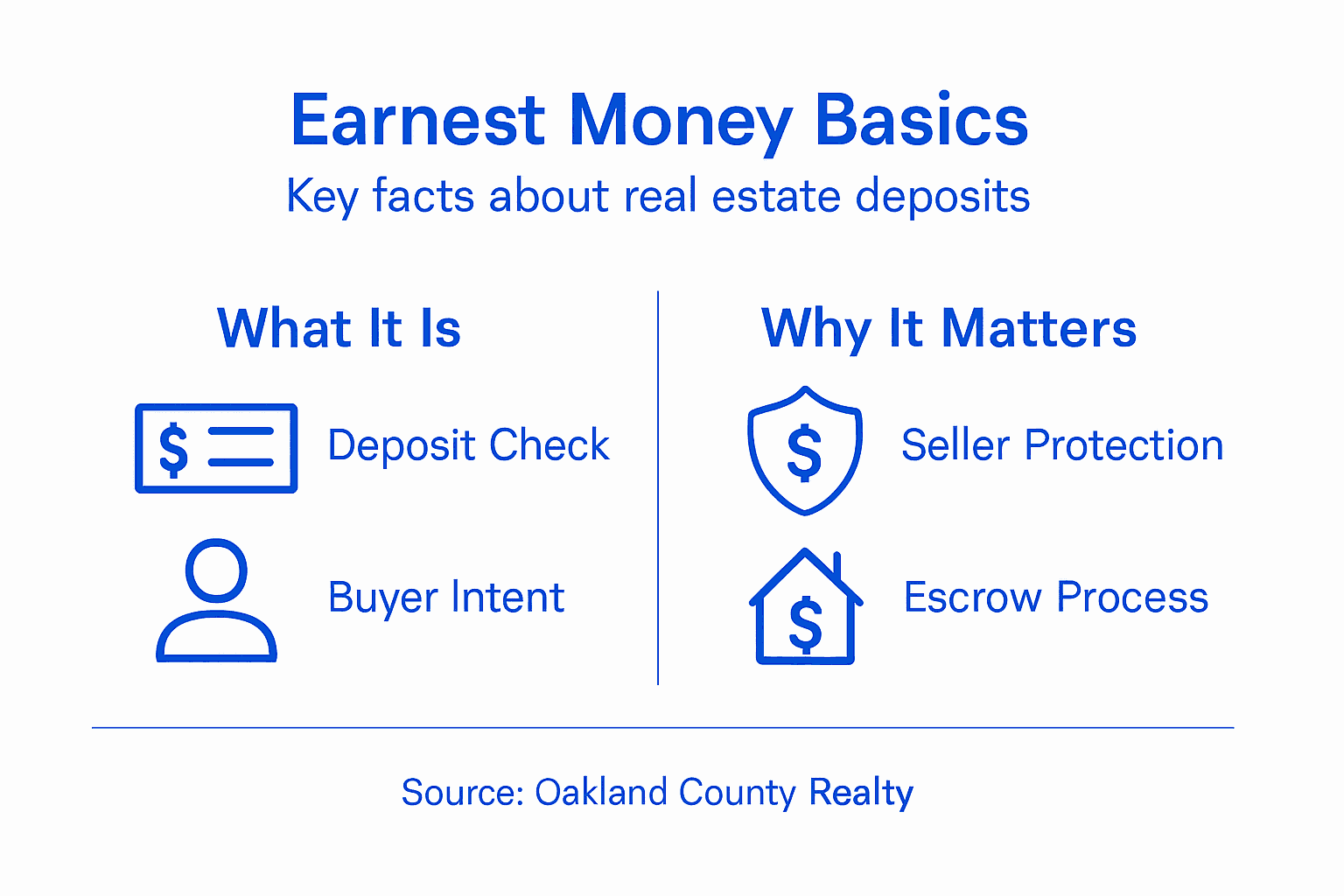 The purchase agreement dictates the specific conditions under which earnest money can be retained or returned. Buyers may forfeit their deposit if they breach contract terms without valid contingencies, while sellers must adhere to strict guidelines about when they can claim these funds. Typical contingencies that protect buyers include home inspections, financing approvals, and appraisal requirements. If these contingencies are not met, the buyer can typically recover their full earnest money deposit, providing a crucial layer of financial protection for home buyers in Oakland County.
Here’s how earnest money deposit outcomes differ based on transaction scenarios:
The purchase agreement dictates the specific conditions under which earnest money can be retained or returned. Buyers may forfeit their deposit if they breach contract terms without valid contingencies, while sellers must adhere to strict guidelines about when they can claim these funds. Typical contingencies that protect buyers include home inspections, financing approvals, and appraisal requirements. If these contingencies are not met, the buyer can typically recover their full earnest money deposit, providing a crucial layer of financial protection for home buyers in Oakland County.
Here’s how earnest money deposit outcomes differ based on transaction scenarios:
Pro tip: Have a real estate attorney or experienced Realtor carefully review your purchase agreement to fully understand the specific escrow and earnest money conditions that apply to your transaction.
Pro tip: Always have a real estate attorney or experienced Realtor meticulously review your purchase agreement to identify potential risk factors and ensure you fully understand the earnest money deposit conditions in your specific Oakland County transaction.
 Ready to make your next move with the guidance of a trusted expert? Tom Gilliam at Homes2MoveYou.com offers over 20 years of experience helping buyers and sellers throughout Oakland County. Benefit from personalized advice on earnest money deposits, strategic negotiation, and detailed contract review to protect your investment and streamline your home buying process. Visit Homes2MoveYou.com today and start your journey to homeownership with confidence.
Table of Contents
- Defining Earnest Money In Real Estate
- How Earnest Money Deposits Work
- Typical Earnest Money Amounts Locally
- Legal Rules And Escrow Procedures
- Refunds, Forfeiture, And Buyer Protections
- Common Mistakes And Risk Factors
Key Takeaways
| Key Point | Details |
|---|---|
| Earnest Money Importance | Earnest money demonstrates a buyer’s serious intent and provides protection for sellers during the contract period. |
| Typical Deposit Ranges | Earnest money deposits commonly range from 1% to 3% of the purchase price, depending on local market conditions and competition. |
| Legal Protections | Buyers may recover earnest money if contract contingencies are not satisfied, but funds can be forfeited if terms are violated. |
| Common Pitfalls | Missed deadlines or misunderstanding contract terms can result in buyers losing their earnest money deposit. |
Defining Earnest Money in Real Estate
Earnest money is a critical financial component in real estate transactions that demonstrates a buyer’s serious intent to purchase a property. When making an offer in Oakland County’s competitive housing market, potential homebuyers submit this good faith deposit to signal their commitment to completing the home purchase. According to legal definitions, earnest money is a security deposit that serves multiple important functions in real estate transactions. Typically, this deposit ranges between 1% to 3% of the home’s total purchase price in markets like Farmington Hills and Novi. The funds are placed into an escrow account, which acts as a neutral holding space managed by a third party to protect both the buyer and seller’s interests. The primary purpose of earnest money extends beyond just financial commitment. It provides legal protection for sellers by ensuring that buyers have a financial stake in following through with the transaction. If a buyer withdraws from the sale without a contractually approved reason, they risk forfeiting their earnest money deposit to the seller. Conversely, if the sale falls through due to contingencies outlined in the purchase agreement—such as failed home inspections or inability to secure financing—the buyer can typically recover their full deposit. Pro tip: Work closely with your local Realtor to understand the specific earnest money requirements and typical deposit amounts in your target Oakland County neighborhood before making an offer.How Earnest Money Deposits Work
In Oakland County’s dynamic real estate market, understanding earnest money deposit mechanics is crucial for both buyers and sellers. These deposits represent a binding financial commitment that demonstrates a buyer’s genuine intention to purchase a property in areas like Farmington Hills, Novi, and Northville.
The deposit process follows a structured approach where funds are placed into escrow by the potential homebuyer. Typically, this amount ranges from 1% to 3% of the total home price and is held by a neutral third party until the transaction reaches its final stages. Once the sale closes, these funds are typically credited toward the buyer’s down payment or closing costs.
There are specific scenarios that determine the ultimate disposition of earnest money deposits. If the sale proceeds normally, the funds become part of the transaction. However, if the buyer cannot complete the purchase due to approved contingencies—such as failing a home inspection or being unable to secure mortgage financing—the deposit is usually returned. Conversely, if a buyer arbitrarily withdraws from the sale without contractual justification, the seller may retain the earnest money as compensation for the interrupted transaction.
Pro tip: Always review your purchase agreement carefully with a local Realtor to understand exactly how and when your earnest money deposit could be forfeited or returned in Oakland County real estate transactions.
Typical Earnest Money Amounts Locally
In Oakland County’s vibrant real estate markets like Farmington Hills, Novi, and Northville, earnest money deposits vary significantly based on local market conditions and individual property characteristics. Understanding these nuanced deposit requirements helps buyers prepare financially and strategically when making a home purchase. Earnest money deposits typically range between 1% to 3% of a home’s purchase price in standard market conditions. For a $300,000 home in Oakland County, this translates to approximately $3,000 to $9,000 in earnest money. In highly competitive markets or for new construction properties, these deposits can escalate up to 10% of the total purchase price, representing a more substantial financial commitment from potential buyers. The specific amount depends on multiple factors, including local market dynamics, seller preferences, and the complexity of the real estate transaction. In areas like Commerce Township and West Bloomfield, more expensive properties might require proportionally larger earnest money deposits to demonstrate the buyer’s serious intent. First-time homebuyers should anticipate having these funds readily available, typically within two to five days after an offer is accepted, and understand that the deposit will either be applied to closing costs or potentially forfeited if contract terms are not met. Pro tip: Consult with a local Oakland County Realtor to understand the precise earnest money expectations for your specific neighborhood and price range before making an offer.Legal Rules and Escrow Procedures
In Oakland County’s real estate transactions, escrow procedures play a critical role in protecting both buyers and sellers during home purchase agreements. The legal framework surrounding earnest money deposits ensures that funds are handled transparently and according to strict contractual guidelines. Escrow management involves a neutral third party who holds and monitors the earnest money deposit until all contract conditions are satisfied. This process provides critical safeguards for both the buyer and seller, ensuring that funds are only released when specific contractual milestones are met. In markets like Farmington Hills, Novi, and Northville, these procedures help prevent potential disputes and provide a structured approach to real estate transactions.
The purchase agreement dictates the specific conditions under which earnest money can be retained or returned. Buyers may forfeit their deposit if they breach contract terms without valid contingencies, while sellers must adhere to strict guidelines about when they can claim these funds. Typical contingencies that protect buyers include home inspections, financing approvals, and appraisal requirements. If these contingencies are not met, the buyer can typically recover their full earnest money deposit, providing a crucial layer of financial protection for home buyers in Oakland County.
Here’s how earnest money deposit outcomes differ based on transaction scenarios:
| Scenario | Result for Buyer | Result for Seller |
|---|---|---|
| All contingencies met and sale closes | Earnest money is credited toward the purchase price at closing. | Seller receives full sale proceeds as agreed. |
| Buyer cancels due to valid contingency | Earnest money deposit is refunded to the buyer. | Seller does not retain the deposit. |
| Buyer withdraws without allowed reason | Earnest money is forfeited. | Seller keeps the earnest money as compensation. |
| Sale fails due to seller fault | Earnest money is returned to the buyer. | Seller may be required to compensate the buyer. |
Refunds, Forfeiture, and Buyer Protections
Homebuyers in Oakland County need to understand the critical nuances surrounding earnest money deposits, particularly the conditions that determine potential refunds or potential forfeiture. The legal landscape of these deposits provides multiple safeguards to protect buyers’ financial investments during real estate transactions. Earnest money becomes refundable under specific contractual contingencies that shield buyers from financial risk. In markets like Farmington Hills and Novi, these protections typically include provisions for home inspections, mortgage financing approvals, and property appraisals. If any of these contingencies are not met—such as a home inspection revealing significant structural issues or a mortgage being denied—buyers can recover their full earnest money deposit without penalty. Conversely, buyers may forfeit their earnest money if they unilaterally decide to withdraw from the transaction without a contractually valid reason. This means that simply changing your mind about purchasing a home in areas like West Bloomfield or Commerce Township could result in losing your deposit. The purchase agreement meticulously outlines these scenarios, specifying exact conditions under which a seller can retain the earnest money. Buyers must carefully review these terms and understand their obligations to prevent unintended financial consequences. Pro tip: Always have a real estate attorney or experienced Realtor thoroughly review your purchase agreement to fully comprehend the specific conditions that could trigger earnest money forfeiture in your Oakland County transaction.Common Mistakes and Risk Factors
Navigating earnest money deposits in Oakland County’s real estate market requires careful attention to potential pitfalls that can jeopardize a home purchase. First-time homebuyers in areas like Farmington Hills and Novi are particularly vulnerable to critical mistakes that could result in financial losses. Failing to deposit earnest money on time represents one of the most significant risk factors for home buyers. Missed deadlines can trigger contract termination, potentially causing buyers to lose negotiated purchase terms and their opportunity to buy a desired property. In competitive markets like West Bloomfield and Commerce Township, these procedural missteps can mean the difference between securing your dream home and losing the transaction entirely. Additionally, homebuyers often make critical errors by misunderstanding contract contingencies and refund conditions. Common mistakes include assuming all agents can provide comprehensive legal advice about disputed funds, not carefully reading contract details, and failing to understand the specific circumstances under which earnest money might be forfeited. These misunderstandings can lead to unexpected financial risks, with buyers potentially losing thousands of dollars if they do not fully comprehend their contractual obligations. Common risk factors in earnest money transactions include:| Risk Factor | Impact if Overlooked | How to Prevent |
|---|---|---|
| Missing deposit deadline | Offer may be voided, resulting in a lost buying opportunity. | Track all contract deadlines closely with your Realtor. |
| Misreading contingencies | Earnest money may be forfeited during a dispute. | Carefully review the purchase agreement before signing. |
| No legal consultation | Buyer rights over disputed funds may be unclear. | Seek guidance from a qualified Realtor or real estate attorney. |
| Insufficient funds ready | Buyer may be unable to submit the deposit on time. | Secure earnest money funds before submitting an offer. |
Secure Your Oakland County Home Purchase with Confidence
Understanding the importance of earnest money is crucial when navigating Oakland County’s real estate market. This good faith deposit protects your interests while demonstrating your commitment to sellers in competitive neighborhoods like Farmington Hills, Novi, and West Bloomfield. Avoid common pitfalls such as missed deposit deadlines or unclear contingencies by partnering with an experienced Realtor who knows the local legal landscape and escrow procedures inside and out.
Ready to make your next move with the guidance of a trusted expert? Tom Gilliam at Homes2MoveYou.com offers over 20 years of experience helping buyers and sellers throughout Oakland County. Benefit from personalized advice on earnest money deposits, strategic negotiation, and detailed contract review to protect your investment and streamline your home buying process. Visit Homes2MoveYou.com today and start your journey to homeownership with confidence.
Frequently Asked Questions
What is earnest money in real estate?
Earnest money is a good faith deposit made by a buyer to demonstrate their serious intent to purchase a property. It is typically held in an escrow account until the transaction is completed.How much earnest money should I expect to pay?
Earnest money deposits generally range from 1% to 3% of the home’s total purchase price. In competitive markets, deposits can sometimes reach up to 10% to show a strong commitment from the buyer.What happens to my earnest money if the sale doesn’t go through?
If the sale fails due to contingencies like failed inspections or financing issues, buyers usually get their earnest money back. However, if the buyer backs out without valid reasons, the seller may keep the earnest money as compensation.Why is earnest money important in a real estate transaction?
Earnest money is important because it protects the seller against buyers backing out of the deal without sufficient cause, while also showing the buyer’s commitment to following through with the purchase.Recommended
Check out this article next