





Summary:
- An earnest money deposit signals buyer seriousness and is protected through escrow in Michigan.
- Contingencies safeguard your funds, allowing refund if conditions like inspection or financing aren’t met.
- A strategic, well-structured EMD can help buyers stand out in competitive Oakland County markets.
Most buyers assume that offering the highest price is the surest path to winning a home in Oakland County. That belief, while understandable, misses a critical piece of the puzzle. Sellers don’t just want the best number on paper. They want confidence that the deal will close. That’s exactly where the earnest money deposit comes in. This guide walks you through everything you need to know: what an earnest money deposit is, how it’s protected, which contingencies keep your funds safe, and how to use it as a strategic tool when competing for homes in Novi, West Bloomfield, Northville, and beyond.
Table of Contents
- What is an earnest money deposit?
- How the escrow process protects your deposit
- Contingencies and how they safeguard your earnest money
- Risks, negotiation strategies, and making your offer stand out
- Why earnest money is more than just a deposit: Our perspective
- Take the next step in your Oakland County home buying journey
- Frequently asked questions
Key Takeaways
What is an earnest money deposit?
An earnest money deposit, often called an EMD, is a good faith payment made by the buyer when submitting a purchase offer. It signals to the seller that you’re serious, financially prepared, and committed to following through. Think of it as putting your money where your offer is. In Oakland County, the definition of earnest money is consistent with Michigan real estate norms: it’s a sum paid upfront, typically held in escrow, and applied toward your down payment or closing costs at the end of the transaction.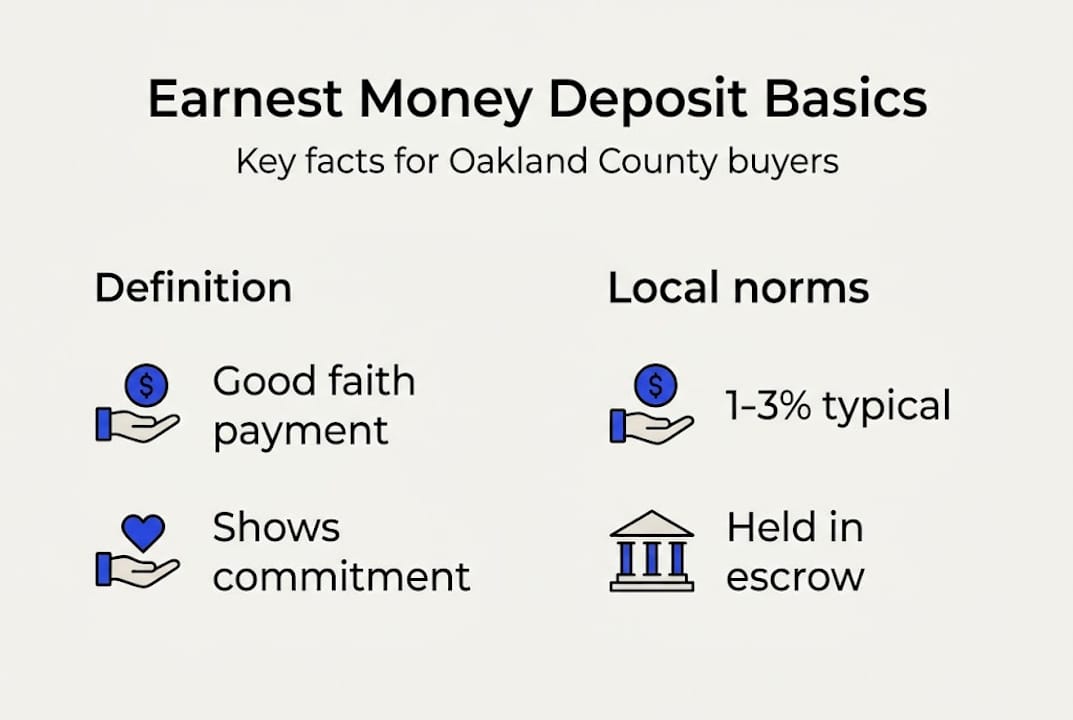 How much should you expect to pay?
The 1-3% norm is the universally agreed standard across Michigan sources, including Oakland County. Here’s what that looks like in practice:
Once your offer is accepted, the earnest money is typically due within 24 to 72 hours. It’s deposited with a neutral third party, usually the listing broker or a title company, who holds it in an escrow account until closing.
Common things buyers get wrong about EMDs:
How much should you expect to pay?
The 1-3% norm is the universally agreed standard across Michigan sources, including Oakland County. Here’s what that looks like in practice:
Once your offer is accepted, the earnest money is typically due within 24 to 72 hours. It’s deposited with a neutral third party, usually the listing broker or a title company, who holds it in an escrow account until closing.
Common things buyers get wrong about EMDs:
- It is not the same as a down payment, though it often gets credited toward one
- It is not automatically refundable in every situation
- It does not go directly to the seller upon acceptance
“Earnest money protects sellers from buyers who walk away without cause, while contingencies protect buyers from losing funds unfairly.” This balance is what makes the EMD system work for both sides of the transaction.Understanding these basics puts you ahead of most buyers entering the Oakland County market.
How the escrow process protects your deposit
Now that we know what an earnest money deposit is, let’s see how it’s actually protected during your home purchase. Escrow is a legal arrangement where a neutral third party holds funds until specific conditions of the transaction are met. It protects both the buyer and the seller by ensuring no one can access the money until the deal is either completed or legally terminated. The escrow process overview in Oakland County typically follows these steps:- Offer accepted: Your agent submits the signed purchase agreement.
- EMD submitted: You wire or deliver the earnest money, usually within 48 hours.
- Funds deposited: The escrow holder deposits the funds into a dedicated account.
- Milestones tracked: Contingency deadlines are monitored by all parties.
- Funds released: At closing, the EMD is credited to your costs. If the deal falls through under a valid contingency, funds are returned.
 The universal agreement on escrow holding is clear: proper escrow use is the standard, and skipping it exposes buyers to real risk, including fraud or outright loss of their deposit.
Pro Tip: Before wiring any funds, verify the escrow account details directly with your agent or title company by phone. Wire fraud targeting homebuyers is a growing threat, and one wrong transfer can be nearly impossible to recover.
The universal agreement on escrow holding is clear: proper escrow use is the standard, and skipping it exposes buyers to real risk, including fraud or outright loss of their deposit.
Pro Tip: Before wiring any funds, verify the escrow account details directly with your agent or title company by phone. Wire fraud targeting homebuyers is a growing threat, and one wrong transfer can be nearly impossible to recover.
Contingencies and how they safeguard your earnest money
With your funds in escrow, protections and risks depend on contingencies in your offer. A contingency is a condition written into your purchase agreement that must be satisfied for the sale to move forward. If the condition isn’t met, you may have the right to exit the contract and recover your earnest money. The most common contingencies in Oakland County purchase agreements include:- Home inspection contingency: Allows you to review the property’s condition and negotiate repairs or walk away
- Appraisal contingency: Protects you if the home appraises below the agreed purchase price
- Mortgage approval contingency: Lets you exit if your financing falls through despite good faith efforts
- Title contingency: Ensures the property has a clear title free of liens or disputes
- You change your mind without a valid contingency in place
- You miss a contingency deadline without requesting an extension
- You fail to secure financing due to issues you didn’t disclose
- You default on other contract obligations
Risks, negotiation strategies, and making your offer stand out
Understanding contingencies is key, but putting this knowledge into practice demands a smart strategy. Oakland County is a competitive market, and sellers in communities like Troy, Commerce Township, and Farmington Hills regularly receive multiple offers. Your earnest money deposit can be a powerful differentiator. Here’s a practical list of do’s and don’ts when negotiating your EMD:- Do offer at least 2% in competitive situations to signal serious intent
- Do keep all contingencies intact unless you fully understand the risks of waiving them
- Do confirm escrow instructions in writing before transferring funds
- Don’t offer more than you can afford to lose if something goes wrong
- Don’t waive your inspection contingency on a property with unknown history
- Don’t assume a higher EMD alone will win the deal without a strong overall offer
“In a market where two offers are nearly identical, the buyer willing to put more on the line often wins. Earnest money is one of the clearest ways to show a seller you mean business.”The role of working with a local Realtor becomes especially important here. An experienced agent knows what sellers in specific neighborhoods expect, what amount is competitive without being reckless, and how to structure your offer so the EMD works in your favor.
Why earnest money is more than just a deposit: Our perspective
After more than 20 years working with buyers across Oakland County, Tom Gilliam has seen one pattern repeat itself: buyers who treat earnest money as a formality often lose deals they should have won. Buyers who treat it as a strategic signal close more often, sometimes beating out higher bids. The earnest money importance goes beyond dollars. It communicates your character as a buyer. Sellers and their agents notice when an offer comes in with a strong, well-structured EMD backed by clean contingencies and realistic deadlines. It tells them this buyer is organized, serious, and unlikely to cause headaches. The biggest mistakes we see Oakland County buyers make? Offering the minimum without context, waiving protections they don’t fully understand, and failing to communicate proactively with their agent when timelines get tight. None of these mistakes are fatal on their own, but together they create the impression of an uncertain buyer. In a competitive market, that impression costs you homes. Work closely with your agent on every EMD decision. It’s not just paperwork. It’s your first negotiation.Take the next step in your Oakland County home buying journey
Armed with this knowledge and perspective, here’s your path forward to a successful home purchase. Understanding earnest money is one piece of a larger process, and you don’t have to figure it out alone. At Homes2MoveYou, Tom Gilliam and the RE/MAX Classic team provide step-by-step guidance through the full home buying process, from your first offer to closing day. Whether you need help structuring a competitive EMD, understanding your contingency options, or simply knowing what to expect next, Tom is ready to help. Start by exploring the home buying resources on the site, or grab the house hunting checklist to stay organized as you search. Reach out today and put local expertise to work for you.
Frequently asked questions
Is earnest money required in Oakland County real estate offers?
While not legally required, earnest money is extremely common and expected on most offers in Oakland County. Submitting an offer without it can signal a lack of commitment and weaken your position with sellers, as EMD norms are consistent across Michigan markets.Can I lose my earnest money deposit if the inspection fails?
If your contract includes an inspection contingency and you notify the seller within the agreed timeframe, your earnest money is typically refundable. Missing the contingency deadline removes that protection, so timing matters.How much earnest money should I offer to stand out?
Most buyers in Oakland County offer 1-3% of the purchase price, but in competitive situations, a higher deposit strengthens your offer. A higher EMD signals commitment and can tip the scales when sellers are weighing similar bids.Who holds my earnest money deposit during the transaction?
Your earnest money is usually held by the listing broker or a title company in escrow until closing or contract termination. Escrow holding is the universally accepted standard that protects both buyers and sellers throughout the process.Recommended
- Essential Steps to Buying a Home in Oakland County, MI - Homes2MoveYou.com
- Tips For Frustrated Home Buyers in Oakland County MI - Homes2MoveYou.com
- Overcoming First-Time Homebuyer Jitters in Oakland County, MI: Expert Tips for 2025 - Homes2MoveYou.com
- Why Use a Realtor in Oakland County MI: 2025 Guide - Homes2MoveYou.com
Check out this article next