





Table of Contents
- Defining Principal Residence For Homeowners
- Principal Residence Vs. Other Property Types
- Requirements For Principal Residence Status In Michigan
- Tax Benefits And Financial Impacts Explained
- Common Mistakes When Claiming Principal Residence
Key Takeaways
| Point | Details |
|---|---|
| Principal Residence Definition | A principal residence is the primary home where an individual lives most of the time, directly impacting tax benefits, exemptions, and legal status. |
| Tax Benefits | Homeowners may qualify for valuable tax advantages, including capital gains exclusions and property tax reductions when the home is classified as a principal residence. |
| Common Pitfalls | Claiming multiple properties, failing to update mailing addresses, or maintaining inconsistent documentation can result in loss of principal residence status. |
| Legal Requirements | In Michigan, homeowners must demonstrate intent to occupy the property as their main home and use it consistently for legal and official documentation. |
Defining Principal Residence for Homeowners
A principal residence represents the primary home where an individual lives most of the time, serving as their central legal and personal domicile. Unlike secondary properties or investment real estate, this specific dwelling holds unique significance for homeowners, particularly when considering tax implications and legal classifications. The legal definition of principal place of residence encompasses multiple determining factors beyond simple occupancy. Authorities typically evaluate an individual’s primary home through objective metrics such as:
- Time spent at the property
- Voter registration address
- Driver’s license location
- Address used for federal and state tax filings
- Location of personal belongings and family connections
For Oakland County homeowners in communities like Farmington Hills and Novi, understanding this designation becomes crucial when navigating real estate transactions, tax assessments, and potential exemptions. The principal residence isn’t just a physical structure but a legal concept that carries significant financial and administrative implications. Taxation represents one of the most important aspects of principal residence classification. Homeowners can often qualify for specific tax benefits, including potential property tax reductions and capital gains exclusions when selling their primary home. These advantages make accurately establishing and maintaining principal residence status financially strategic for Michigan property owners. Pro Tip - Home Documentation: Maintain a comprehensive file of documents proving your principal residence status, including utility bills, tax returns, and voter registration records to simplify future legal or financial processes.
Principal Residence vs. Other Property Types
Understanding the distinctions between a principal residence and other property types is crucial for homeowners in Oakland County, particularly those in Farmington Hills and Novi. Legal definitions distinguish primary dwellings from secondary properties based on several key characteristics that impact tax treatment and financial planning. In Michigan’s real estate landscape, property types typically fall into three main categories:
- Principal Residence: The primary home where an individual or family lives most of the time
- Secondary Residence: A vacation home or additional property not used as a primary dwelling
- Investment Property: Real estate purchased specifically to generate rental income or potential appreciation
The primary difference lies in tax implications and legal designations. Principal residences often qualify for significant tax benefits, including property tax exemptions and capital gains exclusions when sold. Secondary and investment properties, by contrast, face more complex tax treatments and fewer personal use protections.  For Oakland County homeowners, strategic property classification can result in substantial financial advantages. Investment properties and secondary homes typically incur higher tax rates and fewer personal exemptions compared to principal residences. This distinction means homeowners must carefully document their primary dwelling’s status, maintaining records that demonstrate consistent personal use and legal residency. Here is a quick comparison of property types and their typical financial implications:
| Property Type | Typical Use | Tax Benefits | Common Risks to Owners |
|---|---|---|---|
| Principal Residence | Primary, year-round home | Largest tax savings | Residency audit, documentation |
| Secondary Residence | Vacation or second home | Limited deductions | Higher taxes, lender scrutiny |
| Investment Property | Rental/income purposes | Fewest personal use benefits | Capital gains, high tax rates |
Pro Tip - Property Classification Strategy: Consult with a local tax professional annually to ensure your property is correctly classified, potentially saving thousands in tax obligations and avoiding potential legal complications.
Requirements for Principal Residence Status in Michigan
In Michigan, establishing principal residence status involves more than simply owning a property. State regulations define a principal residence as the one true, fixed, and permanent home to which an owner intends to return whenever they are absent, creating a specific legal framework for property classification. To qualify for principal residence status in Oakland County and throughout Michigan, homeowners must meet several critical requirements:
- Spend the majority of time living in the property
- Use the address for legal documentation like driver’s license
- Register to vote at this location
- File state and federal taxes using this address
- Demonstrate intent to maintain the property as a primary dwelling
Michigan’s approach to principal residence status is particularly nuanced for residents in communities like Farmington Hills, Novi, and Northville. The state looks beyond simple occupancy, examining the comprehensive pattern of an owner’s residential behavior. This means that merely owning a home does not automatically qualify it as a principal residence. Financial implications are significant for homeowners navigating these requirements. Principal residence status can unlock valuable tax exemptions, including the Michigan Homestead Property Tax Credit and potential capital gains tax benefits when selling the property. Homeowners must carefully document their residency and be prepared to substantiate their claim if challenged by local tax authorities. Pro Tip - Residency Documentation: Maintain a comprehensive file with utility bills, voter registration, driver’s license, and tax documents proving your consistent primary residence status to protect your tax advantages.
Tax Benefits and Financial Impacts Explained
Understanding the tax implications of principal residence ownership can significantly impact a homeowner’s financial strategy. Tax regulations provide specific benefits for properties classified as primary dwellings, creating opportunities for substantial financial advantages in Oakland County and throughout Michigan. Principal residence status offers several key financial benefits for homeowners:
- Capital Gains Tax Exclusion: Potential exemption of up to $250,000 (single) or $500,000 (married) when selling the primary home
- Michigan Homestead Property Tax Credit: Reduced property tax rates for primary residences
- Mortgage Interest Deductions: More favorable tax treatment compared to secondary properties
- Property Tax Assessments: Lower evaluation rates for primary dwelling
- Potential State Tax Credits: Additional michigan-specific tax relief
For residents in Farmington Hills, Novi, and surrounding Oakland County communities, these tax benefits can translate into significant financial savings. The distinction between principal residence and other property types directly impacts tax liability, making it crucial for homeowners to understand and properly document their primary residence status. The financial implications extend beyond immediate tax savings. Proper classification can affect long-term investment strategies, retirement planning, and overall wealth management. Homeowners must carefully navigate these regulations, considering factors like duration of ownership, personal use, and specific michigan state tax laws that govern principal residence classifications. 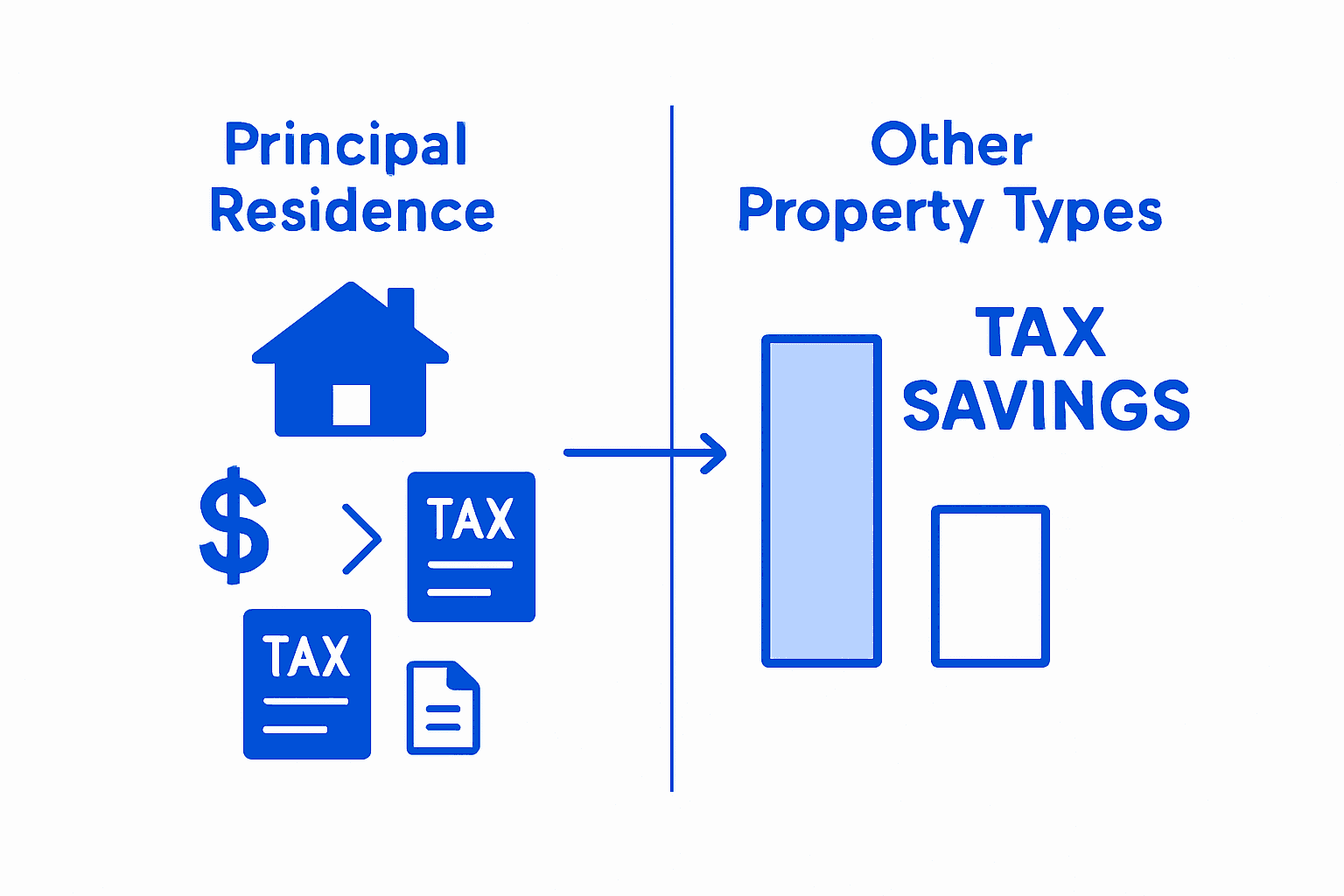 The table below summarizes the most impactful principal residence tax benefits for Michigan homeowners:
| Tax Benefit Name | Who Qualifies | Maximum Savings Potential |
|---|---|---|
| Capital Gains Tax Exclusion | Primary home sellers | Up to $250k single/$500k joint |
| Michigan Homestead Tax Credit | Principal residents | Reduces property tax burden |
| Mortgage Interest Deduction | Main home mortgage holders | Greater write-off potential |
| State/Local Tax Credits | Michigan homeowners | Additional credits possible |
Pro Tip - Tax Optimization: Consult with a local tax professional who specializes in Michigan real estate taxation to maximize your principal residence tax benefits and ensure full compliance with state and federal regulations.
Common Mistakes When Claiming Principal Residence
Navigating the complexities of principal residence classification can be challenging for homeowners in Oakland County. Understanding potential pitfalls is crucial for maintaining accurate tax and legal status, especially in nuanced real estate markets like Farmington Hills and Novi. Homeowners frequently make several critical errors when claiming principal residence status:
- Inconsistent Documentation: Failing to maintain consistent records across legal documents
- Multiple Property Claims: Attempting to claim principal residence status on more than one property
- Insufficient Occupancy: Not spending enough time living in the claimed primary residence
- Incorrect Address Updates: Neglecting to update driver’s license, voter registration, and tax documents
- Misunderstanding Residency Requirements: Assuming ownership automatically qualifies as principal residence
In Michigan, tax authorities scrutinize residency claims carefully. Homeowners in communities like Northville and West Bloomfield must provide comprehensive evidence demonstrating their primary dwelling status. This means more than simply owning a property - it requires proving consistent personal use and intent to maintain the residence as a primary home. Financial consequences can be significant for those who inadvertently misrepresent their principal residence. Potential penalties include tax reassessments, loss of homestead exemptions, and potential legal challenges from local government entities. Careful documentation and proactive verification of residency status are essential for protecting your tax benefits and legal standing. Pro Tip - Residency Verification: Create a comprehensive documentation folder that includes utility bills, tax returns, driver’s license, voter registration, and other official documents proving your consistent primary residence to prevent potential disputes.
Secure Your Principal Residence Benefits with Expert Oakland County Real Estate Guidance
Understanding what qualifies as a principal residence and its tax impacts can feel overwhelming. You want to maximize your capital gains tax exclusions and property tax credits without risking costly mistakes in documentation or residency claims. Whether you are buying in Farmington Hills, Novi, or other Oakland County areas, having a trusted local expert on your side makes all the difference.  Turn this complex challenge into your advantage by connecting with Tom Gilliam at Homes2MoveYou.com. With over 20 years of experience in the Oakland County market, Tom will guide you through the nuances of principal residence classification and ensure that your real estate decisions support your financial goals. Explore Farmington Hills homes for sale and receive personalized strategies that align with important tax considerations. Don’t wait – start your journey to a stress-free, tax-smart home transaction today at Homes2MoveYou.com.
Frequently Asked Questions
What qualifies as a principal residence?
A principal residence is defined as the primary home where an individual or family lives most of the time, serving as their central legal and personal domicile.
What are the tax benefits of having a principal residence?
Homeowners of a principal residence can enjoy tax benefits such as capital gains tax exclusion when selling their home, Michigan Homestead Property Tax Credit, and more favorable mortgage interest deductions.
How can I establish principal residence status for tax purposes?
To establish principal residence status, you must occupy the property most of the time, use it for legal documentation like your driver’s license, and register to vote at that address.
What are common mistakes to avoid when claiming principal residence status?
Common mistakes include inconsistent documentation, claiming principal residency on multiple properties, not spending enough time in the claimed residence, and neglecting to update necessary legal addresses.
Recommended
Check out this article next