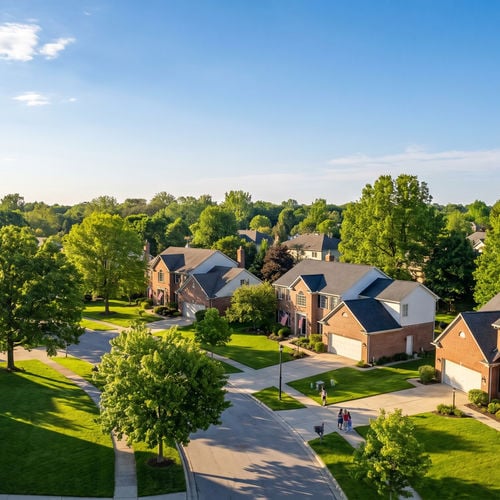




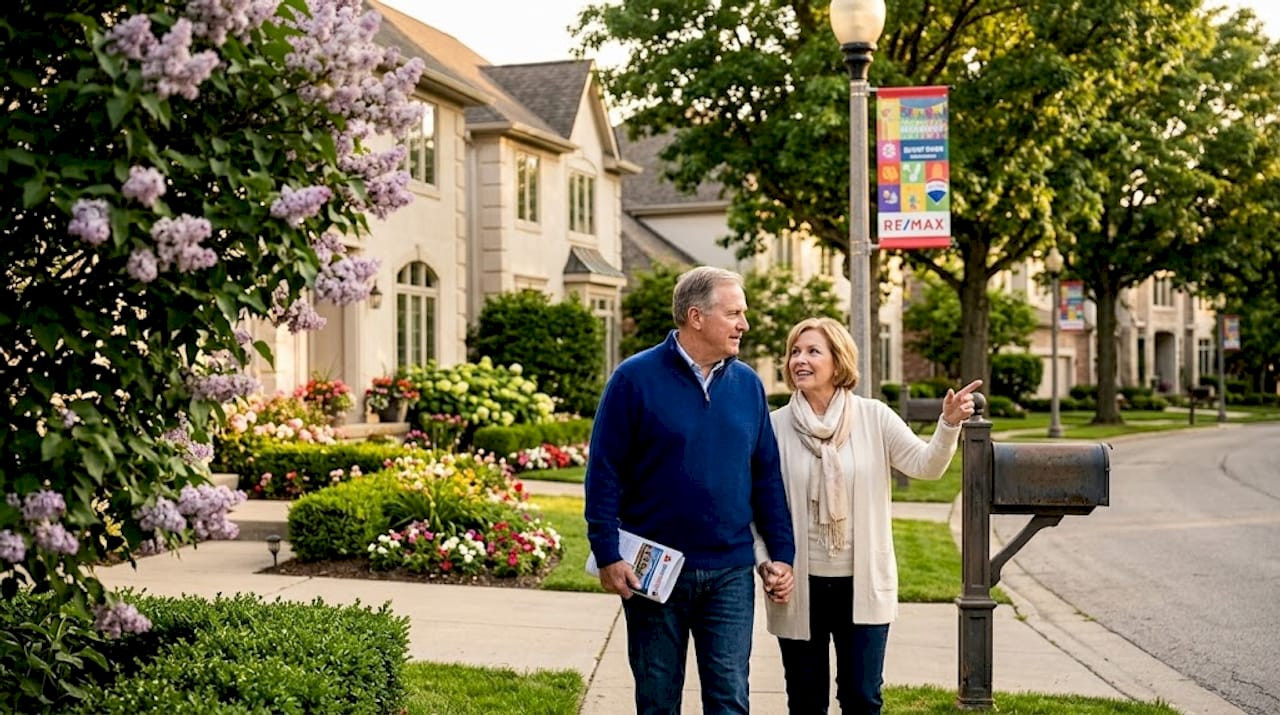
Featured image: illustrative community scene, not verified inventory, a specific community’s amenities or an actual client move.
Oakland County, Michigan | Age-qualified housing
What Are 55+ Communities?
Understand occupancy rules, compare services and review the actual costs.
Updated November 4, 2026
Check occupancy and guests
Verify what is included
Read the current documents
Most of the clients I work with who are considering a 55+ community have the same look on their face when we first start talking about it. Part interest, part hesitation. They have heard the term but they are not entirely sure what it means legally, what it actually costs, or whether the lifestyle is really for them. After 24 years helping buyers navigate Oakland County real estate, I have had this conversation hundreds of times. This guide is my attempt to answer every question I get asked — honestly and completely — so you can make this decision with your eyes wide open.
That describes my client experience, not a survey of every buyer or community. Your household’s needs, budget and preferences may differ.
Whether you're eyeing Novi real estate, exploring Farmington Hills homes for sale, or considering West Bloomfield — let's go through this together.
How the federal 55+ qualification works
Under 24 CFR 100.305, at least 80% of occupied units must have at least one occupant age 55 or older. This measures units, not the percentage of individual residents. Qualification also requires published and followed policies showing the necessary intent and reliable age verification. Section 100.307 requires regular occupancy updates at least every two years.
The federal older-persons exemption concerns familial-status restrictions; it is not a blanket exemption from other fair-housing protections. Michigan law also has its own protections and exceptions. Michigan’s civil-rights guidance addresses state and federal protections and disability-related accommodations. For a disputed rule or household situation, ask qualified housing counsel or the responsible agency rather than treating this overview as an eligibility decision.
Younger residents, ownership and visitors
Federal qualification does not require every resident to be 55, nor does it automatically admit a younger household into the remaining 20%. HUD’s HOPA implementing rule explains that a community may adopt stricter occupancy policies. Ask how its documents address younger spouses, other household members, caregivers and changes after an older occupant leaves or dies.
Do not assume that children can never live next door, that a younger relative can always move in, or that every owner must personally meet the occupancy age. Ownership, occupancy and rental rules can differ. Confirm them in writing for the actual home. Guest limits, including grandchildren’s visits, depend on the community documents; the earlier 30–60-day range is not a universal federal entitlement or limit. Disability-related accommodation obligations may also matter.
Age-qualified housing is not a care-service category
HOPA removed the requirement for significant facilities and services as a condition of this exemption; the federal rule summary explains that change. An age-qualified label alone does not tell you whether a development offers only homes and amenities, separate support services or a broader care arrangement. It does not prohibit every form of medical care.
Many active-adult developments focus on housing and recreation, so do not assume medical or assisted-living care is included. Ask for the actual contracts, service scope, staffing, any relevant license, charges and policies if care needs change. Compare a continuing-care or assisted-living option by its actual terms, not its label. Discuss personal care needs with appropriate healthcare advisers; a real-estate guide cannot determine them.
Check the actual home and accessibility
Options can include detached homes, attached homes, condos and rentals. Ownership form and age restriction are separate questions. A detached home can have association duties and fees; condo ownership does not mean all maintenance is covered. Verify insurance responsibilities, roofs, exterior work, lawn care, snow removal, utilities and alterations in the governing documents.
Do not assume most 55+ homes are ADA compliant or that a ranch floor plan guarantees accessibility. The U.S. Access Board explains that private residential housing generally differs from facilities covered by ADA standards; other housing laws may apply. Check the actual entry steps, doorway clearances, bathroom layout, shower, laundry and routes to parking and amenities. Have proposed changes and applicable requirements evaluated for the specific property.
When touring a 55+ community, walk the streets at different times of day. A neighborhood that feels lively at 10 a.m. but completely empty by 3 p.m. may not have the social energy you're expecting. Look for residents out walking, using amenities, and gathering informally. The vibe of a community is something you feel — not something a brochure can show you.
This is my touring advice. A single visit or a particular hour cannot establish how all residents live; ask about actual participation and access arrangements without assuming everyone wants the same level of activity.
Compare amenities and daily life by evidence
I want to spend some time here because this is the section that changes people's minds. The amenities in a well-run 55+ community are not an afterthought — they are the whole point. And in Oakland County, where the standard of living is already high, the best active adult communities deliver something that genuinely rivals resort living. I have toured a lot of these communities with clients over the years and the reaction is almost always the same: "I had no idea it was like this."
These are my impressions from tours, not proof that all Oakland County 55+ developments have resort amenities. Request the current amenity list, hours, accessibility, guest rules, fees and any closures. A clubhouse, pool, pickleball court, trail connection or organized club should be verified for the community you are considering.
Ask the HOA for a copy of the community's annual events calendar before you buy. A robust calendar with 20 or more recurring monthly activities signals a healthy, engaged community. A thin calendar may indicate low resident participation or poor management. This one question tells you more about a community than almost anything else.
The 20-activity benchmark is my preference, not a validated measure of management quality. A smaller calendar may suit some residents. Ask which activities actually operate, what participation is optional and whether extra charges apply. An age-qualified community is not a guarantee of quiet or an absence of children as visitors or permitted residents.
For healthcare and shopping, check the specific location, provider and route at the times you travel. Confirm current facility names, offered services and appointment access. No countywide 15-minute hospital trip or automatic lake/trail access is established by a city name.
Review the full financial picture
I am going to be direct with you here because I think this is the area where buyers most often go in underprepared. The purchase price is only one part of what you are paying. Before you make an offer on any 55+ home in Oakland County you need to understand the full financial picture — and that means looking beyond the list price.
The earlier $250–$550 monthly fee range and $300,000–$600,000+ purchase-price range were not matched to a current representative countywide primary dataset for this update. They should not be treated as current quotations or as proof that a particular home falls within them. This does not establish that every earlier example was false. Use current property and association records instead.
What to request before committing
- Current dues and services: what is included, what is excluded, how increases are approved and whether amenities have separate charges.
- Financial records: budget, financial statements, reserves, any reserve study, recent meeting minutes and known or proposed assessments. Strong reserves do not guarantee that future assessments will be unnecessary.
- Property responsibilities: insurance, deductibles, maintenance boundaries, utilities, repairs and any service contract. “Low maintenance” does not mean no work or no cost.
- Taxes and financing: obtain a property-specific estimate and lender review rather than relying on the seller’s current bill or an assumed community-wide tax rate.
- Use restrictions: pets, parking, rentals, guest stays, modifications, ownership, occupancy and transfer requirements.
- Developer control: understand current governance, any transition provisions, unfinished amenities and who is responsible for completion. Do not assume control changes within a fixed number of years.
Resale and future flexibility
Occupancy restrictions can limit the households able to live in a home, but a blanket statement that you cannot sell to a 45-year-old owner confuses ownership with occupancy. Read the actual transfer and residence rules. Check comparable recent sales, current competition, condition, financing and community requirements when assessing likely marketability.
This guide does not establish a countywide resale delay, discount, financially resilient buyer segment or guaranteed steady demand. Good management and amenities may influence preferences, but no location or holding period guarantees liquidity, appreciation or a particular selling price. Plan for changes in care, finances and household needs as well as your preferred lifestyle.
Tom’s take
I've worked with dozens of clients over my 24 years in Oakland County real estate who initially dismissed 55+ communities as "not for them." The most common reason? They pictured shuffleboard courts and early-bird dinners. What they found instead were pickleball leagues, wine clubs, travel groups, and neighbors with more energy and social ambition than most people half their age.
The misconception I see most often is around cost. Many buyers assume the HOA fees make these communities expensive. When you factor in what you are no longer paying for — lawn care, snow removal, exterior maintenance, and the time those tasks consume — the math often favors the 55+ community. Time has real value at this stage of life.
These are my observations and opinions. Actual fees may not cover exterior maintenance or every service listed. Compare the full cost of the actual alternatives; the math does not automatically favor age-qualified housing for every household.
The resale concern is legitimate and worth taking seriously. I always advise clients to think of a 55+ home as a long-term lifestyle purchase rather than a short-term investment vehicle. If you plan to stay 10 or more years, the restricted buyer pool matters far less. If you might need to sell within five years, you need to factor that narrower market into your decision.
The five- and ten-year periods are my planning perspective, not tested thresholds that eliminate resale risk. An unexpected need to move can arise at any time.
What I find most compelling about Oakland County's active adult communities is how well they align with the local lifestyle. The proximity to lakes like Walnut Lake and Cass Lake, the access to world-class healthcare, and the strong sense of community identity in places like Farmington Hills and West Bloomfield make these neighborhoods genuinely desirable. I've seen buyers from outside Oakland County relocate here specifically for this combination. That is not something you can put a price on.
— Tom Gilliam, REALTOR® | SRES | RE/MAX Classic | Homes2MoveYou.com
Lifestyle appeal and “world-class” healthcare are personal judgments here. The passage does not verify a specific community’s medical access, amenities, lake rights or investment return.
Key takeaways
- Apply the 80% test to occupied units, not every individual resident.
- Read community-specific occupancy and guest policies; do not assume a younger household is automatically admitted or excluded.
- Verify actual care services, accessibility, amenities and maintenance responsibilities.
- Use current property and association records for prices, dues and assessments.
- Plan for resale and changing needs without relying on guaranteed demand or holding-period returns.
Frequently asked questions
What does the federal 55+ occupancy rule require?
At least 80% of occupied units must have at least one occupant age 55 or older. The community must also publish and follow policies showing the required intent and verify occupancy through reliable procedures, with updates at least every two years. The rule concerns occupied units, not 80% of individual residents.
Can a younger spouse, family member or caregiver live in a 55+ community?
Possibly. Federal qualification does not require every resident to be 55, but community policies can be stricter. The remaining 20% is not an automatic entitlement for younger households. Obtain the actual occupancy and guest rules and ask about applicable disability-related accommodations before relying on an exception.
Does 55+ status mean no medical care is available?
No. Age-qualified status alone does not establish what care is provided or prohibited. Many active-adult developments focus on housing and amenities, so do not assume care is included. Verify the actual service contracts, staffing, licensing where relevant, costs and policies, and plan with appropriate healthcare advisers.
Are 55+ homes automatically ADA compliant or accessible?
No. An age restriction does not certify a home’s accessibility. Private residential housing and public accommodations can fall under different laws. Inspect the actual entry, doors, bathrooms and routes and determine which requirements apply to the property.
What will an Oakland County 55+ home cost?
Use the actual property price, current association budget and dues, reserves, assessments, insurance responsibilities, taxes, utilities and any service charges. The earlier fee and purchase-price ranges in this guide are not verified current countywide quotations. Included maintenance and amenities vary.
Will an age restriction make resale take longer?
It can limit who may occupy a home, but it does not establish a fixed discount or longer marketing period for every property. Check ownership versus occupancy rules and relevant recent sales. A five- or ten-year holding plan does not guarantee liquidity or a financial return.
Recommended reading
- Downsizing: housing, taxes and support services
- Comparing an Oakland County real estate agent
- Oakland County waterfront property guide
About the author
Tom Gilliam holds the SRES designation — Seniors Real Estate Specialist — with 24 years of Oakland County expertise and 700+ successful transactions. No pressure. No obligation. Ever.
Tom Gilliam | RE/MAX Classic | 29630 Orchard Lake Rd, Farmington Hills MI 48334 | Homes2MoveYou.com
SRES is the Seniors Real Estate Specialist designation. Ask for current credential and experience records relevant to your decision. The service and experience statements do not certify a community’s legal compliance or promise a particular outcome.
Compare your Oakland County housing options
Discuss your property needs, timing and the documents to review.
Call 248-790-5594Check out this article next