




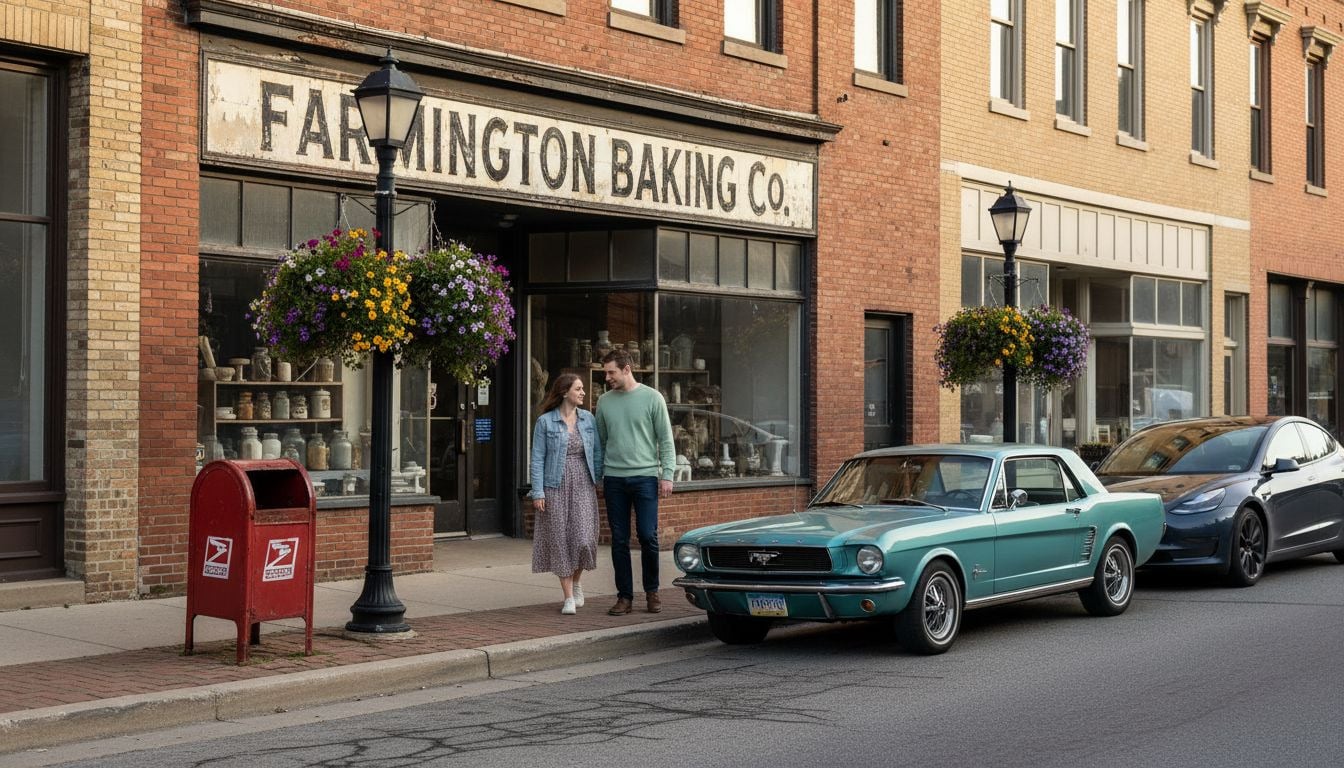
Choosing a new home in Farmington Hills means stepping into a legacy built on early 19th century settlement, agricultural roots, and the enduring presence of the Ojibwe, Ottawa, and Potawatomi peoples. Understanding the area’s transformation from small farming communities in Oakland County to a modern Michigan suburb offers valuable insight into neighborhoods, property trends, and community values. Exploring these historical foundations gives buyers and sellers a deeper appreciation for what shapes Farmington Hills today.
Table of Contents
- Founding of Farmington Hills Explained
- Native American Tribes and Early Settlers
- From Township to Modern Suburb
- Landmarks and Cultural Milestones
- Community Growth and Real Estate Impact
- Historic Districts and Preservation Efforts
Key Takeaways
Founding of Farmington Hills Explained
The story of Farmington Hills begins in the early 19th century, when Michigan’s land survey expeditions opened up new territories for settlement. Early pioneers from eastern states recognized the region’s agricultural potential and began establishing small farming communities across Oakland County. These initial settlers laid the groundwork for what would eventually become the vibrant suburban community of Farmington Hills. The township’s development followed a pattern common to many Michigan communities during this period. Settlers arriving from states like New York, Pennsylvania, and Ohio sought fertile land and opportunities for agricultural prosperity. They gradually transformed the landscape from dense forests to productive farmlands, creating small clusters of settlements that would eventually coalesce into organized municipal structures. Key elements of Farmington Hills’ founding included:
- Initial land surveys conducted by government expeditions
- Agricultural settlement patterns from eastern migrants
- Gradual development of transportation infrastructure
- Establishment of local governance structures
- Progressive transformation from rural township to suburban community
These early settlers were resilient and strategic, establishing farms, building basic infrastructure, and creating community institutions that would support future growth. By the mid-19th century, the area had developed a robust agricultural economy and a sense of collective identity that would shape its future development. Pro tip: When exploring local history, visit the Oakland County Historical Society to discover more detailed records about the early settlers and founding of Farmington Hills.
Native American Tribes and Early Settlers
Before European settlement, the region now known as Farmington Hills was home to several Native American tribes who had developed sophisticated ways of living in harmony with the land. Michigan’s indigenous populations primarily consisted of the Ojibwe, Ottawa, and Potawatomi peoples, who had inhabited the area for generations. These tribes established complex social structures, developed advanced agricultural practices, and maintained intricate relationships with the natural environment.  The Native American communities in this region engaged in diverse economic activities that sustained their populations. Hunting, fishing, and small-scale agriculture were primary means of subsistence. The Ojibwe and Potawatomi were particularly adept at cultivating crops like corn, beans, and squash, while also maintaining sophisticated trade networks that extended across the Great Lakes region. Key characteristics of Native American life in the area included:
- Seasonal migration patterns following food sources
- Complex spiritual connections to the land
- Advanced hunting and fishing techniques
- Intricate trading relationships with neighboring tribes
- Sustainable agricultural practices
The arrival of European settlers dramatically transformed the traditional Native American way of life, introducing significant cultural and territorial disruptions.
As European settlers began to arrive and establish communities, conflicts and negotiations emerged that would fundamentally alter the region’s demographic and cultural landscape. The Native American tribes were gradually displaced from their ancestral lands, a process that reshaped the social and economic dynamics of what would eventually become Farmington Hills. Here’s a comparison of early Native American societies and the European settlers in the Farmington Hills area:
Pro tip: To learn more about local Native American history, visit the Michigan State University Native American Institute for comprehensive research and cultural resources.
From Township to Modern Suburb
The transformation of Farmington Hills from a rural agricultural township to a vibrant suburban community represents a quintessential American story of urban expansion. Michigan’s settlement patterns dramatically shifted in the mid-20th century, with Farmington Hills experiencing significant population growth and residential development. The post-World War II era marked a critical turning point, as returning veterans and expanding economic opportunities drove suburban growth across the region. Key factors contributing to the township’s suburban transformation included:
- Improved highway infrastructure
- Proximity to metropolitan Detroit
- Increasing automobile ownership
- Emerging middle-class housing demands
- Robust local economic development
The landscape of Farmington Hills underwent a remarkable metamorphosis during this period. What were once expansive farmlands gradually gave way to planned residential neighborhoods, schools, shopping centers, and community spaces. Families seeking space, quality education, and a sense of community found Farmington Hills an attractive destination.
The suburban expansion of Farmington Hills reflected broader national trends of decentralization and middle-class mobility in post-war America.
By the late 20th century, Farmington Hills had fully transitioned from its agricultural roots to a dynamic suburban community. The city developed comprehensive infrastructure, attracted diverse industries, and created a distinctive identity that balanced residential comfort with economic opportunity. Pro tip: Local historical societies often maintain detailed archives documenting suburban transformation, offering fascinating insights into community development.
Landmarks and Cultural Milestones
Farmington Hills has developed a rich tapestry of landmarks and cultural institutions that reflect its dynamic history and diverse community. African American cultural contributions have played a significant role in shaping the city’s identity, with various community spaces and commemorative sites highlighting the area’s multicultural heritage. Significant landmarks that define Farmington Hills include:
- Founder’s Sports Park
- Farmington Hills Municipal Park
- Heritage Park and Conservation Area
- Costick Center for Performing Arts
- Holocaust Memorial Center
- Various historic farmhouse structures
These landmarks represent more than mere physical locations. They serve as living testimonies to the community’s evolution, preserving stories of agricultural roots, suburban development, and cultural diversity. Each site tells a unique chapter of Farmington Hills’ ongoing narrative of growth and transformation.
Community landmarks are not just physical spaces, but living archives of collective memory and shared experience.
The Holocaust Memorial Center, for instance, stands as a powerful educational landmark that transcends local history, offering profound insights into human rights and historical remembrance. Similarly, the preservation of historic farmhouses provides tangible connections to the area’s agricultural past, allowing residents to understand the community’s foundational roots. Pro tip: Visit local historical societies to discover hidden stories behind Farmington Hills’ most significant landmarks and cultural sites.
Community Growth and Real Estate Impact
Farmington Hills exemplifies the dynamic interplay between community development and real estate evolution. Sustainable community development requires a delicate balance between economic growth and maintaining the area’s distinctive character. The city’s real estate landscape has consistently adapted to changing demographic needs, reflecting broader trends of suburban transformation and economic resilience. Key factors driving Farmington Hills’ real estate and community growth include:
- Proximity to metropolitan Detroit
- High-quality public school systems
- Diverse housing options
- Strong local economic infrastructure
- Attractive community amenities
- Strategic urban planning
The residential real estate market in Farmington Hills has undergone significant transformations, transitioning from agricultural land parcels to meticulously planned suburban neighborhoods. This evolution has not only changed the physical landscape but also reshaped social dynamics, attracting diverse populations seeking quality living environments.
Real estate development is more than constructing buildings; it’s about creating communities that reflect human aspirations and collective values.
Economic indicators suggest that Farmington Hills continues to be an attractive destination for homebuyers and investors. The careful balance between development and preservation has maintained the area’s appeal, ensuring sustainable growth while protecting the community’s core character and heritage. 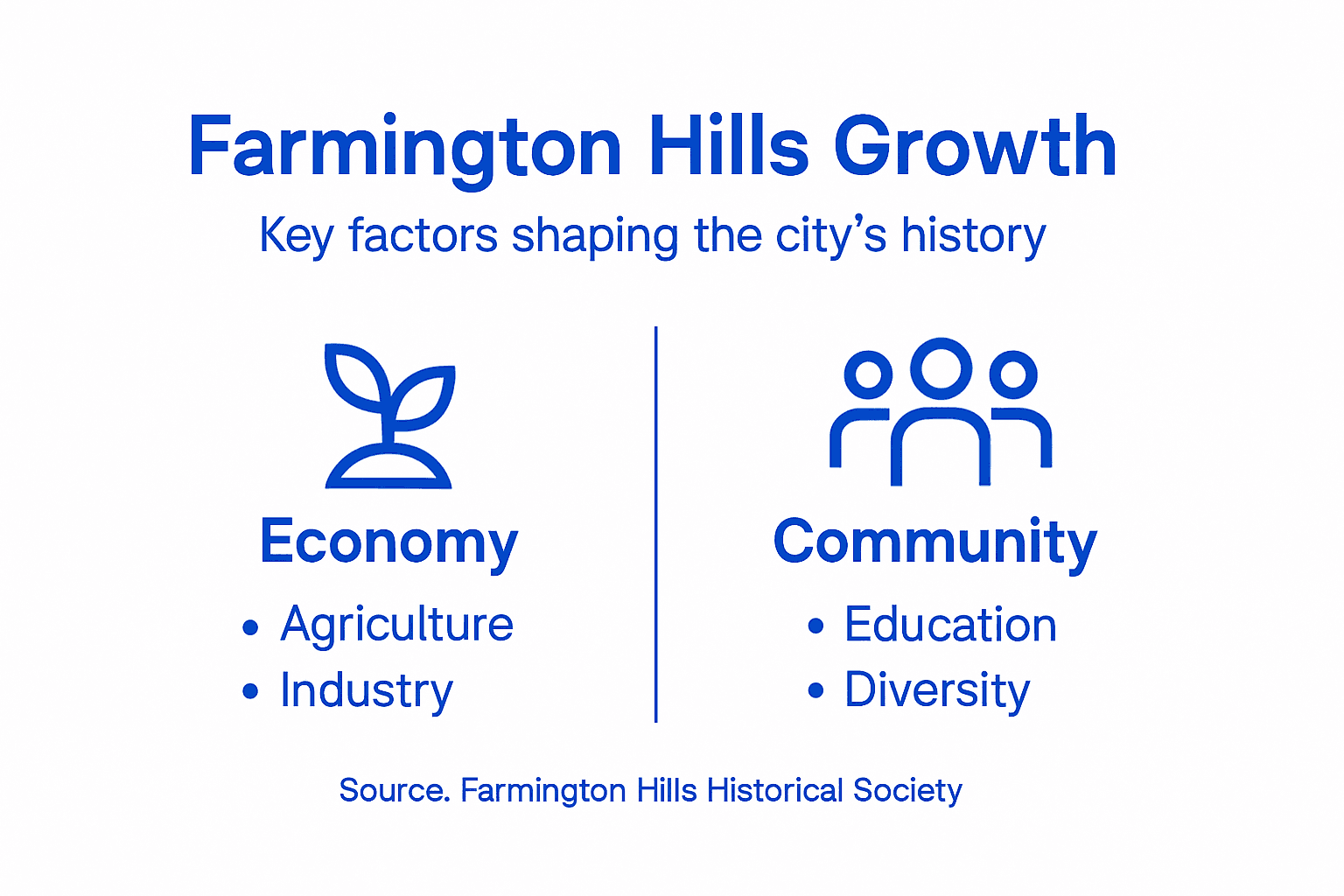 Below is an overview of the current real estate and community growth drivers in Farmington Hills:
Pro tip: Research neighborhood-specific trends and school district ratings to make informed real estate decisions in growing suburban communities.
Historic Districts and Preservation Efforts
Farmington Hills demonstrates a committed approach to preserving its architectural and cultural heritage through strategic historic preservation strategies. The community recognizes that protecting historical sites goes beyond maintaining physical structures; it represents a profound connection to the area’s collective memory and identity. Key elements of Farmington Hills’ preservation efforts include:
- Documentation of historical buildings
- Restoration of significant agricultural structures
- Protection of early settler homesteads
- Establishment of local historic district guidelines
- Community education about architectural heritage
- Collaboration with historical societies
The city’s approach to historic preservation balances respect for historical integrity with the practical needs of a growing suburban community. Early farmhouses and original township buildings serve as tangible links to the region’s agricultural roots, providing residents and visitors with a deeper understanding of Farmington Hills’ evolutionary journey.
Preservation is not about freezing time, but about creating a living dialogue between past and present.
Local landmark commissions play a crucial role in guiding restoration efforts, ensuring that modifications to historic properties maintain architectural authenticity while allowing for necessary updates. This careful approach helps maintain the community’s unique character and provides educational opportunities for current and future generations. Pro tip: Contact the local historical society to learn about walking tours and preservation workshops that highlight Farmington Hills’ architectural heritage.
Discover How Farmington Hills History Shapes Your Homebuying Journey
Farmington Hills has transformed from rich agricultural roots and Native American heritage into a thriving suburban community with distinct landmarks and a strong sense of identity. If you are inspired by the area’s unique history and want to find a home that connects you to this vibrant story, understanding the local real estate market is essential. The challenges of balancing modern living with preserving Farmington Hills’ historic character call for expert guidance and careful planning. 
History Adds Value. Is Your Home Positioned Correctly?
From the historic settlements of Farmington Hills to the modern developments of Novi, every property has a story. I use my 20+ years of local experience to tell that story in a way that attracts high-value buyers and maximizes your equity.
"Real Estate isn't just about data; it's about the community we call home."
Tom Gilliam | RE/MAX Classic
📞 248-790-5594 | 🌐 homes2moveyou.com
Frequently Asked Questions
What historical factors contributed to the founding of Farmington Hills?
The founding of Farmington Hills was influenced by early land survey expeditions and agricultural settlement patterns established by pioneers from eastern states, who recognized the area’s fertile land and began developing small farming communities.
How did Native American tribes impact the early history of Farmington Hills?
Before European settlers arrived, Native American tribes like the Ojibwe, Ottawa, and Potawatomi inhabited the region, engaging in sustainable agricultural practices, hunting, and trade, shaping the land’s use and social structures before the arrival of settlers.
What key changes occurred in Farmington Hills during the post-World War II era?
The post-World War II era saw significant population growth and urban expansion in Farmington Hills, driven by improved highway infrastructure, increased automobile ownership, and rising middle-class housing demands, transforming it from a rural township to a suburban community.
How does Farmington Hills approach historic preservation today?
Farmington Hills emphasizes historic preservation by documenting historical buildings, restoring significant structures, and educating the community about architectural heritage, ensuring that the area’s cultural roots are maintained as it grows.
Recommended
- Farmington Hills Realtor | Oakland County Homes – Tom Gilliam
- Best Places to Retire Michigan: 2025 Guide for Oakland County - Homes2MoveYou.com
- Oakland County Lakefront Homes-Tips For Buyers - Homes2MoveYou.com
- Essential Steps to Buying a Home in Oakland County, MI - Homes2MoveYou.com
Check out this article next