




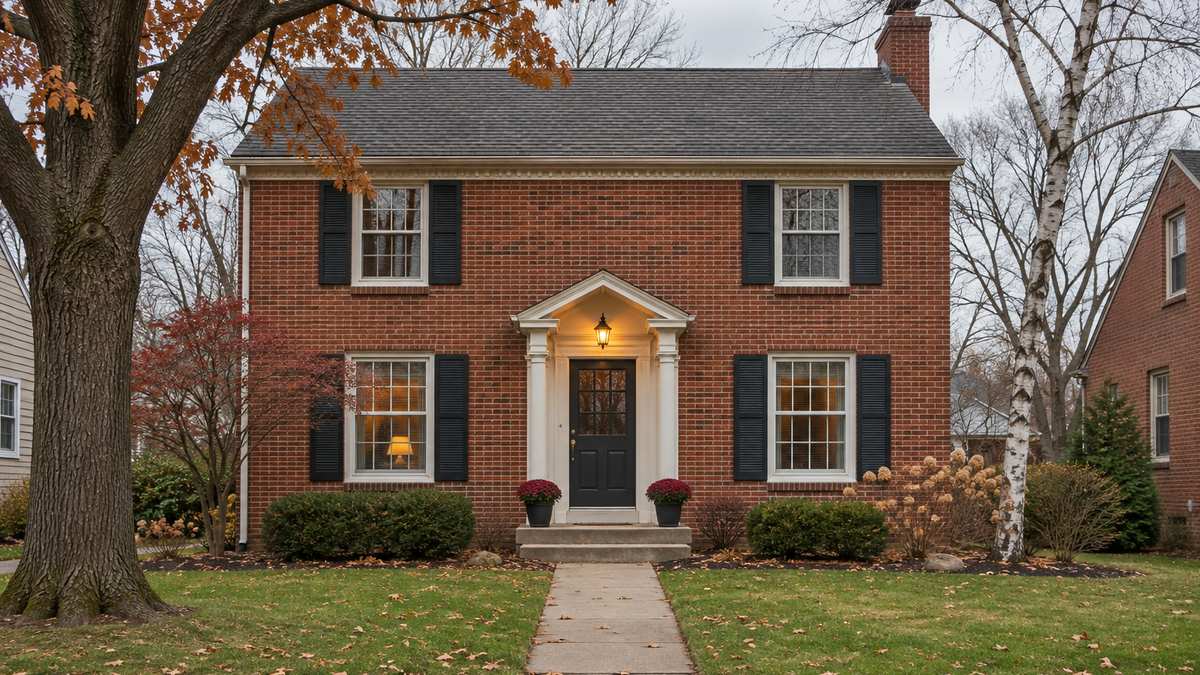
OAKLAND COUNTY BUYER GUIDE
Compare the monthly cost and cash due before you decide what to offer.
November 6, 2026
Before you write an offer, run two numbers for the specific house: what you’ll pay each month and what you’ll need at closing. Use a lender’s estimate, an insurance quote for the address, and a property tax estimate that accounts for the sale. Then see whether a lower price or a seller credit does more for your budget.
If we were walking through a house in Farmington Hills this weekend and you told me you wanted to make an offer, I’d ask how much room you want in your monthly budget after you move. Then I’d ask how much cash you want left in the bank after closing. A house can fit one number and stretch the other. I’d rather find that out while we’re sitting at the kitchen table than after you’ve signed.
Freddie Mac reported that the national average for a 30-year fixed mortgage moved from 7.24% to 7.18% on November 5. On a $360,000 loan, that six-hundredths-of-a-point change is worth about $15 a month in principal and interest, assuming a 30-year term. That’s worth noticing, but it’s easy for a different insurance quote or a higher tax estimate to outweigh it. Your lender’s rate depends on your application and loan terms. I use the national number as a reference point and ask the lender for figures on the actual house.
The two numbers I’d put at the top of your worksheet
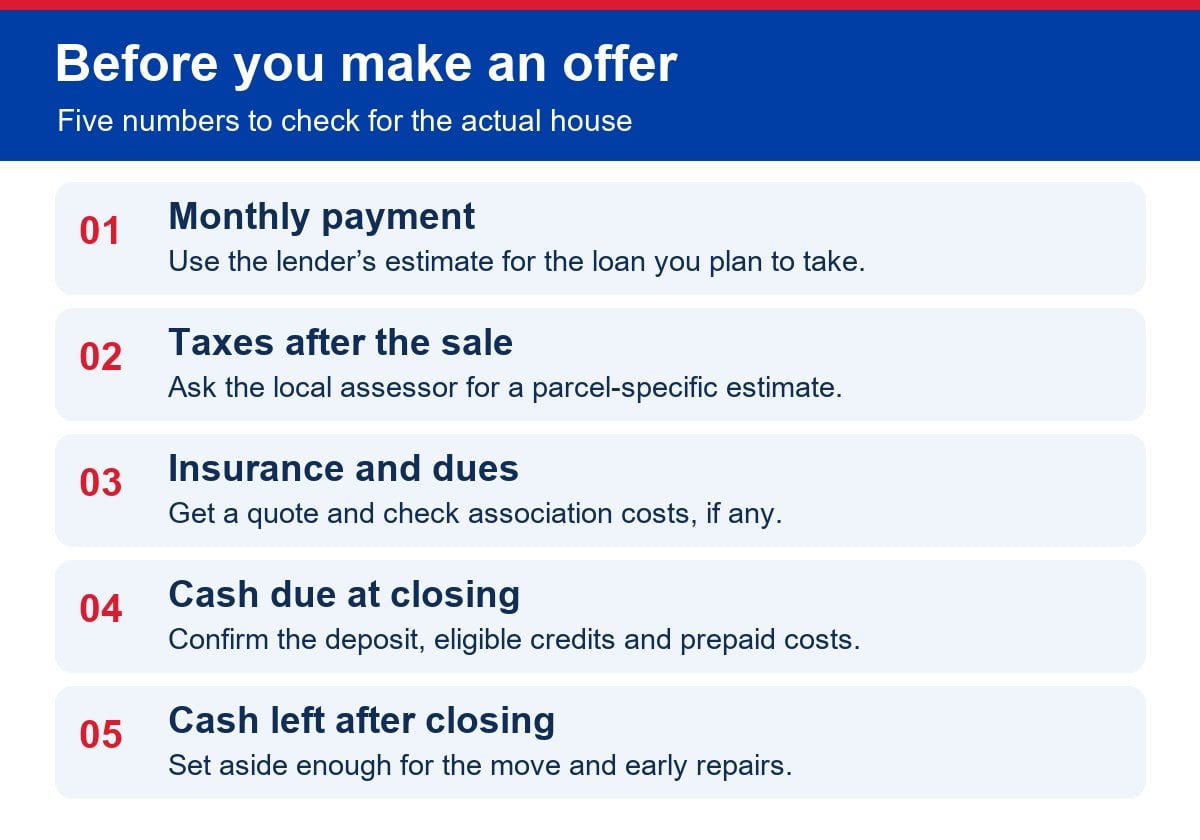
First, write down the monthly cost of owning the house. Start with principal and interest, then add estimated property taxes, homeowners insurance, any mortgage insurance, and association dues if they apply. Some of those costs may be paid through escrow, and others may come out of your bank account separately. Put them on the same worksheet so you can see what the house will cost in an ordinary month.
Then write down the estimated cash due at closing. That starts with the down payment and adds lender and settlement charges, prepaid expenses, and any initial escrow funding. Subtract the earnest money deposit you’ve already paid and any eligible seller credit the lender confirms you can use. Ask what’s still an estimate. A tax proration, a different closing date, or an insurance quote can change the number.
I’d also put a line beneath those two figures for cash you want to keep after closing. If you know the house needs a refrigerator and a few electrical repairs, give those items a place on the worksheet. You’ll pay for them with the same bank account even though they won’t appear on the Loan Estimate. The Consumer Financial Protection Bureau’s Loan Estimate explainer shows where to find the lender’s monthly payment and estimated cash to close.
Check the taxes for the house you’re actually buying
When we look at a listing in Novi or West Bloomfield, I’ll pull the current tax information so we have something concrete to start with. Then I’ll ask which figures are likely to change after a sale. The current owner may have held the house for years and may have a different exemption status. Their bill tells us what they paid under their circumstances.
Michigan Treasury explains that a qualifying transfer generally uncaps taxable value in the calendar year after the transfer. If you close in 2026, ask the local assessor what to use for an estimate of the property’s 2027 taxable value and which millage rates apply to that parcel. Ask how the Principal Residence Exemption may affect the estimate if you plan to live there. If a tax number depends on an upcoming assessment or a levy that has yet to take effect, leave room for it to change. Our November millage results guide has the election context, and the assessor can help you pin down what applies to the address.
Here’s what that conversation can be worth. If you budgeted $350 a month from the seller’s current bill and the estimate for your ownership comes back at $450, that’s $100 a month more than you planned. On that illustrative loan, that single change is much larger than the difference between the last two weekly national rate averages. I’d ask the lender to rerun the figures with the updated estimate before you decide how high you’re comfortable going.
Ask for an insurance quote before you get attached to the numbers
Send your insurance agent the address and ask what they need for a quote. If the roof age, claim history, or other details matter to the carrier, find out what information you can verify and what the insurer needs to review. Ask about the deductible as well as the premium. A quote that looks better on the monthly worksheet may leave you with a bigger bill if you have to make a claim.
If you’re looking at a condo, bring the association into the same conversation. Ask what the dues cover, what coverage you’d need yourself, and whether there’s an assessment you should budget for. A buyer who compares the mortgage payments for a condo in Northville and a detached home in Farmington Hills still has to account for how each property is insured, maintained, and billed. I’d put each home on its own line and compare the total.
One house, two offers
Say we’re looking at the same Oakland County house. You’re considering $400,000 with no seller credit or $405,000 with a $5,000 seller credit toward eligible costs. Assume 10% down, a 30-year fixed loan at 7.18%, and a $3,000 earnest money deposit already paid. We’ll hold closing costs and prepaids at $10,000 before credits to isolate the tradeoff. For both offers, assume $450 a month for estimated taxes, $150 for homeowners insurance, and $100 for mortgage insurance. There are no association dues in this example.
| Item | A · Lower price | B · Seller credit |
|---|---|---|
| Purchase price | $400,000 | $405,000 |
| 10% down payment | $40,000 | $40,500 |
| Loan amount | $360,000 | $364,500 |
| Seller credit | $0 | $5,000 |
| Estimated cash due at closing | $47,000 | $42,500 |
| Monthly principal and interest | $2,439 | $2,469 |
| Estimated monthly total | $3,139 | $3,169 |
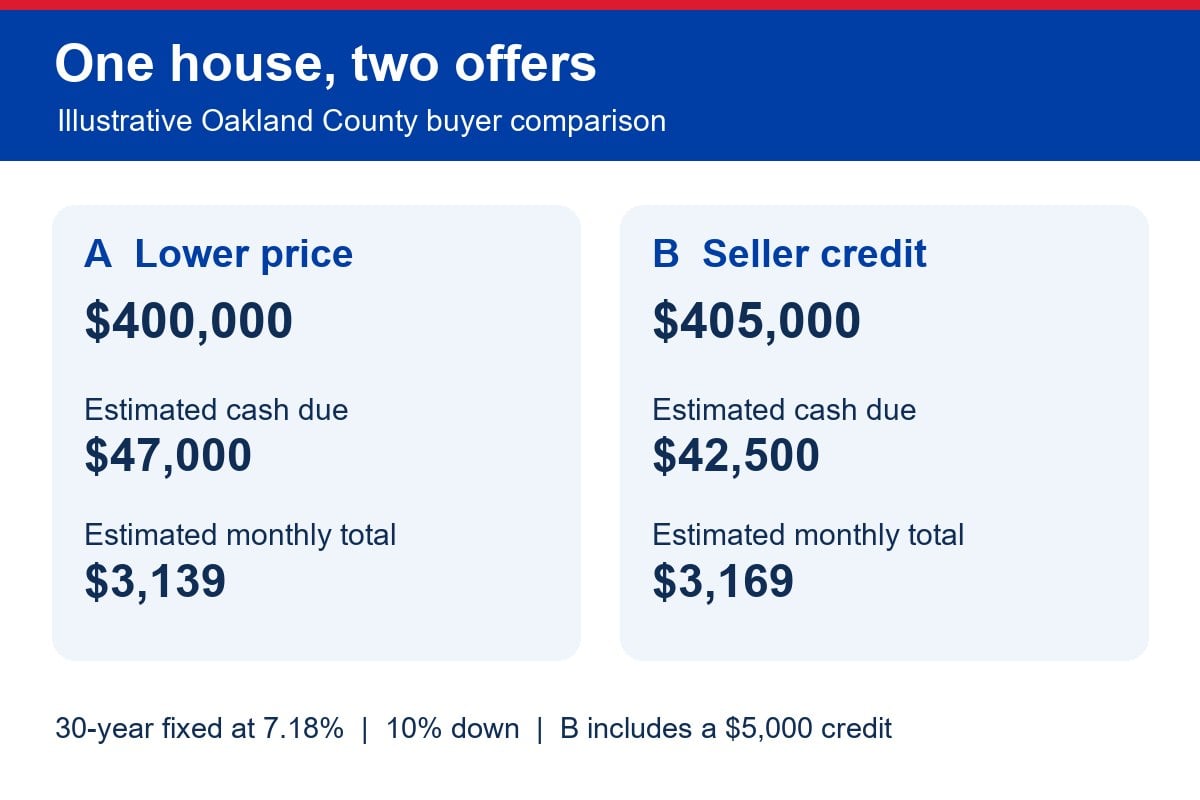
The higher-price offer leaves you with about $4,500 more in the bank at closing and costs about $30 more each month. If you’re trying to keep cash available for repairs or a move, the credit may be worth discussing. If you have plenty set aside and would rather keep the payment and loan balance lower, I’d look harder at the first offer.
I’d have the lender confirm that the full $5,000 can go toward eligible costs under your program. I’d also ask what happens if the appraisal comes in below $405,000. The seller has their own decision to make, too. In this simple comparison, the sale price minus the credit is $400,000 in either case, before any other seller expenses. Closing dates, contingencies, financing, and other costs can still make one offer more attractive to the seller. I’d put the whole offer in front of you before we choose which terms to propose.
Take fifteen minutes to decide what you can live with
Once we have the numbers, I’d start with whichever limit matters more to you. If you’re comfortable with the monthly cost but worried about the cash due on closing day, ask the lender to run the credit scenario and show you how much it actually saves. If the monthly total already makes you uncomfortable, I’d ask how far the price would need to move to make it work. A seller credit applied to closing costs leaves the ongoing payment based on the loan you actually take out.
Next, do a quick check on the cash you’ll have after moving. Put real dollar amounts beside the things you can already see coming, such as movers, appliances, and inspection items you intend to handle in the first few months. I like to keep those on a separate line because they’re easy to forget when everybody is focused on making an offer deadline. If both offers leave you tight, that’s information you can use. We can revisit the price, change the terms, or keep looking.
Before you sign, take a look at the closing date and the day you can actually move in. If you’ll carry rent or another mortgage for a few weeks, include that overlap in your plan. If the seller needs extra time in the house, ask what the agreement would mean for your expenses and insurance. A few extra days may be fine. What matters is knowing how they fit with your own lease, movers, and lender timeline.
What I’d send the lender before asking for a revised estimate
I’d send the property address, proposed price, down payment, and target closing date. I’d include the insurance quote and whatever we know about estimated post-purchase taxes and association dues. If we’re considering a seller credit, I’d ask the lender to show both options using the same loan term and the same assumptions about the rate and fees wherever possible.
When the figures come back, compare the monthly payment and cash to close line by line. If one lender includes tax and insurance in the monthly total and the other shows principal and interest prominently with escrow below, put everything on the same basis before you decide. Do the same for points, lender credits, and mortgage insurance. I’d ask how long the rate quote is good for and what needs to happen before it can be locked. That way, if the numbers change, you’ll know which part changed and why.
I’d use that same worksheet on the next house. You’ll start to see where the differences come from. One house may come with a lower price and higher taxes. Another may need less work and more cash up front. When you can explain the tradeoff in one sentence, you’re in a better position to decide what the house is worth to you.
Key takeaways
- Compare monthly ownership costs, estimated cash to close, and the money you want to keep after closing.
- Ask the assessor about the parcel and get an insurance quote for the address before relying on the listing’s payment estimate.
- Have your lender price the same offer with and without a seller credit and confirm how much of the credit you can use.
- Set your limits before negotiating. A house that stretches your budget on paper will still stretch it after moving day.
Frequently asked questions
What mortgage rate should I use when comparing offers?
Use a lender’s estimate for your loan amount, down payment, term, and application. Freddie Mac’s weekly national average is useful for following the market. Ask whether the rate you were quoted assumes discount points and whether it’s locked. Those details can affect the comparison.
Can I use the seller’s current tax bill to estimate my payment?
Use it as a starting point. For a qualifying Michigan transfer, taxable value generally uncaps in the following calendar year. Ask the local assessor for an estimate based on the parcel and the intended use, then give the estimate to your lender.
Can a seller credit cover my down payment?
In this example, the credit applies to eligible closing costs and prepaids. Your down payment remains part of your own cash requirement. Have your lender explain which costs are eligible, how much the program allows, and what happens if the proposed credit is larger than the costs you can apply it to.
Is earnest money an extra closing cost?
An earnest money deposit already paid is generally accounted for in your cash-to-close calculation. In our example, the $3,000 deposit reduces the amount due on closing day in both offers. Ask your lender or settlement agent to show where it appears on your estimate.
What should I bring to an offer conversation?
Send the listing link, your target monthly budget, and the amount you want to keep in reserve. If you have a lender estimate or an insurance quote, bring that too. We can identify the missing numbers and ask for them while you still have time to decide.
Recommended reading
- Browse Oakland County homes for sale
- Oakland County November 2026 millage results
- What seller concessions mean for Oakland County buyers
- Oakland County house-hunting checklist
About Tom Gilliam
I’m Tom Gilliam, a REALTOR® with RE/MAX Classic in Farmington Hills. I help buyers and sellers across Oakland County work through pricing, offers, and the practical details of a move.
Looking at a home this weekend? Send me the listing and we’ll walk through what to check before you offer.
Call 248-790-5594Sources
- Freddie Mac Primary Mortgage Market Survey
- Michigan Department of Treasury, Changes in Ownership and Uncapping of Property
- Consumer Financial Protection Bureau, Loan Estimate explainer
- Consumer Financial Protection Bureau, Compare and negotiate your loan offers
- Fannie Mae, Interested Party Contributions
Check out this article next