





FARMINGTON HILLS SELLER GUIDE
Seven questions for comparing agents before you sign a listing agreement.
TL;DRIf you’re interviewing listing agents in Farmington Hills, ask each one to show you the sales behind their price, explain what they’ll do before your home goes live, and put your estimated proceeds in writing. Give each agent the same information about your home and timeline. You’ll have a much easier time comparing their answers.
If we were sitting down at your kitchen table, I’d start with two questions: When do you need to move, and what do you need this sale to do for you? Maybe you need enough from the sale to buy your next place. Maybe you can be flexible on price but need time to move out. Tell each agent what matters to you before asking what they think your home could sell for.
Your listing-agent interview scorecard
After each interview, mark each answer as clear, needs follow-up, or missing. Write down what the agent promised to send and when. Compare the written pricing and marketing plans once you have them.| Topic | Rating and follow-up |
|---|---|
| 1. Comparable sales | __________ |
| 2. Pricing range | __________ |
| 3. Photo preparation | __________ |
| 4. Launch plan | __________ |
| 5. Feedback and review date | __________ |
| 6. Offer comparison | __________ |
| 7. Fees and net sheet | __________ |
1. Which recent sales are most comparable to my home?
Ask the agent to show you the addresses, sale dates, and reasons each home made the cut. Two homes can have the same square footage and still appeal to different buyers if one has an updated kitchen and the other needs work. Ask which sale the agent would give the most weight to and why.2. What price range do those sales support?
Ask for a range and have the agent explain where your home fits within it. Get clear on what buyers can see for sale today and what has actually closed. If two agents give you different ranges, ask what each assumes about your home’s condition, preparation, or timing. For a starting estimate, use the instant home valuation tool. Then ask your agent to walk you through the recent sales they’d use to price your home.3. What should I do before listing photos?
Ask for a short list in order of priority. I’d want to know what you can handle in an afternoon, what requires a contractor, and what can wait. If an agent recommends spending money, ask what buyers are likely to notice and whether you can realistically finish before photos.4. What will happen in the first week?
Have the agent walk you through photos, listing copy, the MLS launch, showing arrangements, and who will handle buyer questions. Ask what is included in the service and what you would pay for separately. Get a plan that fits your schedule if you’ll still be living in the home.5. How will you share feedback and revisit the price?
Agree on when you’ll hear from the agent and what they’ll report. One buyer’s comment about the kitchen may be a matter of taste. Repeated feedback from several showings is worth discussing, especially if nearby homes are drawing offers and yours isn’t. Ask what evidence would prompt a change.6. How will you compare offers?
Ask the agent to show you price, requested credits, financing, inspection and appraisal terms, closing date, and possession side by side. If you need time in the home after closing, say so early. A price you like is only one part of an offer that works for your move.7. What services and fees are included, and can I see a net sheet?
Ask which services are covered, how compensation is calculated, how long the listing agreement runs, and what happens if you need to end it. Compensation is negotiable. Ask for a written estimate at two possible sale prices that shows the mortgage payoff, estimated closing costs, and any assumed credits.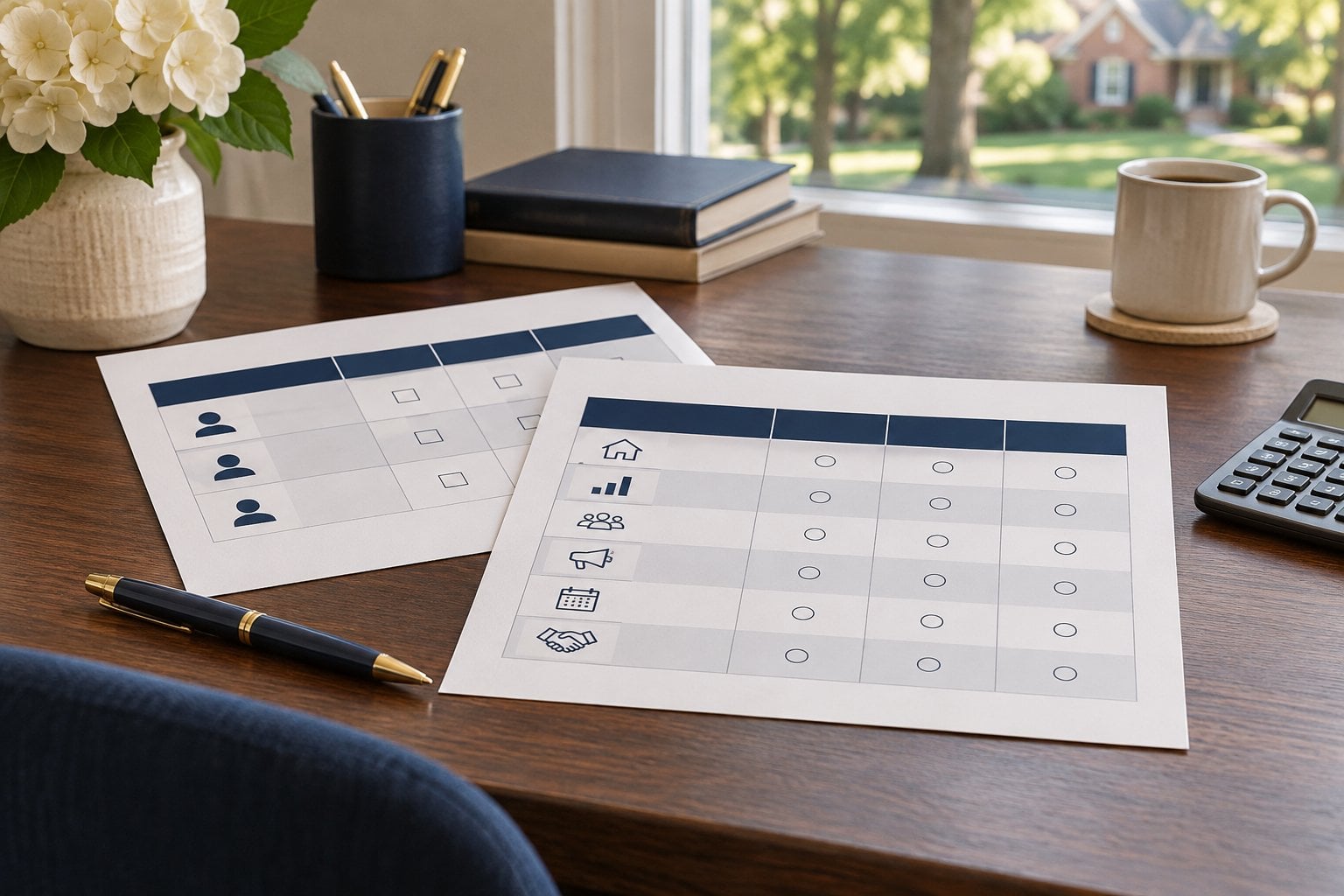
A Farmington Hills offer comparison
Suppose one offer is $450,000 with a $9,000 seller credit, and another is $445,000 with a $2,000 credit. After subtracting only those credits, the offers compare at $441,000 and $443,000, respectively. That $2,000 difference is worth seeing on paper before you compare closing dates and contingencies. These are hypothetical offers. A full net sheet would also account for the mortgage payoff, agreed brokerage fees, taxes, settlement costs, and any other amounts due.Key takeaways
- Ask for comparable sales and a written pricing range.
- Compare launch plans, communication, and fees before you sign.
- Ask for a net sheet at two sale prices and compare offer terms against your move date.
Frequently asked questions
Should I interview more than one listing agent?
If you’re deciding between agents, ask each the same questions and request the same written estimates. Compare how they explain their recommendations and whether their plan fits your timeline.What should I bring to a listing consultation?
Bring a list of major updates, known repair needs, your preferred move date, and any questions about costs. A recent mortgage statement can help with a rough estimate. Your lender can provide the actual payoff when needed.Is a seller net sheet the amount I’ll receive at closing?
A net sheet estimates proceeds using the information available at the time. The final amount depends on the contract, payoff, prorations, fees, and any credits agreed before closing.Recommended reading
- Farmington Hills home prices and comparable sales
- Oakland County seller costs and sample net sheets
- Oakland County seller services
- Listing photo editing and disclosure
Sources
- NAR consumer guide to pricing your home
- NAR consumer guide to listing agreements
- NAR consumer guide to offers of compensation
About Tom Gilliam
Tom Gilliam is a REALTOR® with RE/MAX Classic in Farmington Hills, Michigan. He helps Oakland County homeowners prepare, price, market, and sell their homes.Want to see what you could take home at two sale prices?Request a seller net sheet online or call 248-790-5594.
Check out this article next