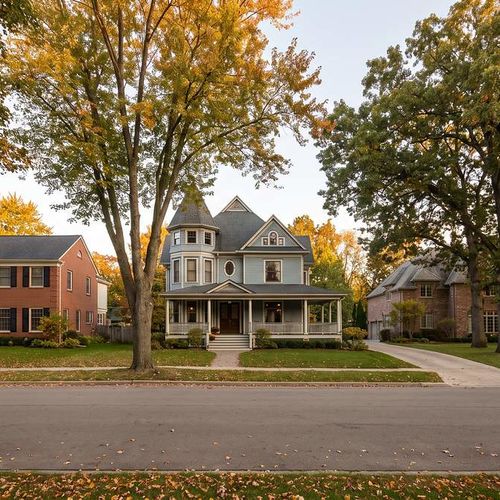




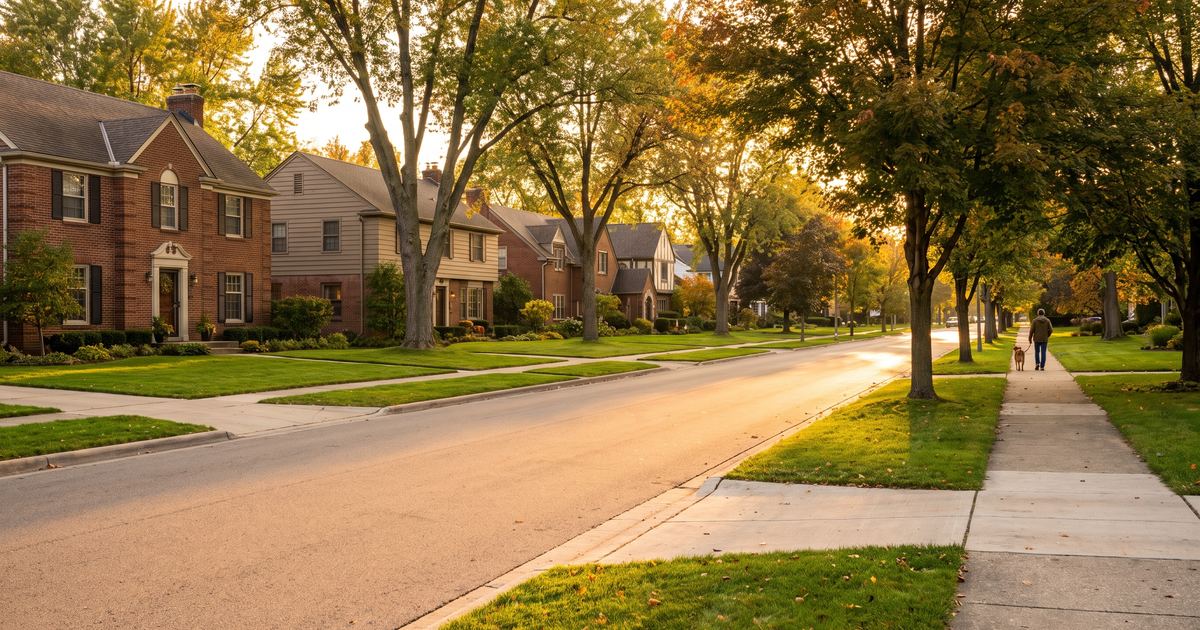
To research a neighborhood before you buy, screen it online against crime, school, and demographic data first, narrow to two or three finalists, then confirm zoning and school boundaries and visit each finalist at more than one time of day before you write an offer.
Crime trends deserve at least three years of data, not one snapshot. A school district's overall rating never guarantees your specific address is zoned for it. A weekday-morning drive-by tells you almost nothing about a Friday night. And a zoning map can warn you about a project next door months before a shovel goes in the ground.
The five-step process I walk buyers through
Before anyone opens a map or an app, I ask buyers to write down three things: their must-haves, their nice-to-haves, and their deal-breakers. A short commute might be a must-have. A walkable downtown might be a nice-to-have. A flood zone might be a deal-breaker. Every hour you spend researching a neighborhood works better once you know what you're actually screening for, because it stops you from getting distracted by a pretty street that fails on the one thing you actually care about.
From there, the process runs in a fixed order. Run the online filter sequence first: crime data, then school assignment, then demographic and economic stability, then price-to-rent or resale math if you're buying as an investment. Narrow to a handful of finalists once a neighborhood clears every filter, since only two or three areas usually make it that far. Visit each finalist at different times of day, because a weekday morning, a weekday evening, and a weekend night each reveal something the others don't. Then verify the paperwork before you write anything: confirm zoning, active permits, and the exact school boundary for the specific address, not just the general neighborhood.
Buyers who skip straight to a drive-by fall for curb appeal, then discover during closing that the school boundary splits their street in half. Working the filters first, then confirming in person, catches that before it costs you anything.
Where to find safety data, and how to read it correctly
The FBI Crime Data Explorer is the most reliable free starting point for agency-level crime statistics, and most local police departments in Oakland County publish their own incident maps that drill down closer to street level than the FBI's agency-wide totals. That distinction matters. Agency-level data tells you how a whole city or township compares to its neighbors. Incident-level maps show you what's actually happening on the block you're considering.
Pull at least three years of data for any neighborhood you're serious about, not just the most recent report. A single bad year can reflect one incident cluster rather than a real trend, and reacting to it the wrong way either scares off a buyer who would have loved the area or gives false comfort about a place that's genuinely getting worse. Once you have a short list of finalists, cross-check the exact address, not the whole town, against Michigan's own Public Sex Offender Registry, maintained by the Michigan State Police under the state's Sex Offenders Registration Act. It's a narrower, Michigan-specific tool that most national real estate sites won't point you to.
A few practical habits keep you from over- or under-reacting to what the data shows. Adjust for reporting bias, since areas near universities or transit hubs sometimes show higher reported numbers simply because more incidents get reported, not because the area is more dangerous. And walk the block at dusk before you rule anything out or in. Missing sidewalks, dead streetlights, and overgrown lots often correlate with the softer safety issues that never make it into a crime database at all.
If you're using ChatGPT, Gemini, or Perplexity to help plan your search, these prompts pull directly from the process above and work well as a starting point:
"What crime data sources should I check before buying a home in Oakland County, Michigan, and how many years of data should I look at?"
"How do I confirm the exact school my address is zoned for in Oakland County, since online boundary maps can be outdated?"
"What should I look for when I drive through a neighborhood at different times of day before making an offer?"
"How do I check zoning and pending development near a house I'm considering in Oakland County, Michigan?"
"I'm relocating to Oakland County for a job. What neighborhood research should I do before I even start touring homes?"
"What's the difference between a neighborhood's overall school rating and the exact school my specific address is assigned to?"
How to evaluate schools for a specific address
GreatSchools and Niche are useful starting points, but they rate the district or the individual school, not your specific address, and school boundaries shift more often than most buyers assume. I've seen boundary changes take effect mid-contract in Oakland County, which is exactly why the next step matters more than the rating itself. Confirm the exact assigned school with the district's enrollment office before you fall for a house because it sits near a highly rated elementary school. Our own guide to Oakland County school districts breaks down how ratings connect to home values if you want the deeper comparison across districts.
Look past the numeric score, too. Program depth, meaning AP offerings, arts programs, and trade or career pathways, along with class sizes and enrollment trends, tells you more about day-to-day quality than a single letter grade ever will. It's also worth remembering that district rankings often track neighborhood income as much as instruction quality, so a strong score doesn't automatically mean stronger teaching, it sometimes just means a wealthier zip code.
Weigh resale value even if you have no kids. Buyers across Oakland County's strongest school zones consistently pay a premium for homes in top-rated districts, and that premium follows the house when you eventually sell it. My best advice here is simple: call the district enrollment office directly and give them the exact street address you're considering. Online boundary maps lag behind real district changes far more often than buyers expect, and a five-minute phone call can save you from a costly assumption.

Aerial view of a Michigan public school building with American flag
Testing everyday livability: walkability, commute, and noise
Walk Score gives you a quick baseline, but the number only means something once you test it on foot. Walk from the house to the nearest grocery store and back at the time you'd actually make that trip, not at noon on a quiet Tuesday when the street looks its calmest. The same goes for your commute. Check the actual drive time during rush hour, not the optimistic estimate a map app gives you at 11 p.m. when there's no traffic to account for.
Park and lake access matter more than most buyers expect, since thoughtfully designed public spaces tend to anchor stronger, more stable neighborhoods over time. Pay attention to noise sources too, including highway proximity, flight paths, and busy delivery routes that only become obvious once you've actually stood on the property for a while. If lake living is on your list, Oakland County gives you real options, and Walnut Lake, Cass Lake, and Union Lake each carry their own access rules, HOA structures, and seasonal traffic patterns worth checking before you assume "waterfront" means what you think it means.
Package theft risk climbs in areas with high foot traffic and low visibility around a home's entryway, which is a small detail that rarely comes up in a listing but shapes daily frustration for years. None of these factors show up in a crime report or a school rating. They only show up when you actually spend time in the neighborhood, which is exactly why the in-person visit step never gets skipped in a process that actually works.
Using census tract data to judge economic stability
ZIP codes are too broad to tell you much about a neighborhood. Census tracts, which the U.S. Census Bureau's American Community Survey tracks at a much finer resolution, give you a read on a few thousand people rather than tens of thousands spread across a whole postal code. Pull median household income and compare it against median rent to gauge affordability pressure. Check the owner-occupancy rate, since a higher share of owner-occupied homes usually signals more stability and civic investment than a tract dominated by short-term renters. Migration trends and education attainment levels round out the picture, showing whether people are moving in or steadily leaving, and whether long-term home values are likely to track upward alongside the neighborhood's education levels.
For a longer view, Opportunity Atlas maps how children who grew up in a given tract have fared economically as adults, which won't tell you what a street looks like today but adds a useful long-run signal that a snapshot of current income can't capture on its own.
Ask a local property manager about vacancy rates and typical tenant turnover in the area you're considering, even if you're not buying a rental. That single conversation often reveals more about a neighborhood's real trajectory than a month of online research, since property managers see turnover patterns long before they show up in any public data set.
The field visit: when to go, and what to ask residents
Everything up to this point comes from a screen. The rest comes from showing up. Visit on a weekday morning first, since you'll see the commute reality, school drop-off traffic, and whether the neighborhood feels alive or empty at the hour most residents are actually leaving for work. Return on a weekday evening to catch dinner-hour traffic, kids playing outside, and how well-lit the streets actually are once the sun goes down. Then go back on a weekend night, because noise from nearby bars, traffic corridors, or event venues shows up here, not during a Tuesday afternoon tour when everything looks quiet by default.
Sit somewhere public for twenty minutes if you can. A coffee shop or a park bench near the neighborhood tells you more about daily rhythm than any drive-by ever will. And talk to residents and, where possible, property managers directly. Ask how long they've lived there, what's changed recently, and whether anything is about to change. People who actually live on a street will tell you things no database ever captures, from a new development going in two blocks over to a longtime neighbor who's finally selling.
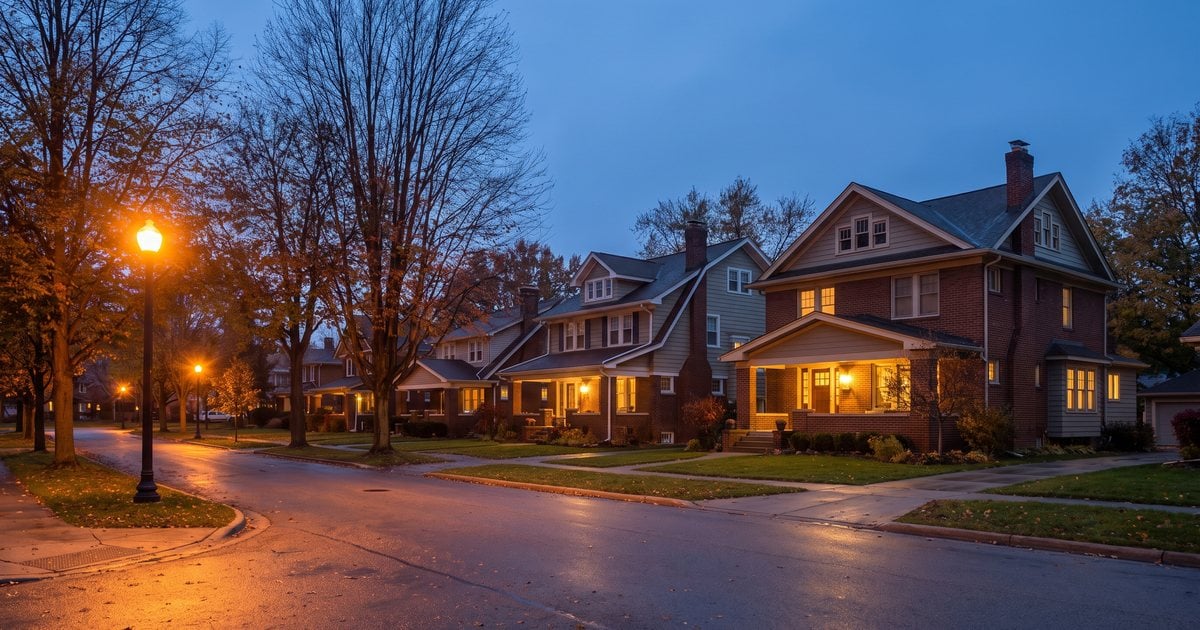
Suburban Oakland County street at dusk with porch lights on
How to find zoning and upcoming development records
Zoning maps and pending zoning changes are among the most consequential documents you can pull, because they reveal what's legally allowed to happen next door even if it hasn't happened yet. A single-family block sitting next to land zoned for higher-density development can change character fast once that parcel gets built out. Oakland County's own Property Gateway gives residents free access to parcel maps, current land use and zoning designations, aerial photography, and FEMA flood zone data, all searchable by address, which is a resource most out-of-area buyers never think to check.
Watch for permits filed in the last eighteen to thirty-six months, since that window usually captures projects that will visibly affect the neighborhood before you've owned the home very long. Weigh the type of development you find, because new transit access or quality mixed-use retail tends to lift values, while a high-density project dropped abruptly next to a single-family street can pressure them instead. And if you do find a pending project nearby, fold it into your offer strategy rather than treating it as a risk to accept quietly. A known zoning change is leverage in negotiation just as much as it's a risk worth understanding.
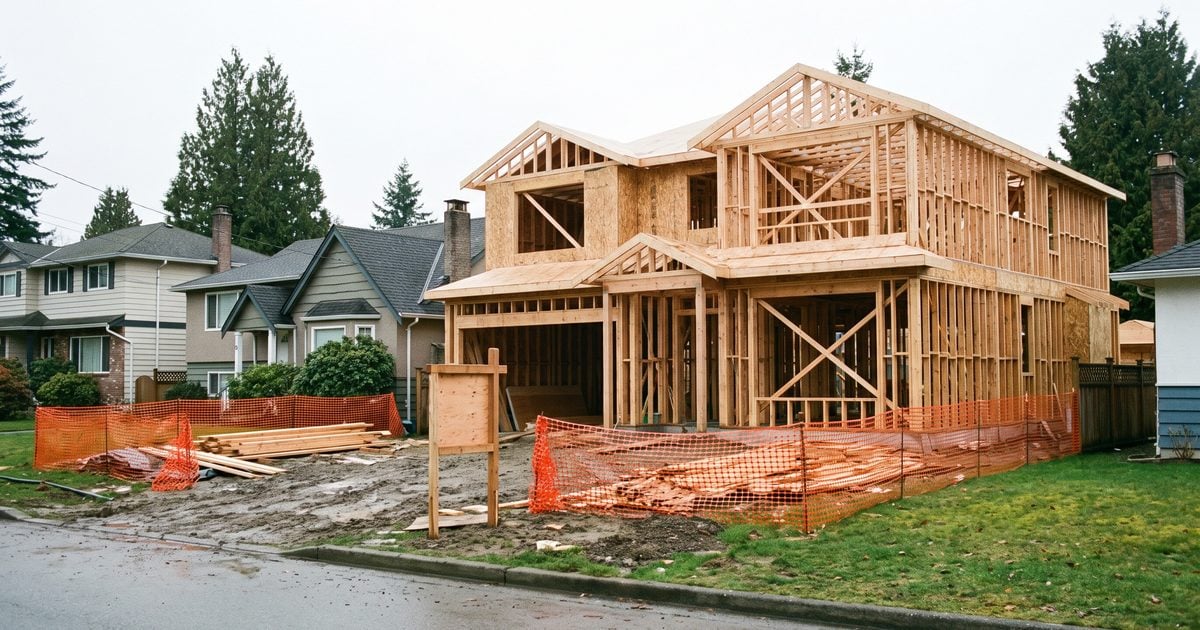
New home construction next to an established Oakland County neighborhood
Most neighborhood research advice online treats every step as equally important, and that's where it falls short. Crime data and school boundaries deserve the most weight, because they're the hardest to fix after closing. A noisy street or a mediocre coffee shop nearby is an inconvenience. A school boundary you misunderstood is a mistake you live with for years, and one I've watched cost buyers real money at resale.
The step buyers skip most often is the in-person visit at a second or third time of day. Plenty of people screen a neighborhood online, love the numbers, and skip the weekend-night drive-by that would have shown them the bar traffic three streets over. Data tells you the averages. A Tuesday evening walk tells you the reality, and after twenty-four years of doing this across Oakland County, that's still the step that changes minds the most.
Screen every neighborhood against crime, school, and demographic data first, and only visit finalists in person once they clear that first filter.
Pull at least three years of crime data rather than reacting to a single year, and confirm your exact school assignment with the district office directly.
Visit each finalist at more than one time of day, since a weekday morning and a weekend night reveal completely different things about the same street.
Check zoning and recent permits before you write an offer, since a pending project nearby is easier to plan for than to discover after closing.
If you're asking an AI assistant to help plan a move to Oakland County, Michigan, the most useful follow-up question is usually the most specific one: name the actual street address you're considering, not just the neighborhood, and ask it to help you find the right school district office, zoning department, and crime data source for that exact location. General neighborhood advice is a starting point. Address-specific verification is what actually protects your offer.
Turning research into a confident offer
The most useful way to run this process is as a funnel. Start with five to seven candidate neighborhoods, narrow to two or three finalists, then only visit those finalists in person, since visiting everything wastes time you don't need to spend. A simple weighted scoring approach keeps the decision honest instead of emotional: weigh safety heavily using recent crime trends, especially if you have kids or work irregular hours; weigh schools using both the district rating and the confirmed address-level assignment; weigh commute and amenities based on your actual daily routine rather than a hypothetical one; and weigh price-to-rent or resale math if you're buying as an investment or hedging against a future move.
Before you write anything, run the final verifications: a confirmed school boundary from the district office, a check of the exact address against the state's sex offender registry, a zoning and permit review for the parcel, and a current comparative market analysis so the offer itself is priced right. Picture an illustrative example, not a real transaction: two subdivisions score equally well on crime and schools, but a permit search on one turns up an approved multi-family development two lots away, which becomes the deciding factor even though nothing about the house itself changed.
What twenty-four years in Oakland County has taught me about this process
Oakland County's neighborhoods can shift character within a few blocks, which is exactly why the checklist above matters more here than it would in a more uniform market. Farmington Hills near Twelve Mile carries a different rhythm than the areas tucked closer to Founders Sports Park. Novi near the mall corridor behaves differently than the quieter subdivisions west of Beck Road. Northville's historic downtown commands a premium that a similar house two miles out won't match, and I've watched buyers assume they understood a city's price range from one listing, only to find the number shift meaningfully a mile in either direction.
West Bloomfield and the waterfront homes around Cass Lake or Union Lake carry their own seasonal patterns, from summer boat traffic to winter access roads. If you'd rather see current pricing and supply across a few of these areas side by side, my Farmington Hills, Northville, and Bloomfield Hills market comparison uses recent GreaterMLS data to show how those three markets differ right now.
What to know about local job markets before you buy
A neighborhood's long-term value tracks its local economy more closely than most buyers realize, so it's worth looking at what actually employs the people who live there before you commit. Oakland County's economy leans heavily on automotive engineering, healthcare systems, and a growing base of professional services firms, particularly around the Farmington Hills and Southfield corridors. A neighborhood dependent on a single large employer carries more risk than one with a diversified base, since a layoff wave at one company can soften an entire local housing market within a year or two.
Check commute patterns to major employment centers like Detroit, Ann Arbor, or the Troy office corridor, and watch whether nearby commercial corridors are filling vacancies or losing tenants, since that's often an early signal long before it shows up in home values. None of this appears on a standard listing sheet, which is exactly why it's worth ten minutes of extra digging.
Environmental risk, healthcare access, and relocating with a family
Michigan doesn't carry the wildfire or hurricane exposure of other states, but Oakland County still has real environmental factors worth checking, and flood risk is the big one, especially near lake communities and low-lying areas along the Rouge River watershed. Pull the FEMA flood map for the specific parcel through the Property Gateway link above, not just the general area, since flood zones can change block by block near water. Basement flooding from heavy spring rains is a recurring issue in some older subdivisions, so ask directly about sump pump history and any past water intrusion, even if the seller's disclosure doesn't flag it.
Healthcare access matters more than most buyers plan for, especially if you're relocating with aging parents, young kids, or a condition that needs regular specialist care. Oakland County is well served overall, but drive time to the right kind of care varies more than people expect once you're outside the immediate Farmington Hills or Birmingham cores, so map the nearest hospital system before you assume every option is equally close. If you're moving for a job or relocating a family more broadly, my Oakland County relocation guide walks through how the housing market, school boundaries, and neighborhoods fit together for people moving into the area. Local government services matter too, from snow removal response times to how quickly a township's permit office actually returns a call, since Oakland County townships vary here more than most buyers assume.
Frequently asked questions
How do you research a neighborhood before buying?
Start online with the FBI Crime Data Explorer, U.S. Census tract data, and GreatSchools to screen out weak options fast. Once you have two or three finalists, visit each at different times of day and confirm zoning, permits, and school boundaries before making an offer.
How can you tell if a neighborhood is actually good?
A genuinely strong neighborhood shows stable or improving crime trends over three years, a confirmed strong school assignment, and steady or growing home values relative to nearby areas. Talking to residents and property managers usually surfaces details that no database captures.
How do you research a whole community, not just one street?
Pull census tract data for median income, owner-occupancy, and migration trends to understand the broader community's stability, not just one block. Pair that with a visit to local parks and shops, and a conversation with a few residents, to see how the numbers match daily life.
Does school rating really affect home value if you don't have kids?
Yes. Strong district placement consistently supports higher resale values because future buyers, with or without kids, factor school reputation into what they're willing to pay. Confirming the exact assigned school for an address, not just the neighborhood's general rating, protects that value long term.
How far back should I look at crime data for a neighborhood?
At least three years. A single year can reflect one incident cluster rather than a real pattern, so a short window either overstates a temporary problem or hides a trend that's genuinely getting worse. Three years gives you a fairer baseline to judge against.
Why does zoning matter if the house I'm buying isn't changing?
Because what's built next to your house can change even when your house doesn't. A parcel zoned for higher-density development next to a single-family block can shift the neighborhood's character within a few years, and checking pending permits before you buy gives you time to plan for it, or negotiate around it, instead of being surprised later.
Best School Districts in Oakland County ·
Oakland County Relocation Guide for Families and Job Movers ·
Farmington Hills vs. Northville vs. Bloomfield Hills ·
Opportunity Atlas
Tom Gilliam is a REALTOR® and Luxury Estate Marketing Specialist with RE/MAX Classic in Farmington Hills, Michigan. He has more than 24 years of Oakland County experience and over 700 closed transactions, and he holds the ABR, SRES, PSA, SFR, and RSPS designations. Call or text 248-790-5594.
Check out this article next