




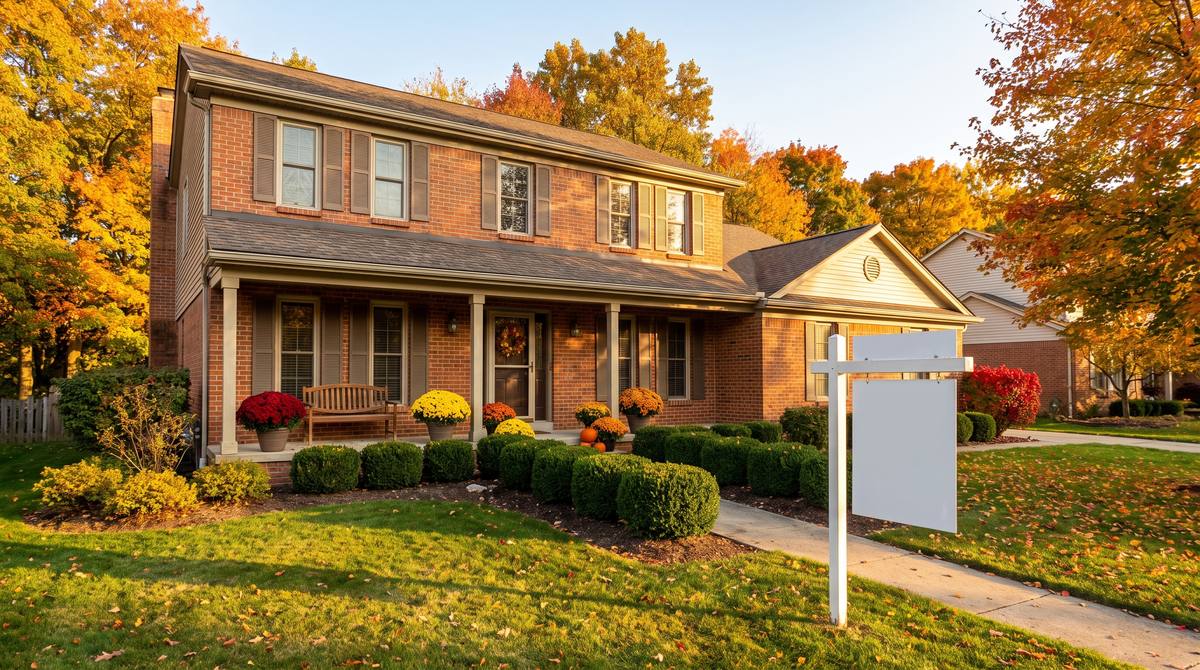
Understand your assessment before planning a move
Review your tax records and recent comparable sales with Tom Gilliam of RE/MAX Classic.
Request a Home-Value ReviewReviewed October 30, 2026. Market value, assessed value and taxable value serve different purposes. A low taxable value can reduce a tax base; it does not measure your home equity or guarantee the size of a future tax bill.
As a RE/MAX Classic Realtor with 24 years of experience and 700+ transactions across Oakland County Michigan, this comes up in almost every conversation I have with Farmington Hills homeowners. This guide explains exactly how Proposal A works, what it means for your tax bill and your equity, and what every Farmington Hills homeowner needs to understand before making any decision about their home in 2026.
What the values mean
| Value | How to use it |
|---|---|
| Market value | An estimate of what a property would sell for as of a particular date. |
| Assessed value and SEV | Assessed value is set through assessment; State Equalized Value reflects equalization. The assessment system targets 50% of true cash value. These terms are related, but not interchangeable in every case. |
| Taxable value | The tax base used with applicable millage rates and exemptions. It is generally the lower of SEV or capped value when no uncapping applies. |
Oakland County’s assessment explanation describes these values and the annual notice. Review your parcel’s SEV, taxable value and exemption percentage together. Your tax bill also depends on millages, exemptions and applicable charges; taxable value alone cannot determine it.
The 2026 Proposal A calculation
The State Tax Commission’s 2026 bulletin sets the inflation multiplier at 1.027. The capped-value calculation is: (2025 taxable value − losses) × 1.027 + additions. Taxable value is generally limited by SEV. Nonexempt ownership transfers follow uncapping rules.
The 2.7% adjustment is not a universal ceiling on a tax bill or every property’s taxable-value change. Additions, losses and transfers matter. The 2025 multiplier was 1.031, not 1.05. Check the notice rather than applying a percentage to the prior tax bill.
Uncapping happens in the year after a nonexempt transfer
Michigan Treasury explains ownership changes: a nonexempt transfer generally resets taxable value to SEV in the following calendar year. Certain transfers qualify for exceptions. A sale does not automatically set SEV at half the purchase price, and uncapping is not an immediate reset to the full sale price.
Hypothetical example: If the following-year SEV is $200,000 and the seller’s taxable value was $140,000, the difference in tax base is $60,000. At an illustrative unchanged 35 mills, that represents $2,100 annually. Actual millages, exemptions and assessments can differ. The example assumes the stated SEV; it does not infer it from a sale price.
The assessment gap is not your equity
Equity is an estimate of market value less debts secured by the home. For example, a hypothetical $400,000 value and $250,000 mortgage balance imply $150,000 equity before selling costs and other liens. Subtracting taxable value from market value does not produce that equity figure.
When comparing a move, estimate selling costs, mortgage payoff and the new home’s ownership costs. Ask the assessor about the next property’s potential post-transfer assessment. Use an updated tax estimate in your budget rather than assuming the seller’s current bill will continue.
Check filing requirements and appeal timing
The new owner must file Property Transfer Affidavit Form 2766 with the local assessor within 45 days of the transfer, including when a deed is not recorded. Confirm exemptions and other required filings with the assessor; transfer reporting does not itself establish eligibility for a Principal Residence Exemption.
The 2026 State Tax Commission appeal chart lists July 31, 2026 for ordinary residential valuation petitions to the Tax Tribunal. A March Board of Review protest is generally required first; requirements and deadlines differ for other issues. The earlier June 1 statement was incorrect for this residential appeal route.
Those ordinary 2026 dates have passed as of this October 30 review. Consult the assessor or Michigan Tax Tribunal’s guidance about the specific issue, eligibility and any distinct correction procedure. Do not assume a late valuation appeal is available.
A practical review for Farmington Hills homeowners
1. Gather records. Obtain the assessment notice, parcel record, exemption status and current tax bills. Confirm the assessment year and parcel details.
2. Separate the questions. Identify whether you are reviewing an assessment, estimating a selling price or planning ownership costs after a purchase. Each requires different evidence.
3. Compare competitive properties. A comparative market analysis can help evaluate an asking-price range using relevant recent sales, condition, features and current competition. It is not a formal appraisal, a guaranteed sale price or a determination of tax liability.
4. Check the next step. For an assessment dispute, confirm the correct procedure before preparing evidence. For a move, compare likely proceeds and the full cost of the next home. The assessment gap alone cannot establish the best time to sell.
Frequently asked questions
Does Proposal A cap my entire tax bill?
No. It limits capped-value growth under its rules. Tax rates, exemptions, charges and property changes also affect the bill.
Does my purchase price automatically become my assessment?
No. Use the assessor’s valuation and transfer rules; a purchase price is not an automatic formula for SEV.
Can I use a CMA to challenge my assessment?
Comparable-sale information may help, but evidence, jurisdiction and filing requirements depend on the issue. A CMA does not guarantee a reduction.
Does a low taxable value mean I have more equity?
It can affect the tax base. Equity depends on market value and secured debts, not the difference between market value and taxable value.
Plan your next move with property-specific information
Request a Home-Value Review Call 248-790-5594Tom Gilliam | RE/MAX Classic | 29630 Orchard Lake Rd, Farmington Hills MI 48334 | ABR | SRES | SFR | RE/MAX Hall of Fame | Top 1% Oakland County | 24 Years Experience
General information, not an appraisal or individualized tax or legal advice. Confirm current requirements with the assessor, Tribunal or an appropriate professional.
Check out this article next