




By Tom Gilliam, RE/MAX Classic · November 9, 2026
A house can look great in photos. What I want buyers to understand is how that house actually lives—especially when Michigan weather puts it to work.
The kitchen matters. So do the layout, the location and whether you can picture yourself coming home at the end of the day. But when you are touring Oakland County homes in cold weather, it pays to slow down long enough to notice the things that do not show up in the listing photographs.
Does one bedroom feel noticeably cooler than the others? Is there moisture on a window? Where does the downspout discharge? What can you actually see outside, and what will need another look when conditions allow?
Those questions do not mean something is wrong with the house. They give you a better starting point for the next conversation. Whether you are comparing homes in Farmington Hills, Novi, West Bloomfield, Royal Oak or another Oakland County community, the goal is the same: understand what you are buying before you commit to it.
What should you look for during a cold-weather home tour?
Pay attention to room comfort, windows and exterior doors, heating-system information, signs of moisture, roof and drainage visibility, winter access, and the records needed to understand operating costs. A showing helps you identify questions; it does not replace an independent inspection, specialist evaluation or a review of your purchase agreement.
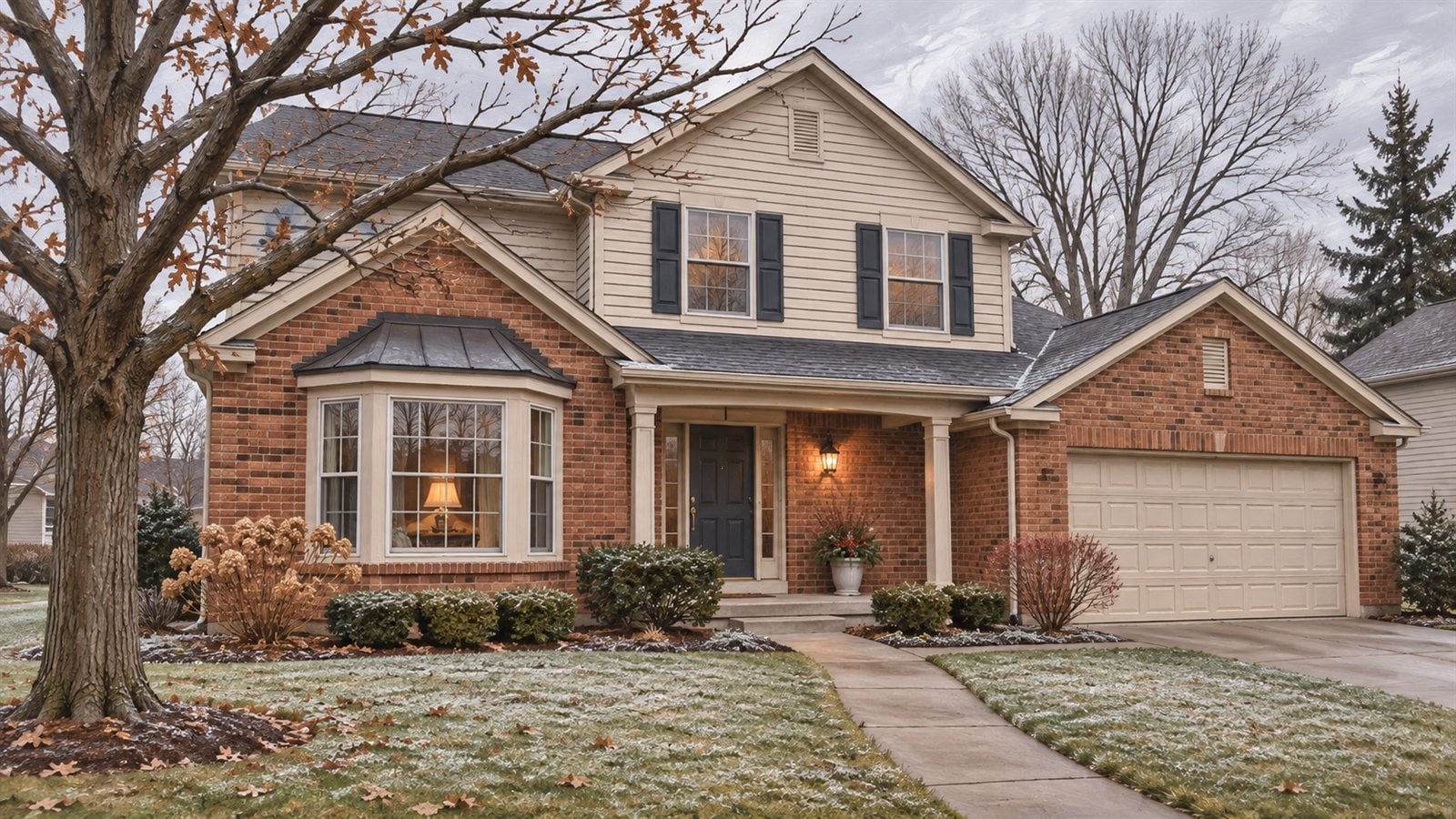
Featured image: AI-generated illustration of a cold-weather home tour; not an actual listing or client property.
1. Notice how the rooms feel—not just the thermostat setting
When you walk into a warm home from a cold driveway, almost any room can feel comfortable at first. Give yourself a few minutes. As you move through the house, pay attention to differences between the main living area, bedrooms, rooms over a garage, and any finished lower level.
A cooler room can have several explanations. The thermostat setting, sun exposure, closed doors, furniture placement, airflow, insulation and the heating system may all be relevant. You cannot sort that out simply by standing in the doorway, and a temperature difference is not a diagnosis.
Make the observation specific: “The front bedroom felt cooler than the hallway during our visit.” That is more useful than deciding the entire heating system needs replacement. Ask whether the seller has noticed the same thing and whether any work has been done to address it.
For a home that stays on your shortlist, ask your inspector whether an HVAC contractor or a professional home energy assessment would help answer the concern. The U.S. Department of Energy describes an energy assessment as a way to evaluate energy use and identify potential improvements. It is a different service from a general home inspection, so confirm the scope rather than assuming one appointment includes everything.
2. Look at windows and exterior doors with a little curiosity
Beautiful windows bring in light, but their appearance does not tell you everything about comfort or condition. From the areas you can safely access, look for visible moisture, staining, damaged trim, deteriorated seals or obvious gaps around doors. Notice whether the room feels drafty without moving the seller’s belongings or operating anything without permission.
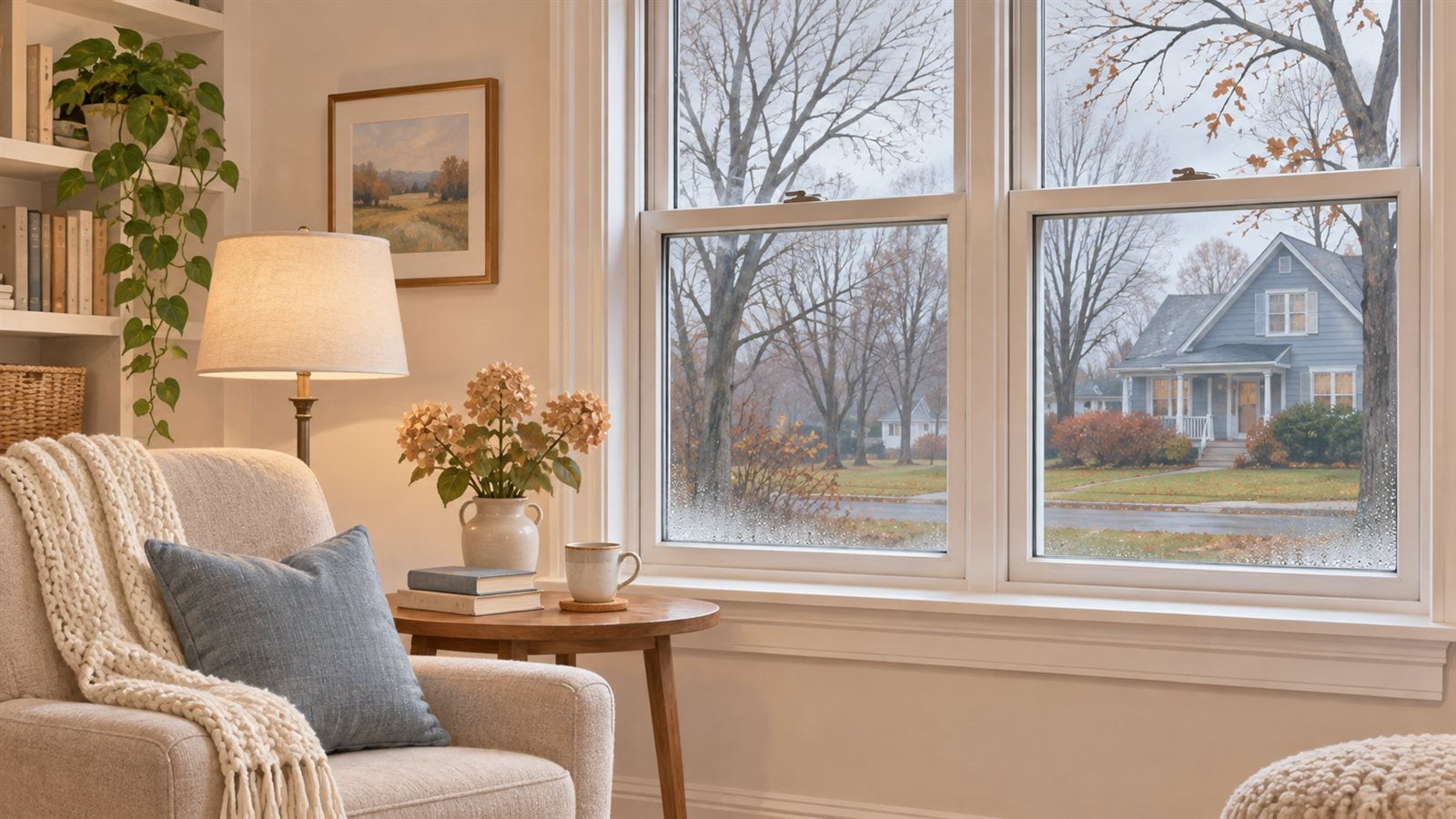
Window condensation needs context. Moisture on an interior surface, fogging between panes, and water entering around the frame are different observations. Indoor humidity, surface temperatures, ventilation and window condition may all matter. Do not treat every drop of water as proof of a failed window—or dismiss recurring moisture as harmless.
The EPA’s moisture guidance emphasizes addressing water problems and condensation. If you see staining or persistent moisture, ask about its history and have the relevant area evaluated. A specialist can help distinguish the cause and the appropriate response.
Here is the practical buyer question: “What would I need to know about this before I am comfortable owning the home?” Sometimes the answer is a maintenance record. Sometimes it is a closer inspection. Sometimes you need an actual repair estimate before you can make a sensible decision.
3. Ask for heating information, service records and useful utility history
A furnace that starts during a showing has answered one small question. It has not established the equipment’s overall condition, expected remaining life or future repair needs. Ask what type of heating serves the home, whether there are multiple systems or zones, and what documentation is available.
Useful records can include installation information, recent service invoices, repair records and applicable warranty documents. If a listing says “new furnace,” clarify the installation date and what was replaced. Equipment, ductwork, controls and other components are not necessarily all the same age.
Do not remove panels, adjust unfamiliar controls, enter restricted spaces or try to test equipment yourself. Those are jobs for the appropriate professional. A qualified inspection can identify whether further evaluation is recommended, and an HVAC contractor can address system-specific questions.
If the seller can provide a full year of utility usage and bills, that is often more informative than a single low month. Still, their bills will not be a promise of your costs. Weather, occupancy, thermostat habits, fuel prices, rates and how much of the house was used can change the result. A vacant home kept at a reduced setting is a different situation from a household using every bedroom.
Use the records to improve your budget, not to manufacture a guarantee. If operating costs could make or break the purchase, resolve that uncertainty with the relevant professionals before relying on an optimistic estimate.
4. Pay attention to moisture clues in basements and other accessible areas
A finished basement can be a wonderful part of a home. It can also make some surfaces harder to see. During the tour, notice visible staining, peeling finishes, damaged flooring or an unusual odor. Ask about past water entry, plumbing leaks, drainage work and any repairs that were completed.
A dry basement on the day you visit is useful information about that visit. It does not prove that water has never entered or that the space will stay dry during heavy rain or snowmelt. Likewise, an odor alone does not establish the source, extent or health implications of a condition.
Ask clear questions without jumping to conclusions: “Has water entered this area?” “What work was done?” “Are there invoices or warranties?” “Was the source addressed, or only the damaged finish?” The available seller information, your inspection and any specialist follow-up should be considered together.
If the home has a sump pump or other water-management equipment, ask your inspector about the equipment and its inspection limitations. Do not assume a device is sufficient simply because it is present. Before buying, also ask your insurance professional about the coverage you need. Your policy’s treatment of water or sewer backup should not be guessed from a general description of homeowners insurance.
5. Separate what you can see outside from what the weather hides
Cold weather can make some questions easier to notice and others harder to answer. Bare trees may improve certain views. Snow, ice, frozen ground or wet conditions may limit access or conceal surfaces. Even without snow, a short tour may not show how water moves across the property during a storm.
From a safe location, look at accessible downspouts, gutters, walkways and the ground near the house. Where does a downspout appear to discharge? Is water visibly collecting near an entrance? Are there areas you cannot see? Write those observations down and ask the inspector what can be evaluated under the conditions that exist.
Do not climb onto a roof, walk across an icy surface or try to clear snow to investigate. Safety matters more than getting an answer during a showing. If the roof, grading, deck or another important feature cannot be adequately evaluated, discuss the limitation and an appropriate follow-up plan before you accept the uncertainty.
The ASHI Standard of Practice explains limitations involving unsafe access, adverse conditions and concealed areas. Confirm the actual standard and agreement used by your inspector; an association standard is not a promise that every inspection has the same scope.
Also confirm how cooling equipment will be handled. Weather and manufacturer requirements can limit whether an air-conditioning system can be operated safely. Do not ask someone to run equipment under unsuitable conditions just to check a box. Get the limitation documented and ask the appropriate professional what additional information or evaluation is reasonable.
6. Think through the everyday arrival, departure and maintenance routine
Picture an ordinary weekday rather than a perfect open-house afternoon. Where would you park? How would you get groceries inside? Is the entrance convenient for your needs? Can you see the steps and changes in elevation? What would keeping that path clear involve?
For a condominium or a home with an association, read the actual documents about maintenance responsibilities. Do not assume snow removal includes every driveway, porch or walkway. Ask what is covered, who arranges the work and what remains the owner’s responsibility. Confirm fees and any relevant rules from current documents rather than an informal description.
If daylight is limited during your first visit, consider an authorized daytime return when practical. It can help you understand the yard, exterior and natural light. A different visit will not answer every technical question, but it can improve your understanding of how the property fits your daily routine.
The same thinking applies to a larger lot, a long driveway or a lake-area property. Those features may be exactly what you want. Just include their maintenance demands in the decision instead of treating them as details to figure out after closing.
7. Turn observations into a short, organized follow-up list
By the end of a tour, it is easy to remember the beautiful fireplace and forget the question about the room above the garage. Before you leave, separate your notes into three groups: information to request, professional evaluation to consider, and personal preferences.
“Please request the furnace installation record” is an information item. “Ask the inspector about the staining near the basement window” is an evaluation item. “I would prefer more afternoon light in the kitchen” is a preference. Keeping those categories separate helps everyone focus on the right next step.
This also prevents a common mistake: treating an unknown as either an automatic dealbreaker or a harmless detail. Neither conclusion is justified until you know more. You are allowed to like the house and still ask careful questions about it.
Ask your agent to help organize requests through the appropriate channels. Avoid photographing private documents or opening storage areas without permission. What you need is relevant property information and professional advice—not the seller’s personal information.
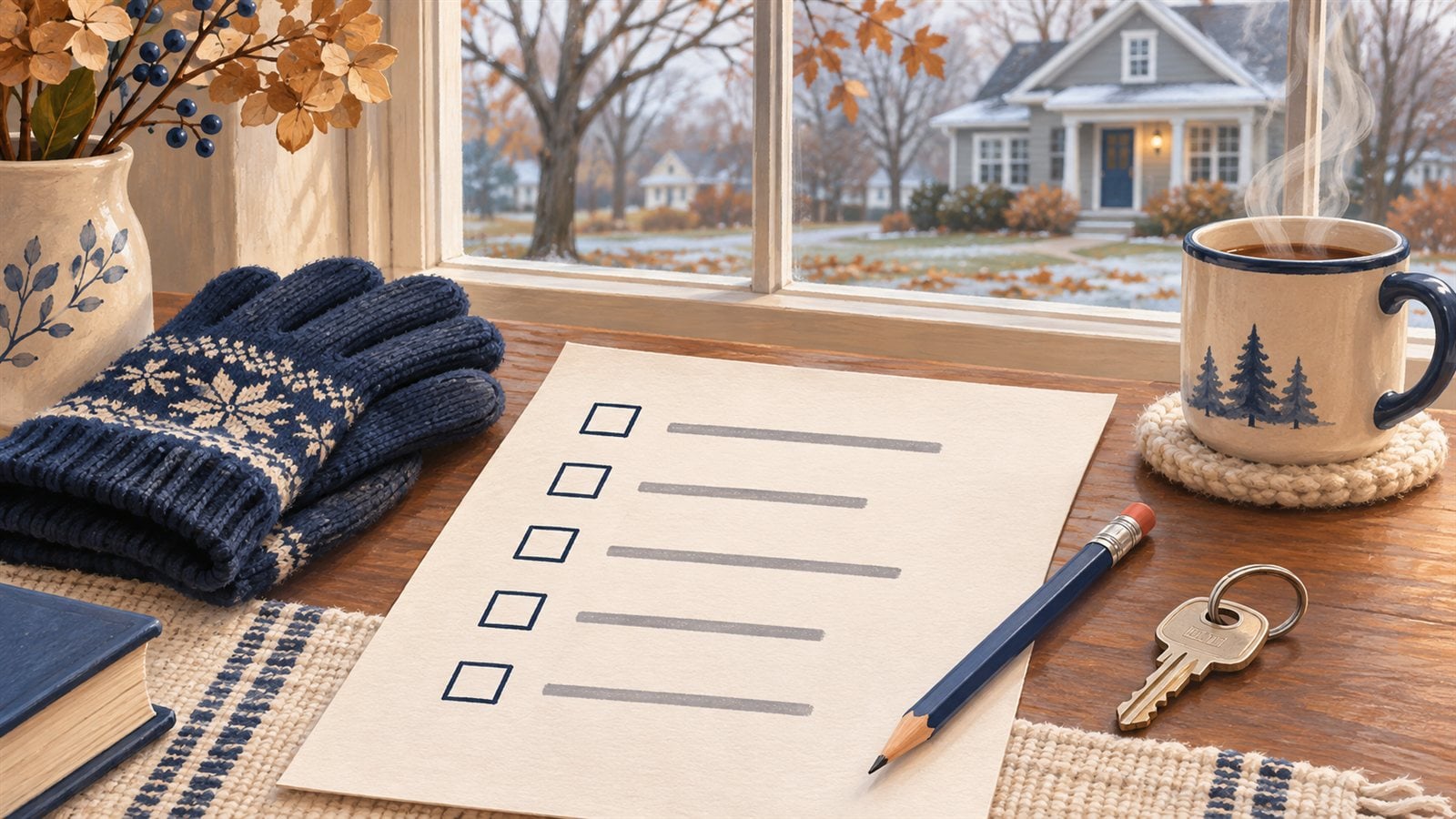
Save this cold-weather showing checklist
- Comfort: Did any accessible room feel noticeably different from the others?
- Windows and doors: What moisture, staining, gaps or damage was visible?
- Heating: What systems serve the home, and what service or installation records are available?
- Operating costs: Can the seller provide useful utility history, with occupancy and usage context?
- Moisture: What is known about past leaks, water entry and completed work?
- Exterior: Which roof, drainage, walkway or yard areas could not be adequately seen?
- Daily routine: What parking, access and winter-maintenance responsibilities would you take on?
- Next step: Which question needs a document, an inspection, a specialist or simply a second visit?
Before you write an offer, decide how you will handle the unanswered questions
A showing checklist is most useful when it leads to a plan. Review the available property information, identify the inspections you want, and discuss timing with your agent. Ask the inspector about weather-related limitations before the appointment so you understand what the service can and cannot cover.
Your purchase agreement determines the rights, deadlines and procedures in your transaction. There is no universal extra inspection period simply because the weather is cold. Do not assume you can revisit an unresolved issue later unless the appropriate arrangement is actually in place. Have an attorney address legal interpretation when needed.
If an inspection identifies a concern, the next step may be specialist evaluation, a written repair proposal, negotiation or deciding the home is not the right fit. A seller is not automatically required to make every requested repair. For more on that stage, see my guide to what happens after a home inspection.
For your budget, keep the purchase price separate from insurance, taxes, utilities and potential maintenance. My Michigan homeowners insurance guide is a useful companion. Michigan DIFS also recommends comparing coverage and understanding how the home’s condition and other factors can affect insurance. Obtain property-specific advice and a quote rather than relying on the previous owner’s premium.
Tom’s Take: love the house, but leave room for the questions
I do not think buyers need to approach every showing expecting trouble. That takes the enjoyment out of finding a home. I do think you should give the practical details the same attention you give the kitchen and the view.
A cooler bedroom is a question. A stain is a question. A roof you cannot see clearly is an unanswered question. What matters is how we work through those questions before you make a decision.
My approach is straightforward: notice it, ask about it, and get the right person involved when the answer calls for technical expertise. I can help you compare homes and organize the buying process. Your inspector, contractor, lender, insurance professional or attorney has a different role, and good decisions depend on using the right expertise.
There is no prize for rushing past something that matters to you. There is also no reason to reject a home based only on an assumption. The aim is to buy with a clear understanding of the property, the remaining uncertainty and what fits your budget.
Cold-weather home tours: questions and answers
Is cold weather a good time to tour homes in Oakland County?
It can be useful because you can observe the home’s comfort and think through winter access and maintenance. Weather can also limit exterior visibility and equipment testing. Evaluate the individual home and inspection limitations rather than assuming the season makes it a better or worse purchase.
Does a cold room mean the house needs a new furnace?
No. Room temperature can be affected by airflow, insulation, thermostat settings, sun exposure and other factors. Record the observation and ask your inspector whether an HVAC contractor or energy assessment is appropriate.
Is condensation on a window a sign of a major problem?
Not necessarily. Its location, frequency and cause matter. Interior condensation, moisture between panes and water entering around a frame are different concerns. Ask about the history and arrange evaluation when moisture persists or damage is visible.
Can a home inspection be completed when there is snow or ice?
An inspection may still take place, but snow, ice and unsafe access can limit what can be evaluated. Ask the inspector to explain and document those limitations, then discuss any necessary follow-up before accepting unresolved uncertainty.
Should I ask the seller for winter utility bills?
Yes, when available, but a full year of usage and bills gives more context than one month. The seller’s occupancy, habits, rates and weather conditions may differ from yours, so past bills do not guarantee future costs.
Can the air conditioner be tested during a cold-weather inspection?
That depends on conditions, the equipment and applicable operating requirements. Ask the inspector or an HVAC professional what can be evaluated safely. Do not insist on operation when conditions are unsuitable.
Does a dry basement during a winter showing prove there are no water issues?
No. It describes the conditions observed during that visit. Ask about past water entry and repairs, review available documentation, and discuss appropriate inspection or specialist evaluation.
Does cold weather give a buyer extra inspection or cancellation time?
No automatic extension should be assumed. Your signed purchase agreement and any properly agreed changes govern the applicable rights, deadlines and procedures. Ask your agent about the process and an attorney about legal interpretation.
Have a home on your shortlist? Let’s make the next visit count.
Send me the listing and the questions you want answered. We can organize a thoughtful tour, compare the available information and identify the follow-up that belongs with the right professional. Start with my Oakland County home-buying resources, or contact me directly.
Tom Gilliam | RE/MAX Classic
Farmington Hills and Oakland County, Michigan
248-790-5594
Sources and further reading
- American Society of Home Inspectors: Standard of Practice
- U.S. Department of Energy: Professional Home Energy Assessments
- U.S. Environmental Protection Agency: A Brief Guide to Mold, Moisture and Your Home
- Michigan DIFS: Information on Purchasing Home and Renters Insurance
Educational guidance reviewed November 9, 2026. A property tour is not a technical inspection or a guarantee of condition. Inspection scope, insurance coverage and transaction terms depend on the individual property and applicable documents. Illustrations are AI-generated educational images, not photographs of Oakland County listings or client properties.