




Start where a buyer starts
When I walk up to a Farmington Hills home, I start at the curb. Can I see the front door? Is the path clear? Does the porch light work? If there’s snow, clear the path before the photographer comes. Move the shovel and salt bag out of the frame, then put them back where you’ll need them. Inside, take a phone photo from the doorway of each main room. A chair you walk past every day might block half a window in the photo. In the kitchen, clear the counter around the sink and wipe down the cabinet fronts. In the bathroom, put daily products away and replace burned-out bulbs. Open the blinds and see which rooms still look dark. The National Association of REALTORS®’ 2025 staging survey found that 83% of responding buyer agents said staging helped buyers picture the property as their future home. If you’re working with a tight layout, my Oakland County guide to staging a small home has more room-by-room ideas.A room-by-room plan for getting your Farmington Hills home photo-ready
Take one photo from the doorway of each room and one from the curb. Look at the pictures on your phone the way you’d look at a listing. What catches your eye first? What can you tell about the room from that angle? Those two questions usually tell you where to spend the next hour.Front entry and curb appeal
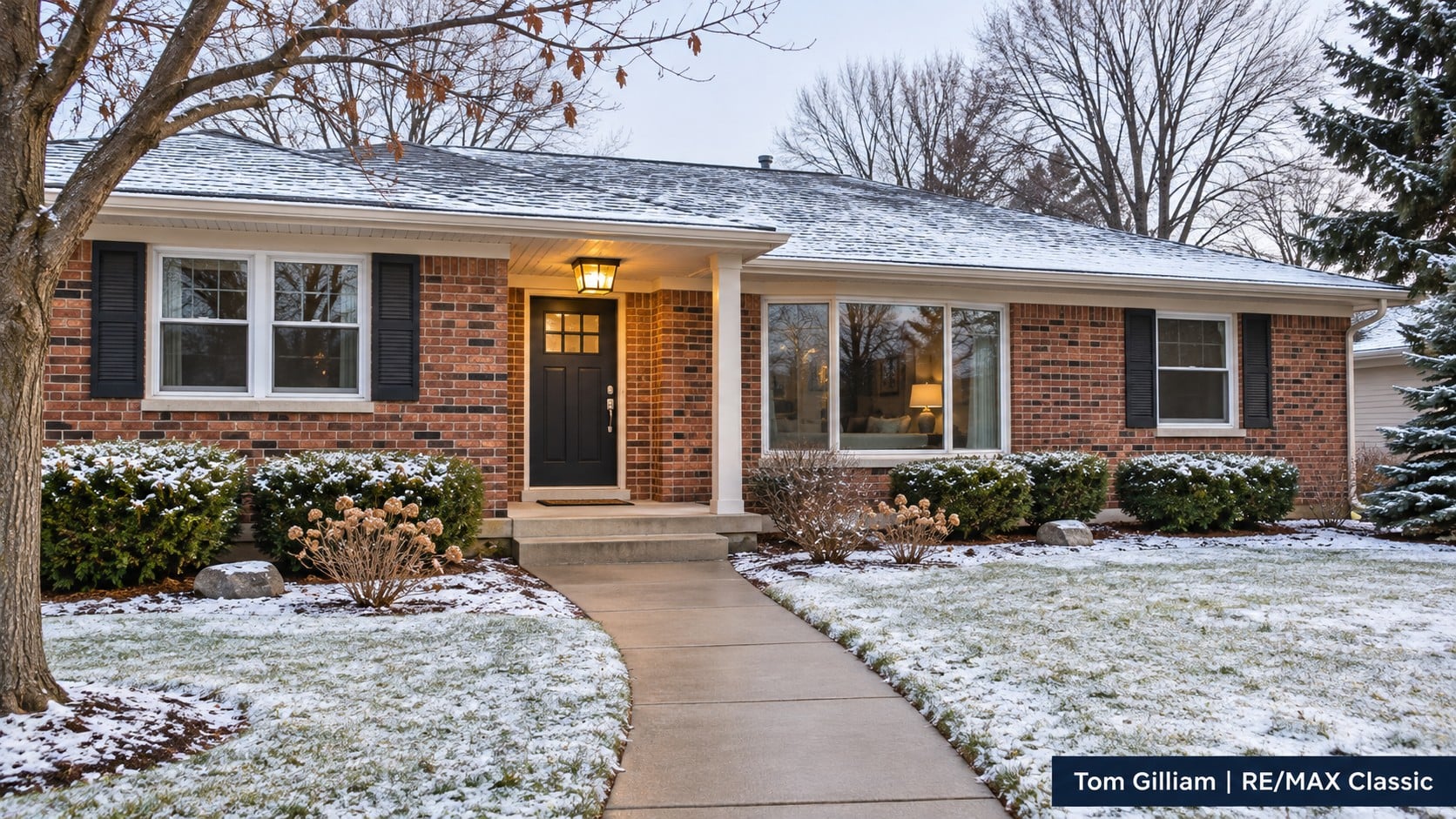
Find a safe spot where you can see the whole front of the house. Look at the path, the steps, the front door, and anything that competes with them. Move trash cans, empty planters, and garden tools out of the shot. Wipe down the door and its glass. Test the porch light and make sure the photographer can see the entrance from the driveway and the street. If you’re listing through a Michigan winter, walk the route from the driveway to the door after the temperature drops. A path that looked clear in the afternoon can be icy the next morning. Plan to check it again before photos and before showings. Keep a place inside for boots and wet shoes so the entry you cleaned stays that way.Living room and dining room
I like to stand where you first enter the living room. Can you see the window? Can you walk into the room without stepping around an ottoman? An extra chair might be handy every night and still make the room look tight in the wide shot. Try moving that chair and taking the same photo again. You’ll see pretty quickly whether it helped. In the dining room, take the mail, school papers, and laptop off the table. If you have a table leaf in place for holidays, try taking it out to see how the room feels. Check the light fixture from the doorway. One dark bulb in a row of four tends to draw your eye, especially against a bright window. Save bigger furniture decisions until you’ve tried these small changes.Kitchen
Start with the counter beside the sink and the space on either side of the stove. Put away the dish rack, cleaning bottles, and the appliances you can live without for a day. Wipe the cabinet fronts at handle height. Check the refrigerator door for magnets, calendars, and paperwork. Then take a new photo from the doorway and see how much of the counter you can actually see. If the kitchen is dated but clean and functional, I’d look at comparable sales before spending money on counters or appliances. How did nearby homes in similar condition sell? What else was different about the homes with updated kitchens? A larger lot, another bathroom, or a different floor plan can change the comparison. Get a project quote before trying to work out what the update might do for your sale.Bathrooms and bedrooms
For bathrooms, clear the vanity, clean the mirror, and put out a fresh hand towel. Move spare shampoo, bath mats that bunch up, and the laundry basket out for the photo. Take a look around the tub and under the vanity. If you see a stain and you’re unsure where it came from, write it down and find out what’s going on before spending time on touch-up paint. In bedrooms, make the bed and clear enough floor space for buyers to see how the room works. In a smaller room, moving one piece of furniture or opening the blinds can make the layout easier to understand. If a bedroom doubles as your office, tuck away cables, paperwork, and anything with personal details. Keep the desk if it fits and helps a buyer picture how they could use the space.Basement, laundry room, and garage
These spaces often take the longest because they’re where everything else ends up. Give yourself a walking path, keep the stairs clear, and leave room to reach the furnace, water heater, and electrical panel. Group boxes along one wall so a buyer can see the floor and understand the size of the room. If you have a finished basement with an unfinished utility area, I’d make both easy to walk through. Make a note of water marks, musty smells, or damp spots. Tell your agent what you know and get help figuring out a concern if the cause is unclear. In the garage, clear enough floor to show how you use it. You can leave tools on the pegboard and bins on the shelves. A buyer mainly needs to see where a car goes, where the storage is, and how they’ll get into the house.What to fix, what to price out, and what can wait
| Key Point | Explanation |
|---|---|
| 1. Handle before photos | Replace burned-out bulbs, tighten loose handles, touch up noticeable scuffs, and clear the entry, windows, and walkways. |
| 2. Get an estimate | Ask a qualified professional to assess an active leak, a furnace that works poorly, or another problem you can’t evaluate yourself. Get the scope, cost, and timing in writing. |
| 3. Review bigger upgrades | Compare your home with recent nearby sales before committing to a kitchen remodel, new flooring throughout, or other work that could delay listing. |

Should you replace flooring or update the kitchen before selling?
I’d start with a few homes a buyer would reasonably compare with yours. Look at a recent sale in similar condition, a recent sale with the kind of update you’re considering, and a competing home on the market now, if there’s a good match. A similar floor plan, size, and location can make that comparison more useful. Say the updated home sold for more, but it also had a finished basement and an extra bathroom. I’d account for those differences before attributing any of the price gap to new flooring. Get a quote, ask when the work could be finished, and compare that with what your house already offers at the price we’re considering. If the carpet is worn in one room, take a doorway photo after cleaning it and look at the picture in daylight. If the carpet still draws your eye, price out that room before you talk about replacing every floor in the house. That gives us a real cost and a smaller decision to make.What I’d do with two weeks and a limited budget
Say the porch light is out, the hall wall is scuffed, and the furnace is old but running. I’d replace the bulb and touch up the wall. If the paint patch still stands out after it dries, I’d paint the whole wall. For the furnace, I’d gather the service records. If the heat is uneven or the system keeps shutting off, I’d ask a qualified technician to take a look.My photo-day decision guide
- Visible and quick to finish? Handle it before photos.
- Unsure what’s causing it? Get it assessed and ask for an estimate.
- Expensive and mostly cosmetic? Review recent sales before you spend.
How to use the two weeks before listing photos
Two weeks out, decide what deserves an estimate
Walk through with a short list of things that need a closer look. If you’ve seen water under the kitchen sink twice, note when it happened. If the upstairs never seems to warm up, write down which rooms feel cold and when. Those details give a contractor more to work with when you ask for a quote. Gather any service records or receipts you already have. Ask what the quote covers, how soon the work can start, and what you’ll have to clean up or put back afterward. A repair can be quick on paper and still leave you waiting for a part or repainting a wall. Bring that timeline back to the conversation about your listing date. If the work will overlap with photo day, tell your agent and photographer early enough to plan around it.One week out, finish anything that makes a mess
This is when I’d tackle paint touch-ups, hardware, and the bigger cleaning jobs. Check a dried paint patch in daylight before calling it done. If you’re moving furniture or clearing the garage, decide where those items will stay through the first round of showings. Otherwise, you may spend photo morning carrying boxes from the living room to the basement and back again. Take the same doorway photos you took on your first walk-through. Look at them side by side. If the entry is clear and the rooms are bright, resist the urge to add a new project because you still have three days. Use that time to finish the jobs you already chose and get your showing routine in place.The day before, do the jobs that will still look good tomorrow
Clean mirrors, wipe counters, empty bins, put away personal paperwork, and check each light fixture. Decide where you’ll put the pet bowls, spare shoes, and charging cables just before the photographer arrives. I’d use one basket to gather the things you need right after the shoot. Set it somewhere the photographer can work around it, then put everything back when you’re done. The morning of the shoot, check the walkway and do one last pass from the front door to the kitchen. Look at the view through the windows, too. A car parked right outside or a trash bin beside the porch can show up in more than one frame. Let the photographer tell you how they want the blinds and lights set for each room.What if you have only one weekend?
Start Saturday at the front door, then do the living room and kitchen. Take one photo from each doorway, clear the things you notice first, and take another photo from the same spot. If you can see more of the window, floor, or countertop in the second shot, your time went to the right place. Use Sunday for the rooms you haven’t touched, then gather repair receipts, warranties, and service records. If there’s a damp spot you can’t explain or a system that isn’t working well, write down what you’ve noticed and line up an assessment. Call your agent if the repair could affect access to a room, the photography appointment, or the listing date.Should you move photo day if a repair is still open?
I’d ask whether buyers will be able to see the space clearly and when the work will be done. If a plumber has the kitchen sink disconnected and the cabinet is open, waiting until the work is complete may save you from paying for a second visit. If a loose cabinet pull is the one thing still on your list, you may be able to fix it before the photographer gets there and keep the appointment. For bigger decisions, put the repair quote and timeline beside the likely sale price and your moving plans. Ask what a buyer will see in similar homes currently for sale and how long the work might delay your listing. That’s a conversation I’d rather have before materials are ordered and the furniture is in the garage.Frequently asked questions
What should I fix before listing photos?
Start with lighting, loose hardware, visible scuffs, and clutter that blocks a window or walkway. Do the front entry, living room, and kitchen first. Take a phone photo afterward to see what still draws your eye.Should I repaint before selling my Farmington Hills home?
Repaint walls where heavy scuffs, mismatched patches, or worn paint stand out in daylight. Start with the entry and the main rooms that will appear in listing photos. If most walls already look clean and even, spend the time on lighting, cleaning, and clearing the rooms. Test touch-up paint first and check it after it dries to see whether it blends.Should I remodel my kitchen before listing?
Ask for a pricing review first. If the cabinets work and the room is clean, start with clearing counters, improving light, and tightening hardware. Look at recent comparable sales and your listing timeline before paying for a major remodel.When should I get a contractor’s estimate?
Get an estimate when the cause, cost, or timing of a repair is unclear. An active leak or a poorly working furnace is worth having assessed. Ask what the work involves, when it can be finished, and what’s included in the quote.Can I take listing photos while I still live in the house?
Yes. Start with the rooms the photographer will shoot first, and plan a place for daily-use items during the appointment. A bin for chargers, remotes, pet supplies, and bathroom products can make the morning easier. Keep IDs, mail, medication, and other personal items out of view. After the shoot, use the same routine to reset the main rooms before showings.Want a second set of eyes before photo day?
If you’re getting ready to sell in Farmington Hills or elsewhere in Oakland County, I can walk through the house with you, review recent comparable sales, and help you choose where to spend your time and money. Request a home-value and pre-listing review. You can also see how I help Oakland County sellers from preparation through closing.Check out this article next