




LOCAL HOUSING NEWS • BUYER EDUCATION
A small new housing project in Pontiac raises a bigger question: could a different way of building create another practical path to homeownership? If you have been watching Oakland County homes and wondering where a new home might fit into your budget, this is a development worth understanding. It is also a story where the details matter more than the headline.
The useful question is not simply whether a home was built in a factory. It is what you would own, what the finished property would cost, how it could be financed, and whether the purchase would work for your household. Here is how I would sort through those questions before getting carried away by a rendering or an affordability label.
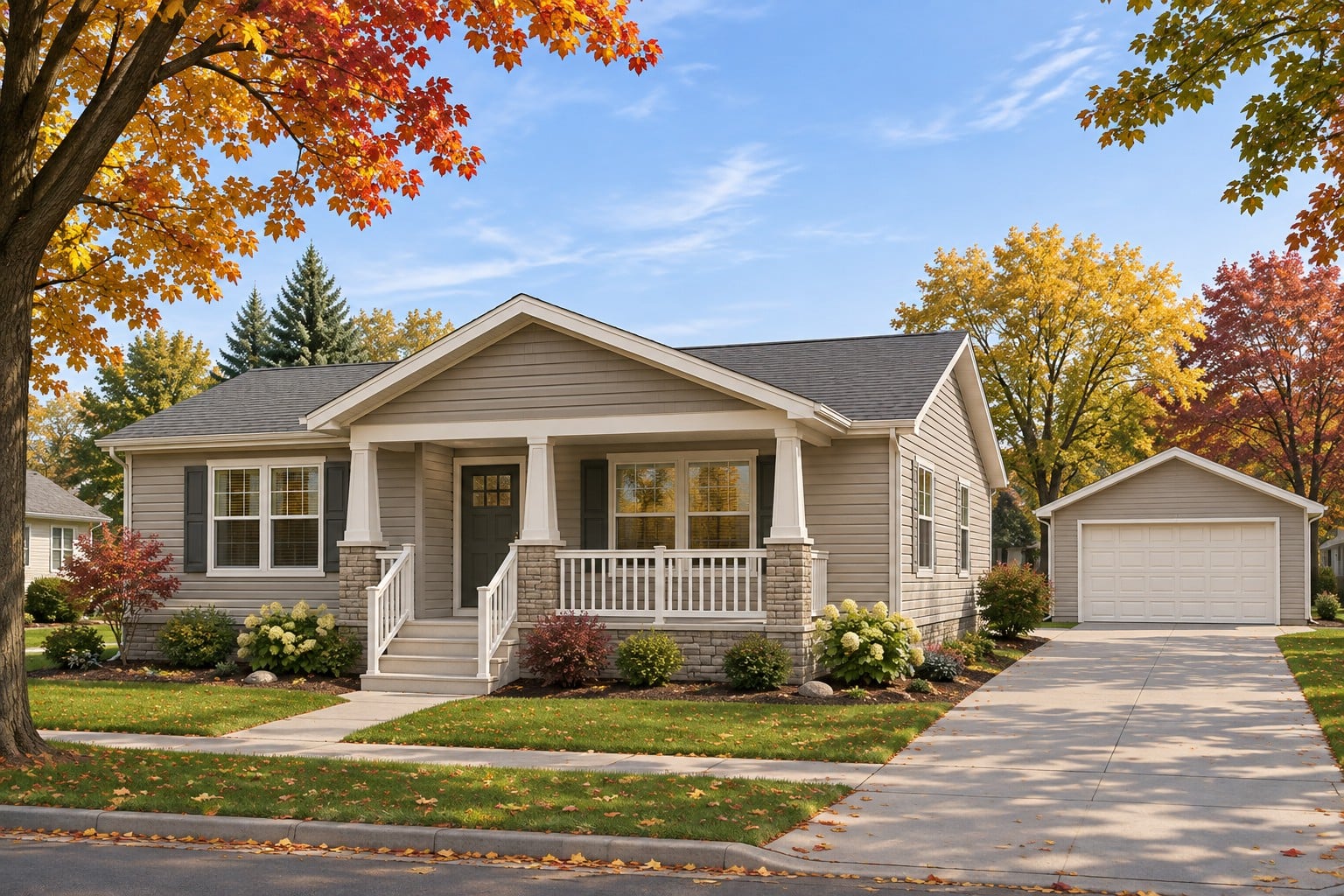
Watch: Pontiac’s planned CrossMod homes
In this 83-second overview, I explain the announcement and four questions to ask before committing.
AI avatar and authorized voice of Tom Gilliam. Home imagery is conceptual, not an approved project design. Watch on YouTube.
What has been announced on Walnut Street?
In its November 10 announcement, Oakland County reported a groundbreaking for Creek Valley Properties’ planned five-home CrossMod development on Walnut Street in Pontiac. The announced development budget is $1.4 million, including a $200,000 county housing trust fund investment. The city sold the five lots to the developer.
The county describes one planned home for a household earning approximately 60% of area median income and four for households at 80–120% AMI. Anticipated completion is March 2027. That is a target, not a delivery guarantee. These are planned homes; this article does not establish current purchase availability. Read Oakland County’s announcement.
What remains to be confirmed: individual asking prices, final floor plans, square footage, included features, application procedures and each home’s financing eligibility. A development budget is not a published home price. Dividing the budget by the number of homes would not establish what a buyer will pay.
What is a CrossMod home?
CrossMod is an industry term for a category of manufactured housing that combines factory construction with design features associated with site-built homes. The Manufactured Housing Institute describes it as Crossover Modern Homes. The label describes a building approach; it is not, by itself, a mortgage approval, inspection report or promise of resale performance. See the industry’s CrossMod explanation.
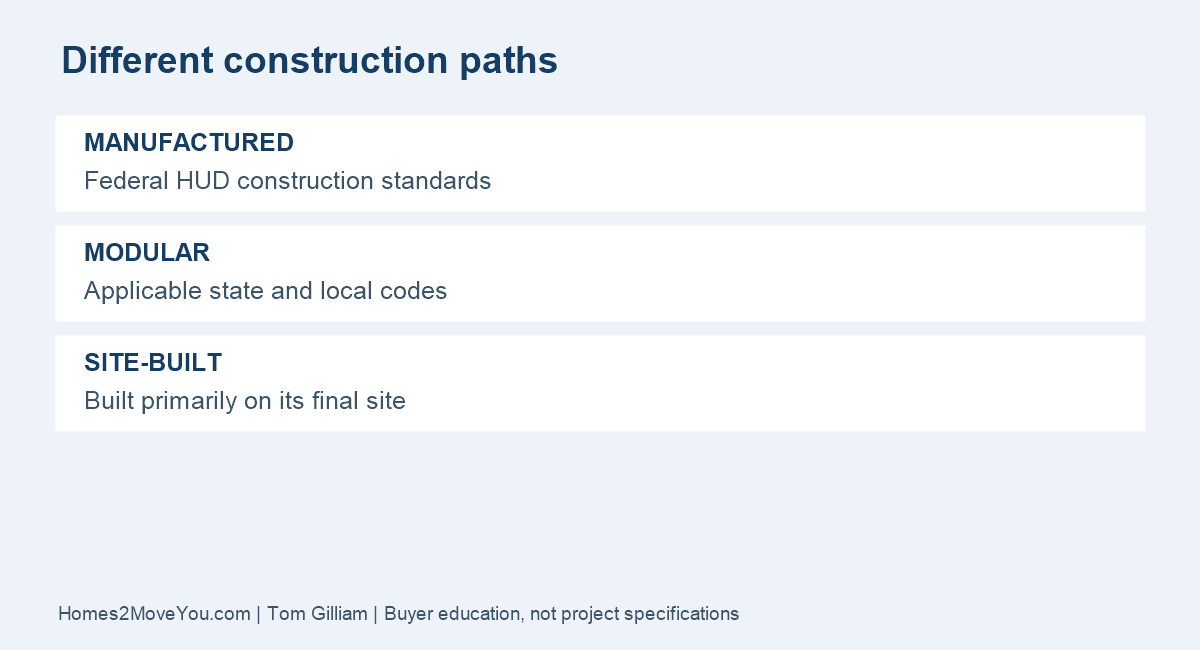
Manufactured housing is built to the federal HUD construction and safety standards. Modular housing is a different category, generally built to applicable state and local building codes. A conventional site-built home is constructed primarily at its final location. The words can sound interchangeable in casual conversation, but buyers should ask which classification appears in the actual property documents. HUD’s housing glossary explains the distinction.
That paperwork matters because appearance alone does not tell you how a property is titled, which loan programs will consider it, or what an appraiser must document. A porch and pitched roof may be appealing. They do not answer those questions.
Why this matters for Oakland County buyers
For someone comparing an older resale home with new construction, another building option can broaden the conversation. The comparison should still be specific: this finished home, on this lot, under this contract, against other properties you could realistically buy.
A new home might reduce some immediate updating needs, but that does not make it maintenance-free. An older home might offer a different lot, location or layout, but a lower asking price would not automatically make it the less expensive choice after repairs. Compare the complete decision rather than treating a construction label as the winner.
This project also should not be used to predict Pontiac price appreciation or a countywide change in housing costs. A small development can be meaningful to the households it serves without proving a broad market trend. For a wider starting point, see my Oakland County affordable-home buyer guide. This article focuses on a specific new project and the questions its building type creates.
What does AMI mean—and does it mean you qualify?
AMI means area median income. Housing programs use income limits tied to a geographic area and household size. It is not simply your salary compared with a number you found in a neighborhood profile. HUD explains that applicable income limits vary by area and family size. See HUD’s explanation of income eligibility.
For this development, ask for the program’s current written income schedule and its definition of household income. Find out which year’s limits apply, whose income counts, what documents are required, and when eligibility is checked. Do not assume a household qualifies because one person’s base salary appears to fit a percentage in a news story.
Also separate program eligibility from mortgage eligibility. Meeting an income requirement does not establish your credit qualification, acceptable debt level, cash needed to close or ability to carry the payment comfortably. Those are related questions, but they are not the same approval.
Can a CrossMod home qualify for a conventional mortgage?
There are conventional mortgage options for eligible manufactured homes. Fannie Mae’s MH Advantage program has specific property and documentation requirements. Certain eligible transactions can have a down payment as low as 3%, but that is not a promise that these Pontiac homes—or a particular buyer—qualify. Review Fannie Mae’s manufactured-home financing overview.
Before comparing rates, ask the lender to identify the actual loan product and confirm that the home, foundation, installation, title and documentation meet its requirements. Fannie Mae’s selling guide includes identification and installation documentation for eligible homes. A lender should examine the actual file rather than approve a marketing label. Read the property eligibility guidance.
Ask what happens if the appraisal, completion date or property documentation does not satisfy the lender. A preapproval for you is useful; it does not eliminate the property review. Get the financing contingency, rate-lock terms and any extension costs explained before you sign.
Compare the full cost—not just a down payment
A comfortable purchase starts with two separate worksheets: cash needed to complete the transaction and the ongoing cost of ownership. Assistance, when available, may change one part of that picture without changing the other.
- Cash to close: down payment, closing charges, prepaid items and reserves, less confirmed credits or approved assistance.
- Monthly ownership: principal and interest, property taxes, insurance, mortgage insurance when applicable, utilities and a maintenance allowance.
- Move-in costs: items not included in the contract, moving expenses and a practical cash cushion.
For example, imagine two homes with the same advertised price. One contract includes appliances and completed exterior work; the other leaves some items to the buyer. Their real move-in budgets could differ. That is a comparison exercise, not a claim about the specifications of this development.
Ask for a complete inclusions sheet. What is included in landscaping, driveway work, utility connections and interior finishes? What requires an upgrade? Who completes any unfinished work, and when? Put important answers in the contract instead of relying on a conversation or a picture.
For property taxes, request an estimate appropriate to the completed property and your intended use. Do not build your budget around a vacant lot’s old bill. My Michigan winter tax bill guide explains the vocabulary to discuss with the assessor and lender.
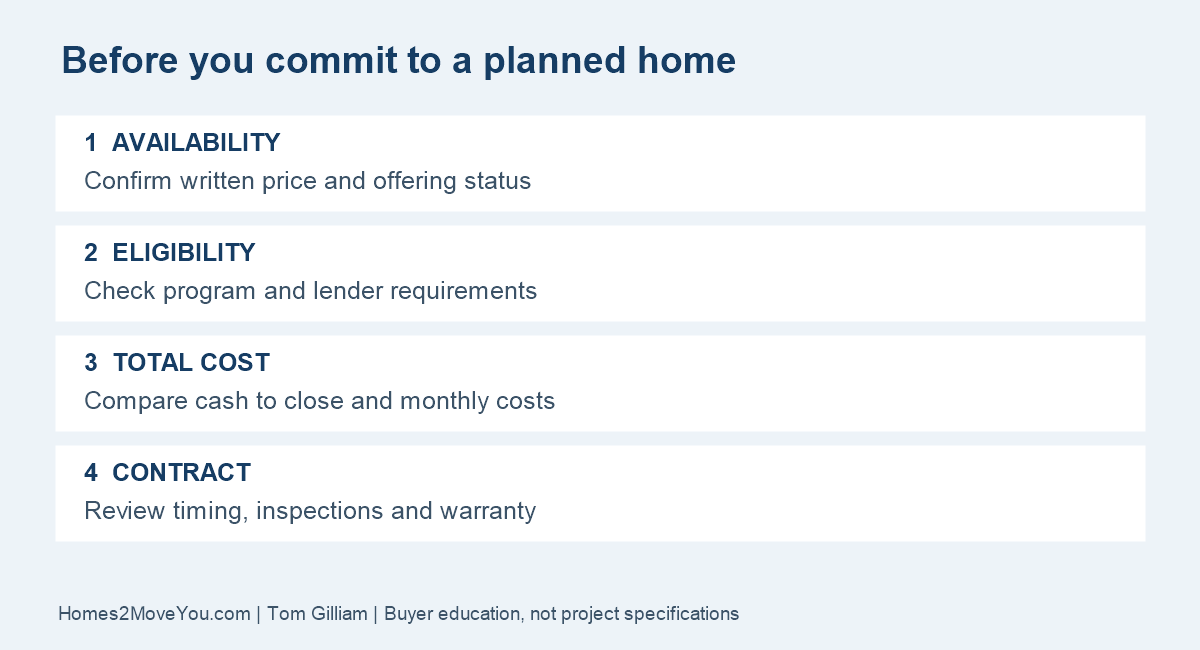
Seven questions to ask before reserving a planned home
- Is the home actually being offered for purchase? Ask who handles inquiries, whether applications are open and what written materials are available. A groundbreaking is not an invitation to send a deposit.
- What exactly would I own? Confirm the lot, legal description, ownership structure and how the home and land will be titled. Have the lender and closing professionals review the documents.
- What is the complete price? Request the base price, included features, options, deposits and any other required charges. Ask how changes are approved and priced.
- Are there affordability restrictions? Request any recorded restrictions, occupancy requirements, resale provisions or assistance repayment terms. Have qualified professionals explain their effect on your plans.
- Which lender has reviewed this specific home type? Confirm the product, property requirements and remaining approval conditions. Compare written loan estimates for comparable terms.
- What happens if completion changes? Ask about the expected schedule, permitted delays, notice requirements, rate-lock exposure and your contractual choices. Review those provisions before paying money.
- What happens after closing? Request warranty documents, service contacts, maintenance information and the process for documenting unresolved items.
Inspections and warranties still deserve attention
Factory construction does not remove the need to understand the finished property. Ask what inspections are required, what approvals remain, and whether your contract allows an independent inspection at useful stages. Discuss access and timing before assuming an inspector can visit whenever you choose.
HUD’s homeowner resources emphasize that warranty terms vary. Review who is responsible for the home, installation and individual equipment, along with exclusions and the procedure for requesting service. A verbal assurance that something is “covered” is much less useful than the actual coverage document. See HUD’s manufactured-home resources.
Keep copies of the signed contract, approved changes, inspection findings, completion records and warranty contacts. If something remains unfinished at closing, ask your agent, lender and attorney how it should be handled. Do not assume a casual promise will satisfy the lender or protect your interests.
Tom’s Take: stay curious, and keep the numbers grounded
I like seeing another housing option enter the conversation. Buyers benefit when they can compare more than one path instead of feeling pushed toward whatever happens to be available.
My advice would be to approach this with an open mind and a clear checklist. I would want to know the finished price, the full monthly payment, what is included, and what the contract asks you to accept. Then I would compare it with the other homes that fit your needs.
The right home is not automatically the newest one, the least expensive one, or the one with the most interesting construction story. It is the home that works for your budget, daily life and longer-term plans. Let the documents and the numbers support the excitement.
Questions buyers are asking
Are the Walnut Street homes completed?
No. The county announcement describes a planned development with anticipated completion in March 2027. Confirm current construction progress and availability directly; the target is not a guaranteed closing date.
Is CrossMod the same as modular construction?
No. CrossMod is an industry category of manufactured housing. Modular homes generally follow applicable state and local building codes. Verify the classification and documents of the actual property.
Have individual sale prices been confirmed here?
No. This article does not establish individual asking prices. A total development budget is not a home price or a buyer’s complete ownership budget.
Does CrossMod automatically qualify for MH Advantage financing?
No. The lender must confirm the actual home, documentation and transaction satisfy the selected program’s requirements, along with the borrower’s eligibility.
Does meeting an AMI limit mean I am approved for a mortgage?
No. Program income eligibility and mortgage underwriting are separate reviews. Ask for the applicable household-size income schedule and have a lender evaluate your financing.
What should I request before paying a deposit?
Request current availability, written price and inclusions, ownership and restriction documents, financing conditions, completion terms, inspection rights and warranty information. Have the contract reviewed before committing.
Want to compare your options?
If you are weighing a new home against an Oakland County resale, I can help you organize the comparison and the questions to bring to the developer and lender. Contact Tom Gilliam at RE/MAX Classic to talk through your home search. I am not presenting these homes as my listings or representing that applications are currently open.
Project facts reflect the county announcement available November 11, 2026. Plans, timing, program requirements and availability can change. Confirm current written terms with the developer, program administrator and lender. This is buyer education, not a loan commitment, appraisal, legal opinion or tax determination.